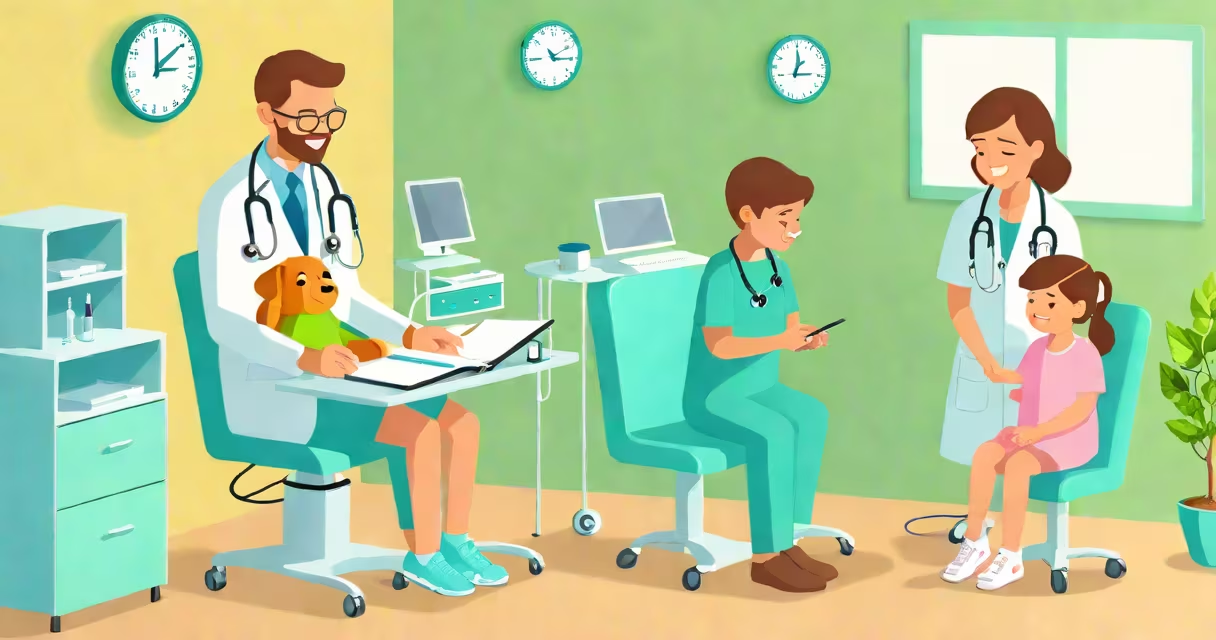
Pediatrics is the medical specialty dedicated to the health and well-being of infants, children, and adolescents from birth through age 18. It involves diagnosing, treating, and preventing diseases specific to young patients, with a focus on growth, development, and long-term wellness.
The field emerged as distinct from adult medicine in the 19th century. French physician François Magendie conducted early experiments on animal models to understand infant physiology, laying groundwork for modern pediatric research. Today, pediatricians manage everything from routine immunizations to complex chronic illnesses like cystic fibrosis and congenital heart defects.
Pediatric care extends beyond illness. It includes developmental screenings, nutritional guidance, mental health support, and injury prevention. A child's physical and emotional needs evolve rapidly. Pediatricians track milestones such as walking at 12 months or reading at age 6 to identify delays early.
Pediatricians assess patients using age-specific tools. For infants, they monitor weight gain, head circumference, and reflexes. By age 3, they evaluate language skills and social interaction. These benchmarks differ sharply from adult diagnostic standards.
Preventive care dominates pediatric practice. The American Academy of Pediatrics (AAP) recommends 41 vaccine doses by age 2, protecting against diseases like polio, measles, and pertussis. Routine checkups occur every 2-3 months during infancy, then annually after age 2.
When illness arises, pediatricians tailor treatments to developing bodies. Antibiotics are dosed by weight, not age. Anesthesia protocols differ between children and adults due to metabolic differences. A 5-year-old with pneumonia may receive a different antibiotic regimen than a 35-year-old with the same condition.
Pediatrics includes subspecialties addressing specific systems or conditions. Not all pediatricians treat every issue. Some focus exclusively on heart problems, brain disorders, or rare genetic diseases.
| Subspecialty | Focus Area | Common Conditions |
|---|---|---|
| Neonatology | Preterm and critically ill newborns | Respiratory distress syndrome, jaundice, sepsis |
| Cardiology | Heart defects and arrhythmias | Patent ductus arteriosus, tetralogy of Fallot |
| Endocrinology | Hormonal regulation and growth | Diabetes mellitus type 1, growth hormone deficiency |
| Psychiatry | Mental health and behavioral development | ADHD, anxiety, autism spectrum disorder |
Each subspecialty requires additional training beyond general pediatrics. A pediatric cardiologist completes three years of fellowship after residency. This ensures expertise in managing congenital heart disease, which affects about 1 in 100 live births globally.
Pediatrics is used in hospitals, outpatient clinics, schools, and public health programs. It supports families during critical developmental windows. Early intervention reduces long-term disability. For example, identifying hearing loss within the first month of life improves language outcomes by 70% compared to late detection.
Public health initiatives rely on pediatric networks. The CDC's Vaccines for Children program provides free immunizations to low-income families. Since 1994, this program has prevented over 14 million cases of vaccine-preventable disease.
Children face unique risks. They are more vulnerable to environmental toxins like lead and air pollution. A 2021 study published in *The Lancet* found that exposure to high levels of traffic-related particulates increased childhood asthma rates by 32% in urban areas. Pediatricians advocate for clean air policies based on such data.
Pediatrics is often mistaken for obstetrics. Obstetricians care for pregnant women and deliver babies. Pediatricians begin their work at birth. The two fields intersect briefly at delivery, but their roles diverge immediately afterward.
Another misconception is that pediatricians only treat minor illnesses. While many visits involve colds or ear infections, pediatricians also manage life-threatening conditions. In 2022, the AAP reported that 1 in 5 children in the U.S. has a chronic condition requiring ongoing care, including asthma, epilepsy, and food allergies.
A lesser-known fact: pediatricians play a key role in identifying child abuse. The National Child Abuse and Neglect Data System (NCANDS) recorded 671,000 substantiated cases in 2021. Pediatricians are mandated reporters in all U.S. states. They detect signs like unexplained fractures, burns, or developmental delays that suggest maltreatment.
I once observed a pediatrician diagnose a 4-year-old with Kawasaki disease during a routine checkup. The child had a persistent fever, swollen hands, and red eyes. The doctor ordered an echocardiogram, which revealed coronary artery abnormalities. Immediate treatment with intravenous immunoglobulin reduced inflammation and prevented permanent heart damage. Without timely recognition, this condition can lead to heart attacks in children under 10.
Medical education emphasizes that pediatric care is not simply "small adult medicine." The physiology, pharmacokinetics, and psychology of children differ profoundly. A dose of acetaminophen safe for a 10-year-old may cause liver failure in a 2-year-old due to immature enzyme systems.
For clarity: the meaning of pediatrics is not just about treating sick children. It is about nurturing healthy ones through every stage of growth. From newborn screening to adolescent counseling, pediatricians serve as lifelong guardians of health.