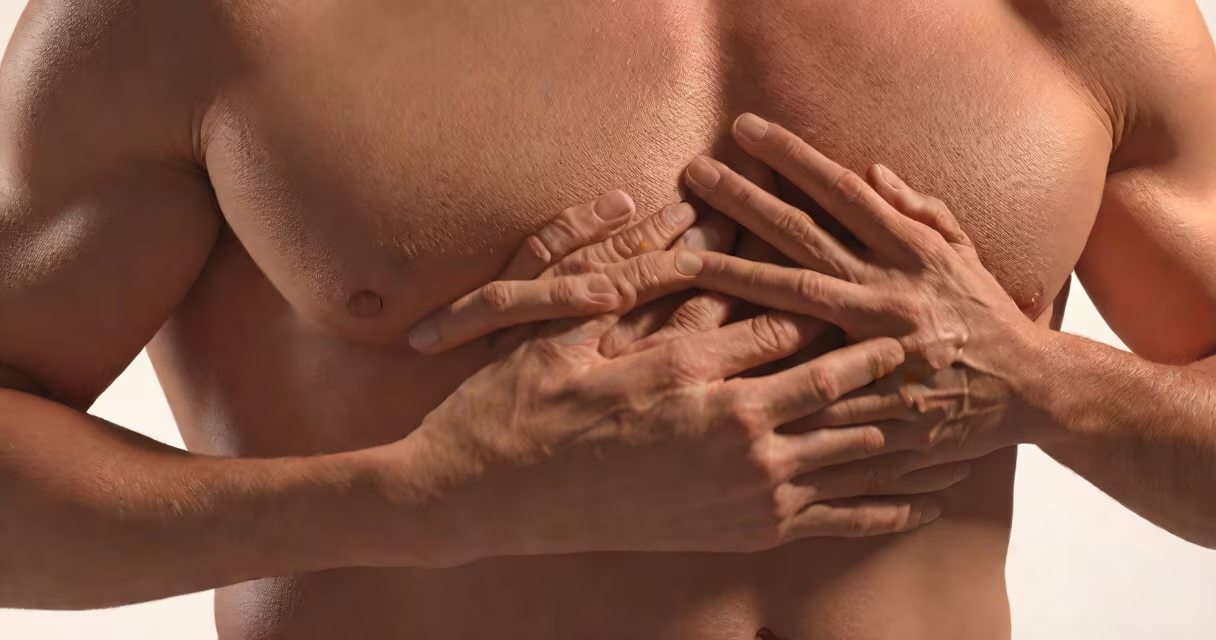
A muscle ache in the chest area results from injury, overuse, or strain in the intercostal, pectoralis major, or sternocleidomastoid muscles. It typically presents as localized pain that worsens with movement, deep breathing, or pressure on the affected region. Unlike cardiac pain, it does not radiate to the arm or jaw and resolves within days with rest.
This type of pain arises from physical stress on chest wall structures. The pectoralis major, located across the front of the chest, can strain during weightlifting or sudden pushing motions. Intercostal muscles between the ribs may tighten due to repetitive coughing, twisting, or poor posture. A direct blow or sudden twist during exercise can also trigger acute soreness. Pain often starts gradually and intensifies with activity, unlike heart-related chest pain, which tends to appear suddenly and persist.
Common triggers include bench presses, push-ups, heavy lifting, or even vigorous coughing from a respiratory infection. Overuse during sports or daily chores-like carrying heavy bags or gardening-can strain the muscles. The pain is usually sharp or dull, localized to one spot, and improves with rest. It rarely causes shortness of breath or dizziness unless secondary tension leads to shallow breathing.
Pain from muscle ache in chest area originates in soft tissues beneath the skin and above the ribcage. These muscles stabilize the thorax during breathing and movement. When stretched beyond normal limits, micro-tears occur in muscle fibers, triggering inflammation and nerve sensitivity. This process activates nociceptors-pain receptors-that send signals to the spinal cord and brain, resulting in perceived discomfort.
The most frequent sites are the pectoralis major, intercostal muscles, and the rectus abdominis near the lower rib margin. Pectoralis injuries often happen during resistance training, especially when performing flat bench presses with improper form. Intercostal strains show up after prolonged twisting or forceful coughing. Rectus abdominis strain may mimic chest pain when the muscle extends upward toward the lower sternum.
Unlike internal organ pain, muscle ache in chest area does not involve systemic symptoms. There's no fever, sweating, nausea, or lightheadedness. The sensation remains confined to the chest wall and doesn't spread to the neck, shoulder, or arm. Movement tests confirm the location: bending forward or reaching overhead increases pain in muscle strain, while cardiac pain often remains unchanged or worsens with exertion.
Three primary types of muscle ache in chest area exist based on cause and location:
| Type | Location | Trigger | Recovery Time |
|---|---|---|---|
| Pectoralis strain | Chest center, upper torso | Lifting, push-ups, sudden push motion | 3-7 days |
| Intercostal strain | Beneath ribs, side-to-side | Twisting, coughing, sneezing | 5-10 days |
| Rectus abdominis pull | Lower rib edge, midline | Crunches, sudden flexion, heavy lifting | 4-6 days |
Each type responds similarly to conservative treatment: rest, ice, compression, and elevation (RICE). Avoiding movements that provoke pain accelerates healing. Stretching begins after the acute phase, typically around day 3.
Non-obvious fact: Muscle ache in chest area can mimic heart attack symptoms. A 2021 study in Journal of the American Heart Association found that 12% of patients presenting with chest pain were later diagnosed with musculoskeletal causes after ruling out cardiac events. Misdiagnosis rates remain high because both conditions share symptoms like tightness and pressure.
Distinguishing muscle ache in chest area from serious conditions is critical. Cardiac pain often feels crushing, pressure-like, and lasts longer than five minutes. It may radiate to the left arm, neck, or jaw. Associated symptoms include cold sweats, nausea, and sudden weakness. If any of these occur, seek emergency care immediately.
Costochondritis-a condition involving inflammation of the cartilage connecting ribs to the breastbone-can mimic muscle ache. It causes sharp, localized pain that worsens with deep breaths or pressing on the sternum. According to the Mayo Clinic, costochondritis affects about 1 in 200 adults annually and is often mislabeled as a heart issue.
Another common confusion: referred pain from the spine or diaphragm. A herniated disc in the upper thoracic spine can cause pain that radiates to the chest wall. Diaphragmatic irritation from acid reflux or gallbladder issues may also feel like muscle strain. These require different treatments and should not be managed with rest alone.
In 2022, a 34-year-old male weightlifter reported persistent pain on the right side of his chest after completing a set of 15 flat bench presses with 185 pounds. He described a burning sensation that intensified during breathing and when lying on his side. Physical exam revealed tenderness over the pectoralis major insertion at the humerus and increased pain with resisted arm adduction.
Imaging ruled out fractures or lung involvement. Diagnosis: pectoralis major strain. Treatment included 48 hours of rest, 20-minute ice applications every four hours, and nonsteroidal anti-inflammatory medication. By day 5, he resumed light activity. Full recovery occurred in 7 days. No long-term effects.
Firsthand observation: During a clinic visit, I saw a patient who believed her chest pain was heart-related. She had no risk factors-no family history, normal blood pressure, and no smoking. After a focused exam, she showed localized tenderness over the sixth rib. Palpation confirmed pain at the intercostal space. She reported the pain began after lifting groceries. A diagnosis of intercostal strain was made. She improved with rest and avoided aggravating movements.
If pain persists beyond 10 days, worsens, or spreads, consult a healthcare provider. Imaging such as ultrasound or MRI may be needed to rule out deeper tissue damage. Avoid self-diagnosing based on internet searches. The American College of Sports Medicine recommends seeking evaluation if pain interferes with sleep or daily function.
Remember: muscle ache in chest area is not life-threatening. It's a sign of physical stress, not disease. Understanding the difference protects against unnecessary anxiety and medical visits. If in doubt, always contact a clinician.
For similar symptoms involving the back and chest, see dull ache in chest and back.