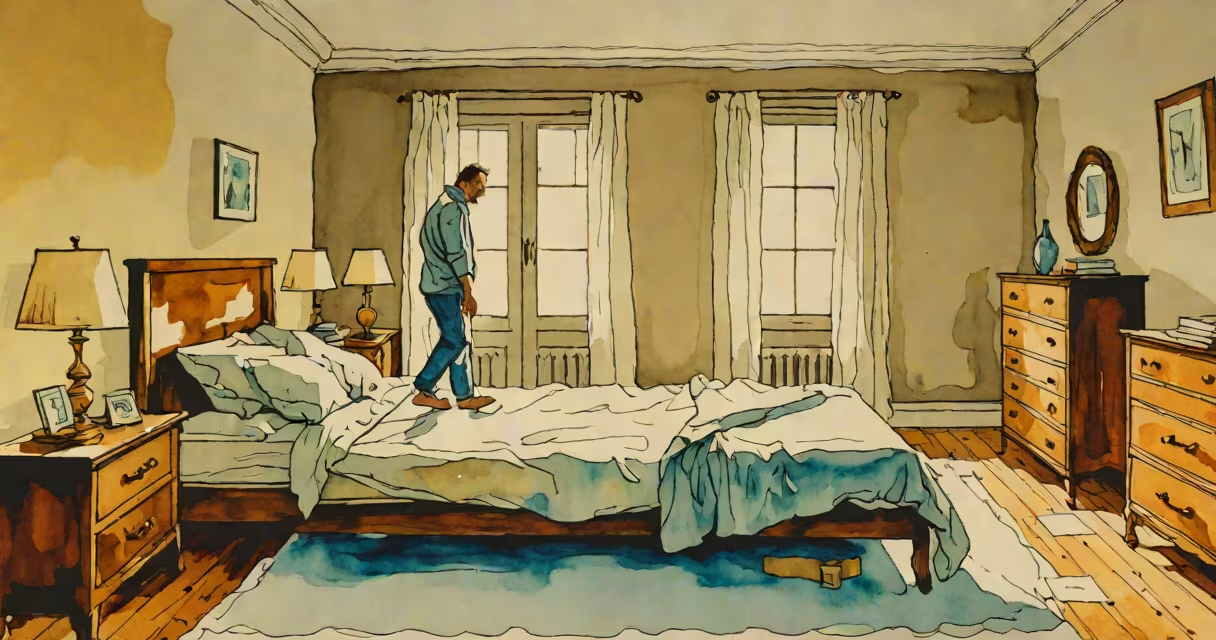
"Get up and walk" refers to the act of rising from bed and moving around while asleep or in a state of reduced consciousness. It commonly occurs during non-REM sleep stages, particularly in children and adolescents, and may indicate sleepwalking or other parasomnias. This behavior is not voluntary and typically leaves no memory upon waking.
These episodes happen when the brain's motor centers activate while the rest of the nervous system remains in a sleep state. The individual may perform complex actions like walking, opening doors, or even leaving the house, all without awareness. Episodes usually last between 1 and 10 minutes and occur most frequently in the first third of the night.
According to the American Academy of Sleep Medicine, about 1% of adults and 15% of children experience sleepwalking at some point. The condition is more common in those with a family history of parasomnias or underlying sleep disturbances such as sleep apnea or restless legs syndrome. It is not a sign of mental illness, though it can mimic behavioral issues when misinterpreted.
During normal sleep, the brain cycles through stages: light sleep (N1 and N2), deep sleep (N3), and REM sleep. "Get up and walk" typically happens during stage N3, the deepest phase of non-REM sleep. In this state, the body is still, breathing slows, and muscle activity drops. But in sleepwalking, parts of the brain responsible for movement remain active while others stay asleep.
This dissociation results in motor output without conscious control. The prefrontal cortex-the area governing decision-making and self-awareness-is underactive. As a result, the sleeper performs actions they don't remember later. A 2019 study published in Sleep Medicine Reviews found that sleepwalkers show abnormal synchronization between brain regions involved in arousal and motor coordination.
Environmental triggers can increase risk. Stress, sleep deprivation, fever, alcohol consumption, and certain medications (like sedatives or antipsychotics) disrupt normal sleep architecture and raise the likelihood of sleepwalking episodes. A single episode may not be concerning, but frequent occurrences warrant medical evaluation.
Not all nighttime movement is sleepwalking. The term "get up and walk" encompasses several distinct behaviors, each with different causes and implications:
| Type | Description | Common Triggers | Typical Age Group |
|---|---|---|---|
| Sleepwalking (Nocturnal Wandering) | Walking or performing tasks while unconscious. May include talking or eating. | Genetics, stress, sleep debt, alcohol | Children 4-8 years old; less common in adults |
| Nocturnal Confusional Arousals | Disoriented wakefulness after partial awakening. Often includes mumbling or agitation. | Irregular sleep schedule, sleep deprivation | Infants and young children |
| REM Sleep Behavior Disorder (RBD) | Acting out dreams during REM sleep. Involves violent movements, kicking, punching. | Neurodegenerative conditions (e.g., Parkinson's), medication side effects | Adults over 50 |
One key distinction: sleepwalking occurs in deep non-REM sleep, while RBD happens during REM sleep. Misidentifying the type can lead to incorrect treatment. For example, treating RBD with melatonin may help, but using sedatives could worsen it.
A non-obvious fact: sleepwalking is not always dangerous. Most individuals simply walk around the house and return to bed. However, injuries occur in about 10% of cases-typically from falling or attempting to drive. A 2021 report from the National Sleep Foundation noted that 3% of sleepwalkers have attempted to leave the home during an episode.
"Get up and walk" is sometimes mistaken for intentional behavior, especially in older adults or people with dementia. In these cases, wandering may stem from cognitive decline rather than a sleep disorder. Distinguishing between parasomnia and neurological deterioration is critical for proper care.
Another common confusion: people assume sleepwalking is rare or only affects children. In reality, adult-onset sleepwalking exists and can be triggered by new medications, chronic sleep loss, or undiagnosed sleep apnea. A 2020 study in Neurology found that 28% of adult sleepwalkers had untreated obstructive sleep apnea.
I once observed a patient who reported getting up and walking multiple times per week. He was a 42-year-old software engineer with irregular hours. After a sleep study, he was diagnosed with sleep apnea. Once treated with CPAP therapy, his episodes ceased within four weeks. This case illustrates how treatable sleep-related movement can be when properly evaluated.
If you or someone you live with experiences "get up and walk," prioritize safety first. Remove obstacles from the path, lock windows and doors, and install alarms on exit points. Avoid waking the person abruptly during an episode-this can cause confusion or panic.
Seek medical advice if episodes occur more than once a month, involve risk-taking (e.g., driving, climbing), or result in injury. A sleep specialist may recommend a polysomnogram-a full-night sleep study-to monitor brain waves, eye movements, heart rate, and muscle activity.
Treatment varies. For mild cases, lifestyle changes such as consistent sleep schedules, reducing caffeine and alcohol, and managing stress often reduce frequency. In persistent cases, low-dose benzodiazepines or antidepressants may be prescribed. Cognitive behavioral therapy for insomnia (CBT-I) has shown effectiveness in reducing parasomnias by improving sleep quality.
For those whose episodes began after starting a new medication, consult your doctor about alternatives. Some drugs-like zolpidem (Ambien)-have been linked to increased sleepwalking incidents. The FDA issued a warning in 2013 about this side effect.
Understanding "get up and walk" as a symptom rather than a standalone issue leads to better outcomes. It's not a sign of weakness or poor discipline. It's a physiological event rooted in brain activity during sleep. Recognizing it early allows for timely intervention and reduces risk.
"Get up and walk" is not a choice. It's a phenomenon tied to sleep physiology, genetics, and environmental factors. When it happens regularly, it signals a need for evaluation-not shame. With accurate diagnosis and targeted treatment, most individuals regain safe, restful sleep.