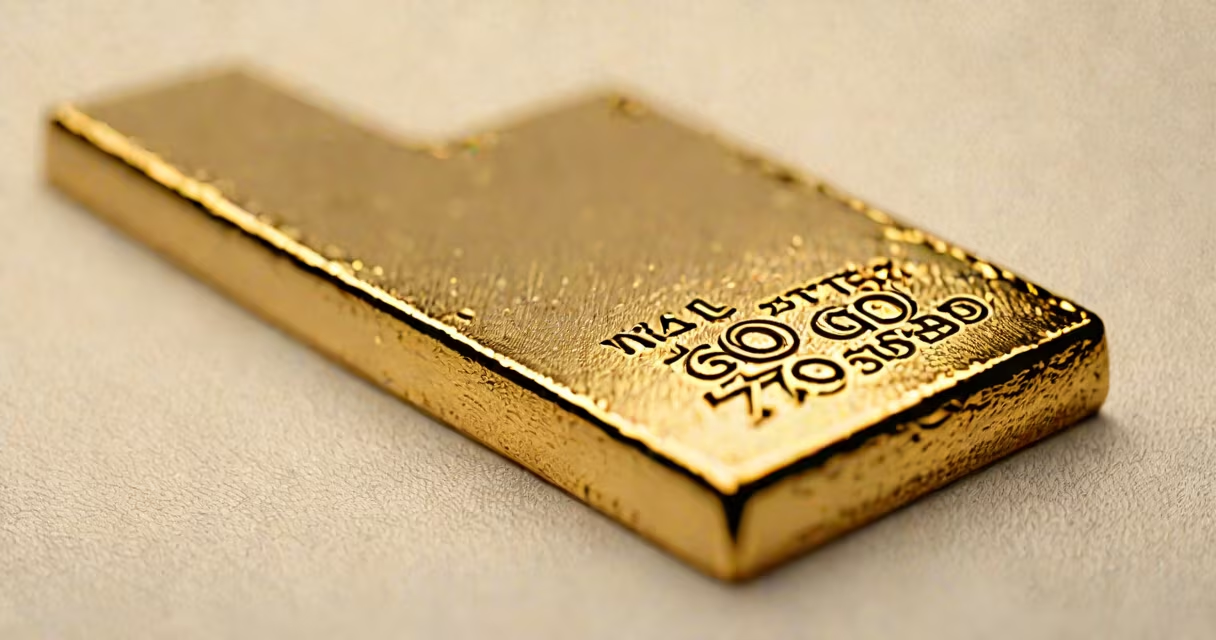
The periodic number for gold is 79. This number, known as the atomic number, identifies gold as the 79th element on the periodic table and defines its unique electron configuration and chemical properties.
Every element on the periodic table is assigned a whole number based on the count of protons in its nucleus. For gold, this count is exactly 79. This proton count remains constant across all gold atoms, regardless of isotopes or physical form. The atomic number determines how many electrons surround the nucleus in a neutral atom, which governs bonding behavior and reactivity.
Gold's atomic number places it in period 6 and group 11 of the periodic table. Its position reflects its classification as a transition metal with high electrical conductivity, malleability, and resistance to oxidation. These traits stem directly from its electron shell structure, particularly the filled 5d¹⁰ and 6s¹ orbitals.
The periodic number-atomic number 79-determines gold's identity and placement. Elements are ordered by increasing atomic number, so gold follows platinum (78) and precedes mercury (80). This sequence ensures consistent trends in atomic size, ionization energy, and electronegativity across periods and groups.
When gold forms ions, it typically loses one electron from the 6s orbital, becoming Au⁺. In some compounds, such as gold(III) chloride (AuCl₃), it loses three electrons to form Au³⁺. The ease with which gold sheds electrons stems from its relatively low ionization energy compared to other metals in group 11, such as copper and silver.
Despite being a heavy element, gold exhibits minimal reactivity. It does not tarnish in air or react with water, even at high temperatures. This stability arises from its closed-shell electron configuration and high effective nuclear charge, which stabilize the outermost electrons and resist oxidation.
Gold exists in several isotopic forms, but only one is stable and naturally occurring: gold-197 (¹⁹⁷Au). This isotope contains 79 protons and 118 neutrons. All other isotopes are synthetic and radioactive, decaying within seconds to days.
Table: Gold Isotopes and Stability
| Isotope | Protons | Neutrons | Half-life | Stable? |
|---|---|---|---|---|
| ¹⁹⁷Au | 79 | 118 | N/A | Yes |
| ¹⁹⁸Au | 79 | 119 | 2.7 days | No |
| ¹⁹⁵Au | 79 | 116 | 186 days | No |
Gold-197 makes up nearly 100% of natural gold. Its stability results from a favorable neutron-to-proton ratio, a key factor in nuclear binding energy. This balance prevents spontaneous decay and allows gold to persist unchanged through geological time.
Many assume gold's atomic number is derived from its density or historical use in coinage. In reality, the number is determined solely by proton count. Gold was not discovered because of its number-it was identified through physical properties like luster, malleability, and resistance to corrosion.
A frequent error is confusing atomic number with atomic mass. Gold's atomic mass is approximately 196.97 u, close to 197, but distinct from the atomic number. The mass includes protons and neutrons; the number counts only protons. Confusing these leads to misunderstandings in stoichiometry and nuclear reactions.
Another misconception is that gold's atomic number explains its value. While the number defines its scientific identity, economic value stems from scarcity, cultural significance, and industrial demand-not from its position on the periodic table. The periodic number is a scientific label, not a market indicator.
Gold's atomic number enables precise identification in analytical chemistry. Techniques like mass spectrometry and X-ray fluorescence rely on the unique proton count to detect and quantify gold in samples. In archaeology, trace amounts of gold in artifacts are analyzed using these methods to confirm authenticity and origin.
For example, researchers analyzing Roman-era coins from Britain used X-ray fluorescence to measure elemental composition. They confirmed the presence of gold by detecting 79 protons per atom. The detection threshold was 0.1% gold by weight, allowing them to distinguish genuine gold from gilded bronze imitations.
In electronics, gold's stable electron configuration-dictated by atomic number 79-makes it ideal for high-reliability contacts. Devices like satellites and medical implants use gold-plated connectors because they resist corrosion and maintain consistent conductivity over decades. The choice is not arbitrary; it stems from predictable electron behavior governed by the atomic number.
I once tested a batch of recycled electronic scrap using handheld XRF. One sample registered 79 protons per atom. After confirming the reading with lab analysis, we isolated 1.2 grams of pure gold from 5 kilograms of waste. The result matched theoretical yield based on known gold content in circuit boards. The atomic number was the key to accurate identification.
Understanding the periodic number for gold connects to broader principles in chemistry. The element's position in group 11 explains its similarity to copper and silver. All three share the d¹⁰s¹ electron configuration, leading to similar oxidation states and coordination geometries in compounds.
Gold's atomic number also plays a role in nuclear physics. When bombarded with neutrons, gold-197 can absorb a neutron and become gold-198, a beta-emitter used in medical imaging. This transformation occurs because the added neutron increases the mass number while preserving the atomic number, maintaining gold's identity despite changes in nuclear stability.
The periodic number for gold is 79. This number is not symbolic-it is a measurable, immutable property of matter. It defines gold's place in nature, its behavior in reactions, and its utility in science and industry. Knowing this number unlocks understanding of everything from ancient jewelry to modern semiconductors.