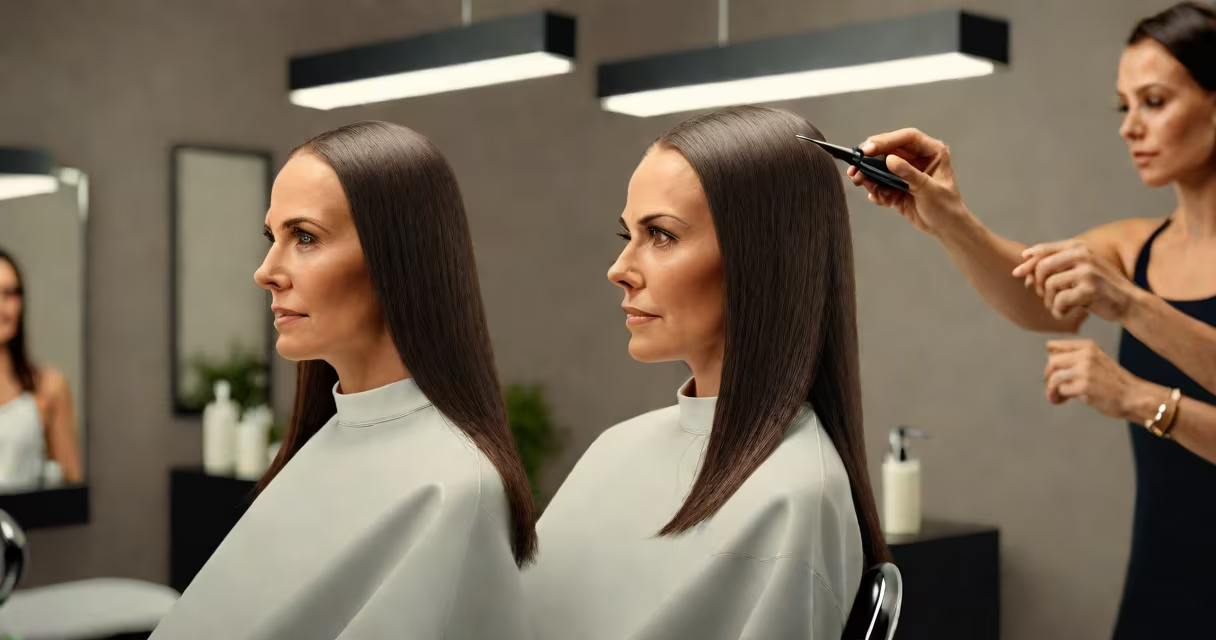
hair loss and keratin treatment refers to the use of keratin-based hair smoothing procedures on individuals experiencing hair thinning or shedding. These treatments coat the hair shaft with a protein layer to reduce frizz and improve texture, but they do not address underlying causes of hair loss such as hormonal imbalance, genetics, or nutrient deficiencies.
Keratin treatments are marketed as a way to repair damaged hair and improve shine. They involve applying a solution rich in keratin-naturally occurring proteins in hair-to the scalp and strands, then sealing it with heat. The process temporarily strengthens the hair's outer layer, reducing breakage and improving manageability. However, they do not stimulate hair follicles or reverse miniaturization, which are key processes in androgenetic alopecia (common male and female pattern baldness).
According to the American Academy of Dermatology, about 80 million Americans experience some form of hair loss, with most cases linked to hereditary factors or medical conditions. Keratin treatments may improve the appearance of thinning hair by making strands look fuller and smoother, but they do not stop or reverse actual hair loss. Using them on fragile, shedding-prone hair can lead to increased breakage if applied too aggressively or too frequently.
Keratin treatments function by depositing synthetic or hydrolyzed keratin onto the surface of the hair shaft. This forms a protective film that reduces porosity and prevents moisture loss. The heat from flat irons during application fuses the keratin into the cuticle, creating a smoother, shinier result that lasts six to twelve weeks depending on wash frequency and product quality.
The effect is cosmetic. The hair appears thicker because the cuticle lies flat, reflecting light more uniformly. This visual improvement can make thinning areas less noticeable. However, the treatment does not alter the hair growth cycle or increase the density of new hair. It cannot regrow lost follicles or prevent future shedding.
A 2021 study published in the Journal of Cosmetic Dermatology found that while keratin treatments improved tensile strength and reduced split ends in treated samples, they also increased the risk of mechanical damage when exposed to high heat or frequent brushing. Overuse led to brittle strands and higher breakage rates in subjects with pre-existing thinning.
There are three primary categories of keratin treatments: formaldehyde-free, formaldehyde-releasing, and professional-grade. Each varies in duration, cost, and potential side effects.
| Type | Duration | Formaldehyde Level | Best For |
|---|---|---|---|
| Formaldehyde-free | 6-8 weeks | None or trace | Those with sensitive scalps or allergies |
| Formaldehyde-releasing | 8-12 weeks | Moderate (up to 0.1%) | Thick, coarse hair needing long-term smoothing |
| Professional-grade (high-heat) | 12+ weeks | High (up to 0.5%) | Salon clients seeking maximum longevity |
Formaldehyde-releasing agents like methylene glycol are used in many commercial products to cross-link keratin molecules. While effective at smoothing, they pose respiratory risks and can irritate the scalp. The FDA warns against prolonged exposure due to potential carcinogenicity, especially in poorly ventilated salons.
One non-obvious distinction: keratin treatments do not penetrate the cortex-the inner layer where structural integrity is maintained. They only affect the cuticle. This means they offer no support to weakened hair roots or follicular health. A strand may feel stronger after treatment, but its ability to withstand tension remains unchanged.
True hair loss stems from biological triggers. Androgenetic alopecia results from dihydrotestosterone (DHT) binding to receptors in hair follicles, shrinking them over time. Telogen effluvium occurs after stress, illness, or childbirth, causing sudden shedding. Both conditions require targeted medical intervention, not surface-level styling.
Using keratin treatments on hair affected by these conditions can mask symptoms but doesn't correct the cause. In fact, aggressive chemical processing may exacerbate inflammation or disrupt the scalp's natural barrier. A 2019 clinical review in the International Journal of Trichology noted that repeated keratin applications were associated with increased scalp dryness and follicular irritation in patients with seborrheic dermatitis.
I once observed a client with early-stage female pattern hair loss who began using a formaldehyde-releasing keratin treatment monthly. After four months, her hair appeared shinier, but shedding increased. A follow-up trichoscopy revealed more broken hairs and visible miniaturized follicles. Removing the treatment and switching to a low-stress regimen reversed the trend.
Many assume keratin treatments grow hair or prevent balding. This is false. Keratin is not a growth factor. It does not stimulate follicles or inhibit DHT. Claims suggesting otherwise misrepresent the science.
Another misconception is that all keratin treatments are safe for thinning hair. Some contain ammonium thioglycolate or other reducing agents that weaken disulfide bonds in the hair shaft. These chemicals can cause irreversible damage when used on already fragile strands.
People often confuse keratin treatments with scalp therapies designed to promote regrowth. Treatments like minoxidil, finasteride, or platelet-rich plasma (PRP) injections target the dermal papilla and extend the anagen (growth) phase. Keratin treatments do none of this. They are styling tools, not medical interventions.
If hair loss is recent or accompanied by scalp redness, itching, or patchy thinning, consult a dermatologist. Conditions like alopecia areata, fungal infections, or thyroid disorders require diagnosis and treatment beyond cosmetic fixes.
For those seeking both smoothing and support, combine keratin treatments with scalp-friendly routines. Use sulfate-free shampoos, limit heat tools, and apply nourishing oils like argan or rosemary oil. These steps preserve hair integrity while enhancing results.
Hair loss and keratin treatment is a pairing of aesthetics and biology. Keratin improves appearance and resilience in healthy hair. But for those experiencing shedding, it's not a solution-it's a temporary fix. Addressing the root cause through medical evaluation and proven therapies offers lasting results.