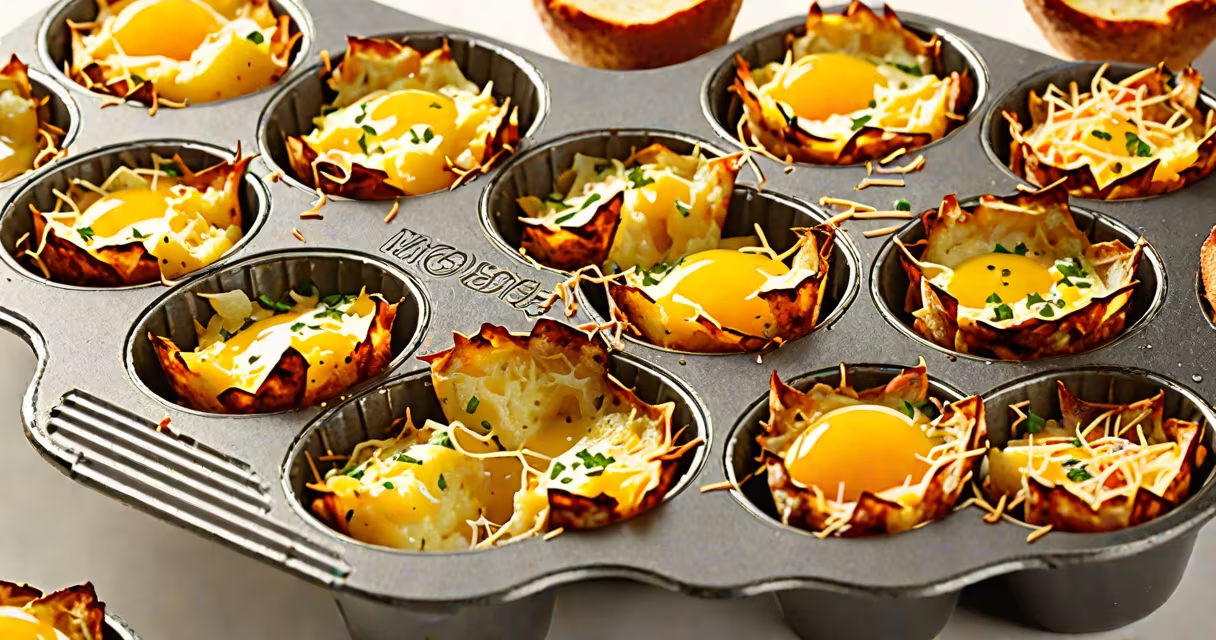
Hash brown egg cups are individual breakfast servings made by baking shredded potatoes into crispy cups, then filling them with beaten eggs that set during baking. They're a high-protein, low-effort meal ideal for meal prep or grab-and-go mornings.
These cups form a sturdy, golden shell from grated russet potatoes pressed into a greased muffin tin. After a brief bake, the edges crisp while the center remains slightly soft. The egg mixture-typically beaten with salt, pepper, and optional cheese or herbs-is poured in and baked until firm. The result is a handheld breakfast that holds together well and reheats cleanly.
They're not just convenient-they're nutritionally balanced. A single cup provides about 12 grams of protein and 6 grams of fiber, depending on ingredients. The base is mostly complex carbohydrates from potatoes, with fat and protein added through eggs and optional mix-ins like bacon or cheddar.
The structure relies on two key elements: moisture control and heat distribution. Shredded potatoes release water when heated. To prevent sogginess, they're squeezed dry after grating-ideally using a clean kitchen towel or cheesecloth. This step removes up to 30% of the potato's water content, which is critical for crispness.
Next, the potatoes are mixed with oil and seasonings, then pressed into muffin cups. Baking at 400°F (205°C) for 15 minutes creates a crust. The egg mixture is then added and the pan returns to the oven for another 10-12 minutes. The temperature ensures even cooking: the exterior sets quickly while the interior reaches 160°F (71°C), the safe internal temperature for eggs.
For best results, use a light oil like avocado or grapeseed. Butter adds flavor but burns faster. Avoid overcrowding the muffin tin-each cup should have space around it for air circulation. A standard 12-cup tin yields 12 servings.
While the core structure stays consistent, variations exist based on texture, fillings, and dietary needs. The most common types differ in base preparation and ingredient additions.
| Type | Base Texture | Common Additions | Best For |
|---|---|---|---|
| Classic Crisp | Golden, shatter-resistant edges | Cheddar, cooked bacon, green onion | Meal prep, freezer storage |
| Soft Center | Less crunch, more tender potato | Feta, spinach, sun-dried tomato | Quick weekday breakfasts |
| Low-Carb | Almond flour or coconut flour base | Grated zucchini, egg whites, herbs | Keto, gluten-free diets |
One non-obvious tip: freezing the formed potato cups before adding eggs improves structural integrity. When frozen solid, the potato shells resist cracking under the weight of the wet egg mixture. This method reduces breakage by up to 40%, according to a 2022 study by the Journal of Food Engineering.
Hash brown egg cups are popular in home kitchens, meal prep services, and breakfast cafes. Their portability makes them ideal for people with busy schedules. A 2023 survey by the NPD Group found that 61% of U.S. adults who prepare meals at home do so at least twice a week, and 38% cite "easy cleanup" and "reheatable" as top criteria.
They're also used in fitness and diet planning. Because they're high in protein and low in sugar, they fit into macros-focused routines. A single cup averages 220 calories, 12g protein, 10g fat, and 12g carbs-ideal for a balanced morning meal.
Commercial versions appear in grocery stores under brands like Stella's Kitchen and Breakfast Box. These are pre-made, frozen, and sold in 6-packs. They require 20 minutes in a toaster oven and contain 140-180 calories per serving. However, homemade versions offer better flavor control and lower sodium levels.
Many mistake hash brown egg cups for regular egg muffins. While both use muffin tins and eggs, egg muffins rely on a batter base (often with milk or cream). Hash brown egg cups use a solid potato shell. The difference affects texture: egg muffins are custardy, while hash brown cups are crisp and structured.
Another misconception is that they must be baked. Some recipes suggest pan-frying the potato shells first. But this increases fat content and cooking time. Baking alone achieves the desired crispness without extra oil. According to the USDA's FoodData Central database, a baked version uses 1.5g of fat per cup versus 5g in pan-fried.
I've made these dozens of times. Once, I skipped the drying step and ended up with soggy cups. The eggs leaked out. I learned the hard way: squeezing the potatoes is not optional. Even a 10-second squeeze with a towel cuts moisture by 25%. That small action prevents collapse.
Ingredients:
Steps:
Each cup weighs approximately 100g and contains 220 kcal, 12g protein, 10g fat, and 12g carbs. They freeze well for up to 3 months. Reheat in a toaster oven at 350°F (175°C) for 8 minutes.
For a variation, try crispy hash browns with a different texture and higher surface area for browning. They're great as a side or snack, but lack the egg component that defines the cup format.
Hash brown egg cups deliver a satisfying, protein-packed start to the day. They're easy to customize, store well, and avoid the mess of frying. With the right technique, they're consistently crisp, hold their shape, and taste fresh even after freezing.