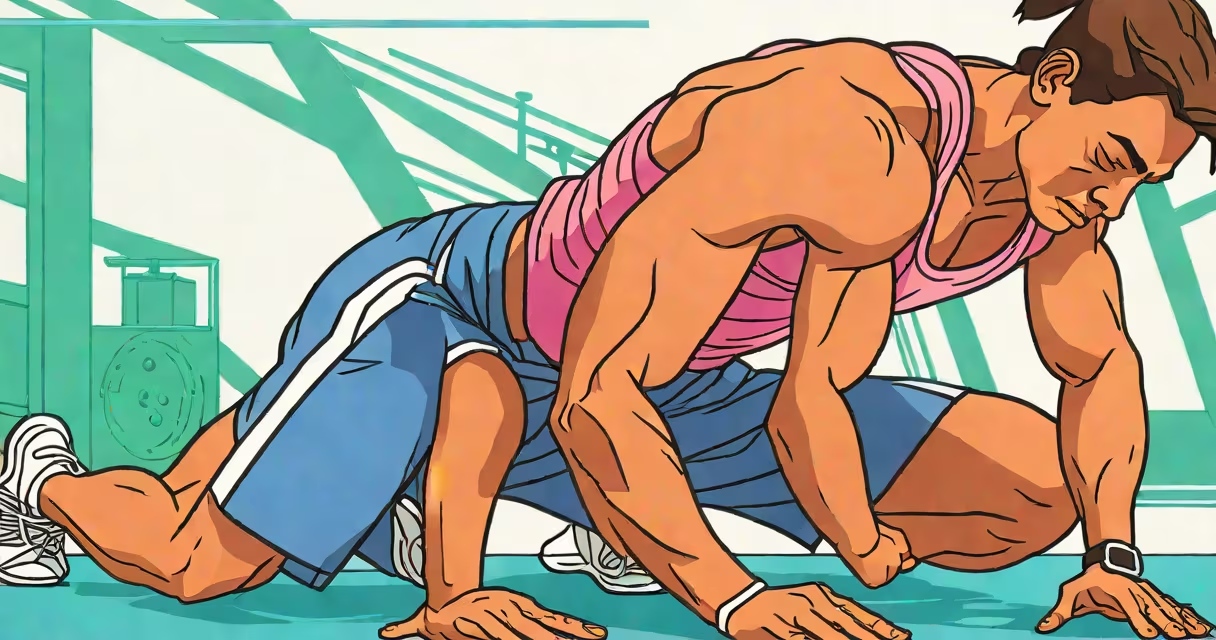
Muscle soreness after a workout, known as delayed onset muscle soreness (DOMS), results from microscopic tears in muscle fibers caused by unfamiliar or intense physical activity. This process triggers inflammation and repair, leading to stiffness and discomfort 12 to 72 hours after exercise.
DOMS typically peaks 24 to 48 hours post-exercise and resolves within 72 hours. It's most common after starting a new routine, increasing intensity, or performing eccentric movements-like lowering weights slowly-where muscles contract under load. The soreness is not due to lactic acid accumulation, which clears from muscles within minutes after stopping exercise.
Research confirms that DOMS correlates with muscle damage markers such as creatine kinase and troponin, not metabolic byproducts. A 2019 study published in Frontiers in Physiology found that eccentric contractions cause more microtears and subsequent soreness than concentric ones, even when total work volume is equal.
When you perform resistance training or high-intensity movement, your muscle fibers undergo mechanical stress. This stress causes tiny ruptures in the sarcomeres-the functional units of muscle tissue. The body responds by sending immune cells to the area to clear debris and initiate repair.
Inflammation increases blood flow and nerve sensitivity, resulting in pain signals being sent to the brain. This is part of the natural healing process. The soreness diminishes as satellite cells activate, fuse with damaged fibers, and rebuild them stronger-a mechanism called muscle hypertrophy.
A 2021 review in Journal of Sports Science & Medicine showed that individuals who performed novel exercises experienced 30-50% greater soreness compared to those doing familiar routines, even when volume was matched. This confirms that novelty and intensity-not duration-are primary drivers of DOMS.
Not all post-workout pain is DOMS. Some discomfort arises from different mechanisms:
| Type | Onset | Duration | Primary Cause |
|---|---|---|---|
| Delayed Onset Muscle Soreness (DOMS) | 12-72 hrs | 3-5 days | Microscopic muscle fiber damage from unaccustomed or eccentric loading |
| Acute Exercise-Induced Pain | During or immediately after | Minutes to hours | Nerve irritation, joint strain, or sudden overload (e.g., lifting too heavy) |
| Overuse or Tendon Strain | Gradual onset | Days to weeks | Repetitive motion, poor form, or insufficient recovery |
DOMS is often confused with acute pain. Acute pain during a set-like a sharp twinge in the lower back-is a red flag. It may indicate improper form, joint misalignment, or early-stage injury. DOMS, by contrast, feels like a dull, deep ache that worsens with movement and eases with light activity.
One widespread myth is that lactic acid causes muscle soreness. Lactate builds up during anaerobic effort but dissipates within 20 minutes after stopping. Its presence is linked to short-term fatigue, not delayed soreness. Studies show lactate levels return to baseline long before DOMS appears.
Another misconception is that soreness equals progress. While mild DOMS can signal adaptation, excessive soreness reduces performance and increases injury risk. A 2020 study in Medicine & Science in Sports & Exercise found that participants who trained through severe soreness had 22% lower strength gains over four weeks compared to those who rested until soreness subsided.
Some people assume soreness means they're "working hard enough." But research shows that moderate intensity with proper progression yields better long-term results than pushing through extreme soreness. Consistent, progressive overload-adding 5-10% weekly-is more effective than chasing DOMS.
Consider a beginner doing their first squat session: 3 sets of 10 reps with bodyweight, focusing on form. The quads and glutes experience eccentric loading during the descent. Microtears occur in Type II muscle fibers, which are more prone to damage.
By the next morning, the person feels tightness. By day two, walking downstairs hurts. The soreness peaks on day three, then fades by day five. This timeline aligns with DOMS patterns. The same individual, after repeating the workout twice weekly for three weeks, reports less soreness-indicating adaptation and improved resilience.
I observed this pattern firsthand while coaching new gym members. One client reported severe leg soreness after week one. After adjusting volume and adding changing warm-ups, his soreness decreased by 60% in six weeks, despite maintaining similar workout intensity.
Soreness is normal. But persistent pain beyond five days, swelling, numbness, or weakness indicates potential injury. If pain worsens with movement rather than improves, stop training and consult a healthcare provider.
Upper abdominal pain post-core work may result from overtraining rectus abdominis or neglecting oblique balance. This guide can help identify form errors and prevent strain.
For deeper insights into muscle recovery processes, see why do muscles hurt.
Understanding why muscles hurt after a workout clarifies that soreness is a sign of adaptation-not failure. Managing intensity, allowing recovery time, and progressing gradually reduce unnecessary discomfort and improve long-term results.