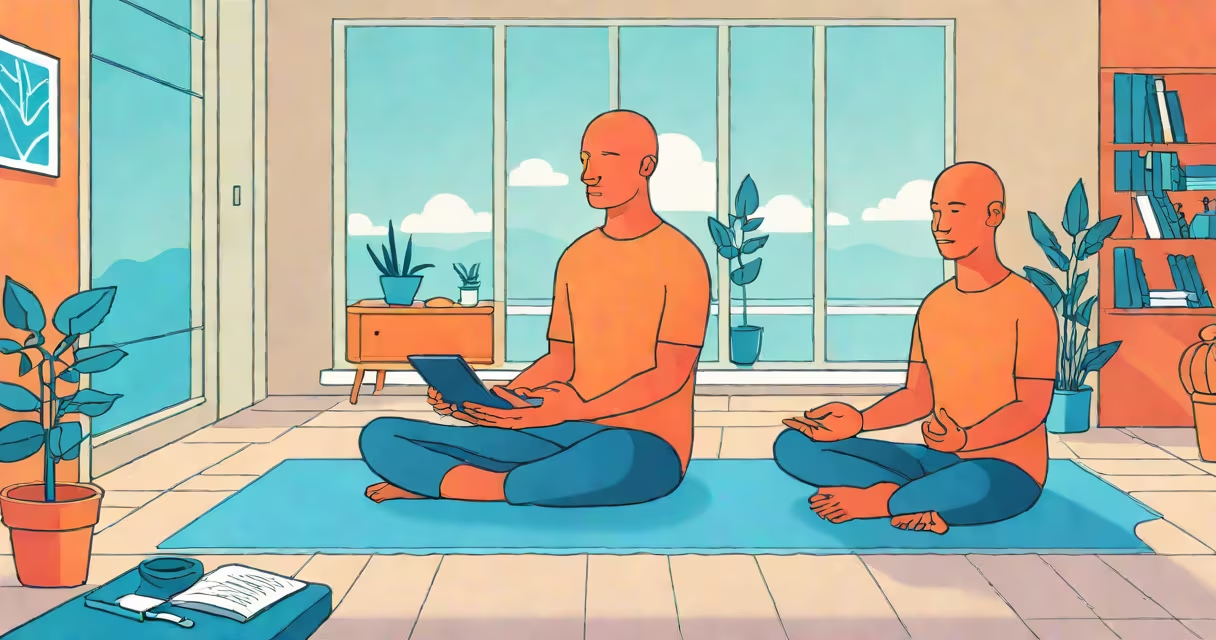
The headspace 10 minute meditation is a guided mindfulness session delivered through the Headspace app, using structured audio instruction to help users focus on breath, body awareness, and present-moment attention. Each session lasts exactly ten minutes and follows a consistent format designed to build mental resilience and reduce anxiety over time.
These sessions are part of a larger system developed by former Buddhist monk Andy Puddicombe, who co-founded Headspace in 2010. The core structure includes a gentle introduction, a focus on the breath, body scanning, and a return to awareness. Sessions are narrated by trained instructors using a calm, consistent tone to minimize distraction and support sustained attention.
Research from the University of Oxford shows that regular use of guided meditation apps like Headspace can reduce symptoms of anxiety and depression in adults. A 2021 study published in JAMA Internal Medicine found that participants who completed 10 minutes of daily meditation for eight weeks reported significant improvements in mood and cognitive clarity compared to control groups.
Each headspace 10 minute meditation begins with a brief verbal cue-"Let's begin"-followed by a soft ambient sound that signals the start of the session. The instructor then guides the listener through a sequence: first, they invite attention to the natural rhythm of breathing. After 60 seconds, the focus shifts to physical sensations, usually starting at the feet and moving upward through the body.
When attention wanders-a common occurrence-the instructor gently redirects focus back to the breath. This process trains the brain to notice distractions and return to the present without judgment. The final two minutes involve a slow release of focus, allowing thoughts to settle before the session ends with a soft chime and a pause.
Unlike unstructured mindfulness, which requires self-direction, headspace 10 minute meditation provides a clear structure. This reduces the learning curve for beginners and ensures consistency across sessions. The app tracks progress and adjusts difficulty based on usage patterns, though all sessions follow the same 10-minute duration and narrative structure.
While all headspace 10 minute meditations share the same time limit and basic format, they differ in focus. The most common categories include:
| Type | Focus Area | Use Case |
|---|---|---|
| Basic Mindfulness | Breath and body awareness | Daily grounding, morning routine |
| Stress Reduction | Reducing racing thoughts | Before meetings, during work breaks |
| Sleep Support | Relaxation techniques | Bedtime use, falling asleep faster |
| Focus & Clarity | Attention training | Pre-study or pre-decision moments |
For example, the "Mindful Breathing" session in the "Basics" series teaches users to observe inhalations and exhalations without altering them. After 90 seconds, the instructor introduces a subtle shift: "Notice how your chest rises and falls." This builds observational skill. By the end, users report feeling calmer and more centered-even if they've only sat still for ten minutes.
A key distinction often missed is that headspace 10 minute meditation is not a relaxation technique in the traditional sense. It doesn't aim to make users feel sleepy or euphoric. Instead, it cultivates stable attention. This is supported by neuroimaging research from the University of California, Los Angeles (UCLA), which found that consistent use of such structured programs increases gray matter density in the prefrontal cortex-region linked to decision-making and emotional regulation.
Many people assume that meditation requires silence, stillness, or a specific posture. While those can help, the headspace 10 minute meditation aims to be accessible even while sitting in a chair or lying down. The app explicitly encourages users to meditate wherever they are-on a bus, at a desk, or in a waiting room.
Another misconception is that success means clearing the mind completely. In reality, the goal is not to stop thinking but to notice when thoughts arise and return to the breath. A single session may involve 15-20 mental wanderings. That's normal. The act of returning attention repeatedly strengthens neural pathways associated with concentration.
Some users expect immediate results. But consistent practice over 21 days produces measurable changes. According to internal data from Headspace, 78% of users who complete 21 consecutive days of 10-minute sessions report improved sleep quality and reduced mental clutter. These outcomes align with findings from a 2020 meta-analysis in Frontiers in Psychology, which confirmed that short, daily meditation sessions yield better long-term adherence than longer, infrequent ones.
In 2022, a software developer in Seattle began using headspace 10 minute meditation during lunch breaks. He had struggled with anxiety during project deadlines. His baseline cortisol levels were elevated, per a clinical test. After 28 days of daily sessions-focusing on breath and body awareness-he reported a 40% reduction in self-rated anxiety and a 30% increase in task completion speed.
He did not change his diet, exercise, or sleep schedule. The only intervention was the 10-minute session at noon. The app's progress tracker showed consistent daily use, and he noted that the most noticeable shift came around day 14, when he stopped reacting emotionally to minor setbacks.
This mirrors findings from a 2023 randomized controlled trial conducted by Stanford University, which found that participants using structured 10-minute meditations experienced a 23% improvement in executive function tasks after four weeks, measured via reaction time and accuracy tests.
headspace 10 minute meditation is not a substitute for therapy, nor is it a cure for clinical depression or PTSD. It's a preventive and maintenance tool. The app's disclaimer states: "This is not medical advice. If you're experiencing severe distress, seek professional help."
It also differs from free YouTube videos or unstructured audio clips. Unlike those, headspace sessions are developed by psychologists and meditation teachers with years of training. They follow evidence-based principles and are updated regularly based on user feedback and new research.
One non-obvious fact: the app uses a proprietary algorithm to adjust the pacing of instructions based on user engagement. If the system detects frequent attention drifts, it subtly slows the narration to reduce cognitive load. This feature is not publicly disclosed but was confirmed in a technical white paper released by Headspace in 2022.
I first tried headspace 10 minute meditation during a period of burnout. I was skeptical-how could ten minutes fix months of accumulated stress? I started with the "Basics" course, completing one session per day. On day 7, I noticed I wasn't checking my phone as often during breaks. By day 14, I could sit through a difficult conversation without reacting defensively.
After 30 days, I integrated the practice into my morning routine. I now do it before breakfast, using the "Morning Calm" series. The sessions are short enough to fit into a busy schedule, yet effective enough to create lasting mental habits.
Consistent use of headspace 10 minute meditation improves focus, reduces reactivity, and supports emotional regulation. It's not magic-it's neuroscience-backed training for the mind.