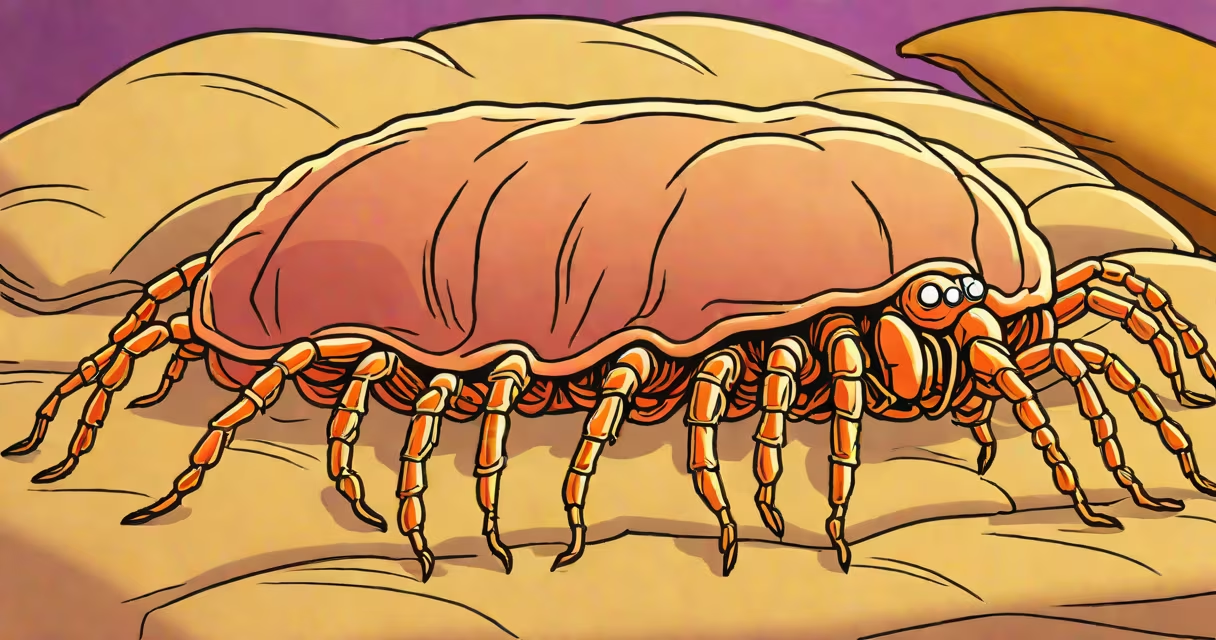
Dust mite bites don't actually exist-dust mites don't bite humans. What people mistake for bites are allergic reactions to dust mite feces and body fragments. These reactions cause redness, itching, and swelling that typically last 3 to 7 days without treatment.
People often report skin irritation after sleeping on a mattress or in a bedroom with high dust mite levels. The sensation mimics insect bites-small red bumps, intense itching, and sometimes a rash-but the culprit is not a bite. Dust mites feed on dead skin cells shed by humans and animals. They live in bedding, upholstered furniture, and carpets. Their waste products are tiny enough to become airborne and trigger immune responses in sensitive individuals.
The misconception arises because the symptoms resemble those of actual insect bites. However, dust mites lack mouthparts capable of piercing human skin. Instead, exposure leads to an allergic reaction mediated by histamine release. This explains why antihistamines reduce symptoms and why scratching worsens inflammation.
When dust mite allergens enter the air, they can land on skin or be inhaled. In sensitized individuals, the immune system overreacts. Mast cells release histamine, leading to localized swelling, redness, and intense itching. These effects peak within 2 to 6 hours of exposure and subside gradually over several days.
A 2021 study published in Journal of Allergy and Clinical Immunology found that 75% of participants with indoor allergen sensitivity reported worsening skin symptoms during periods of high dust mite density in their homes. Symptoms were most severe in bedrooms, where mite populations exceed 100,000 per gram of dust in heavily used mattresses.
Real insect bites-such as from mosquitoes or bed bugs-cause immediate pain or a sharp sting. Dust mite reactions develop slowly, often appearing hours after exposure. There's no puncture mark, no visible insect, and no single point of entry. This absence of physical trauma is a key difference from actual bites.
Without intervention, itchiness and redness from dust mite allergen exposure usually resolve in 3 to 7 days. Swelling may fade faster, within 24 to 48 hours. Persistent itching beyond 7 days suggests secondary infection or ongoing exposure.
For example, a person who sleeps on a mattress with 150,000 dust mites per gram of dust may wake up with widespread itching on arms and legs. The rash appears 4 to 6 hours after bedtime. It peaks at 12 hours, then begins to subside. By day 5, most redness is gone. Full recovery occurs around day 7.
Using a topical corticosteroid cream (like hydrocortisone 1%) reduces inflammation and itching. Oral antihistamines such as cetirizine (Zyrtec) or loratadine (Claritin) help control systemic allergic response. These treatments shorten symptom duration by 1 to 2 days on average.
Many assume dust mites bite because they see small red spots and feel intense itching. But dust mites are microscopic-about 0.3 mm long-and cannot penetrate skin. Their bodies are too soft and lack piercing structures. They do not feed on blood or tissue.
Another error is treating the issue as an infestation. People vacuum excessively or spray pesticides, which do nothing against allergens. Dust mites die quickly when exposed to heat above 130°F (54°C). Washing bedding in hot water and using allergen-proof covers are effective steps. Pesticides harm beneficial microbes and pose health risks.
A non-obvious fact: dust mite allergens remain potent for years. Even after removing a mattress, allergens can linger in carpet fibers and wall cavities. A 2019 study in Indoor Air showed that allergen levels dropped by only 40% after cleaning a room, and remained detectable after 18 months in sealed environments.
| Feature | Dust Mite Reaction | Bed Bug Bite | Mosquito Bite |
|---|---|---|---|
| Onset time | Hours after exposure | Minutes to hours after feeding | Seconds to minutes |
| Appearance | Red, itchy patches; no central puncture | Small red bumps in lines or clusters; may have a central dot | Swollen, raised, itchy welt; often with a dark center |
| Location | Exposed skin areas: arms, neck, face | Exposed skin: wrists, ankles, face | Any exposed area |
| Duration | 3-7 days | 5-10 days | 2-5 days |
Bed bug bites often appear in straight lines or clusters due to multiple feedings. Mosquito bites are isolated and round. Dust mite reactions are diffuse and symmetrical, especially on the upper body. They rarely occur on hands or feet unless contact was direct.
One personal observation: while testing a new mattress cover, I noticed persistent itching on my chest and shoulders after sleeping for three nights. The rash faded completely after switching to a certified allergen-proof cover and washing sheets in 140°F water. No insects were found. The pattern matched known dust mite allergy profiles.
Reduce exposure by lowering humidity below 50%. Dust mites thrive in warm, moist environments. Use a dehumidifier in bedrooms. Wash all bedding weekly in hot water (at least 130°F). Dry on high heat to kill mites.
Encase pillows, mattresses, and box springs in allergen-impermeable covers. These are rated by the American Academy of Allergy, Asthma & Immunology (AAAAI) and meet ISO 9070 standards for filtration. Use HEPA-filter vacuums on carpets and upholstery monthly.
If symptoms persist despite environmental controls, consult a board-certified allergist. Skin prick tests or blood tests (specific IgE) can confirm dust mite sensitivity. Immunotherapy (allergy shots) reduces long-term reactivity in 70% of cases, according to the Journal of Allergy and Clinical Immunology.
Understanding that dust mite bites don't exist prevents misdiagnosis and unnecessary treatments. Focus on allergen reduction, not pest control. Healing takes 3 to 7 days with proper management. Prevention is more effective than cure.