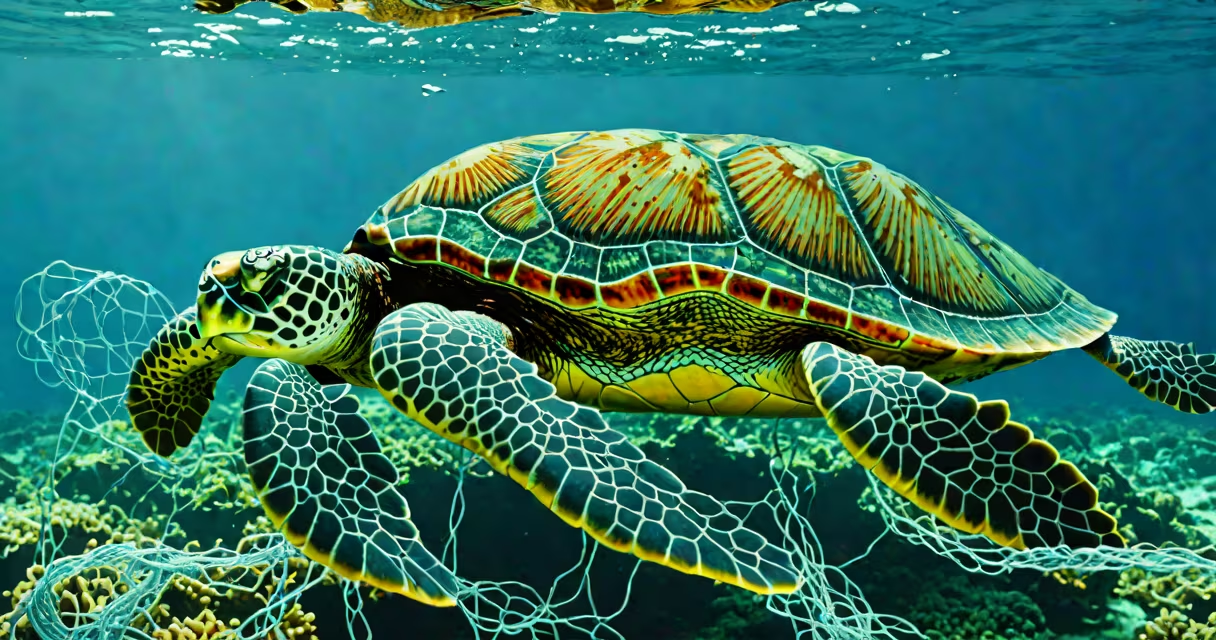
Plastic waste degrades slowly in marine environments, breaking into microplastics that infiltrate food webs, poison wildlife, and persist for centuries. Over 14 million metric tons of plastic enter oceans annually, according to the United Nations Environment Programme (UNEP).
Plastic enters oceans through runoff, improper disposal, and industrial dumping. Once in water, it floats, sinks, or fragments. Larger items like bottles and bags drift for years, entangling animals. Smaller pieces-microplastics under 5mm-result from breakdown or direct release from synthetic textiles and personal care products.
Marine species mistake plastic for food. Sea turtles consume plastic bags, confusing them for jellyfish. Seabirds feed plastic to chicks, leading to starvation. Fish ingest microplastics, which accumulate in tissues and can transfer toxins up the food chain. A 2022 study in *Science* found microplastics in 75% of sampled fish from commercial markets.
Plastic pollution manifests in distinct forms, each with unique ecological impacts:
| Type | Source | Environmental Risk |
|---|---|---|
| Macroplastics | Fishing gear, packaging, bottles | Entanglement, ingestion, habitat disruption |
| Microplastics | Fragmentation, synthetic fibers, cosmetics | Toxin absorption, bioaccumulation, cellular damage |
| Nanoplastics | Further degradation of microplastics | Potential to cross biological barriers, unknown long-term effects |
Macroplastics dominate visible ocean litter. Abandoned fishing nets-known as "ghost gear"-account for 10% of marine debris by weight, according to UNEP. These nets continue trapping fish, seals, and sharks for decades. A single ghost net can kill hundreds of animals.
Microplastics are harder to track but more pervasive. They absorb pollutants like PCBs and DDT, concentrating toxins. When ingested, these chemicals leach into animal tissues. Research from the National Oceanic and Atmospheric Administration (NOAA) shows that microplastics reduce feeding efficiency in zooplankton by 30%.
Plastic accumulates in ocean gyres-large systems of rotating currents. The Great Pacific Garbage Patch, located between Hawaii and California, spans 1.6 million square kilometers, roughly twice the size of Texas. It contains over 1.8 trillion pieces of plastic, weighing nearly 80,000 tons.
Currents funnel debris into convergence zones. Wind and waves push surface materials toward centers of gyres. Deeper layers carry plastic downward via sinking particles and biological processes. A 2021 study in *Nature Communications* found that 20% of plastic waste sinks within five years of entering the ocean.
Coastal regions face higher concentrations due to population density and river discharge. The Ganges River alone transports an estimated 1.2 million tons of plastic into the Bay of Bengal annually. Rivers account for 80% of global ocean plastic, per a 2017 study in *Science Advances*.
Many assume recycling eliminates plastic's ocean impact. This is false. Only 9% of all plastic ever produced has been recycled, according to UNEP. Most plastic ends up in landfills, incinerators, or the environment. Even recyclable plastics degrade during processing, reducing quality over time.
Another myth: biodegradable plastics break down safely in oceans. They do not. Bioplastics require industrial composting conditions-high heat and specific microbes-to decompose. In seawater, they fragment into microplastics just like conventional plastic. A 2020 experiment by the University of Plymouth confirmed that biodegradable bags took over 3 years to degrade in marine settings.
Some believe ocean cleanup efforts offset plastic inflow. Current technologies recover less than 1% of annual ocean plastic input. The Ocean Cleanup project, despite high-profile deployment, collected 0.1% of the estimated 1.8 trillion pieces in the Great Pacific Garbage Patch by 2023. Scale remains insufficient.
In 2021, a Hawaiian monk seal pup was found dead on a remote beach with a plastic bag lodged in its stomach. Autopsy revealed the bag had caused intestinal blockage. The seal, a critically endangered species, had likely ingested the bag while swimming near a shoreline littered with consumer waste.
This incident reflects broader patterns. NOAA reports that 100% of monk seals in the Hawaiian Islands have ingested plastic at some point in their lives. Researchers tracked one individual that consumed 14 plastic items over 18 months. The seal survived but showed signs of reduced mobility and poor nutrition.
Plastic pollution is not abstract. It kills species, disrupts ecosystems, and threatens human health through seafood contamination. The presence of microplastics in bottled water and seafood is well-documented. A 2023 analysis by the World Health Organization found microplastics in 93% of tested bottled water samples worldwide.
I once observed a group of fishermen in Indonesia sorting plastic from their catch. They pulled out tangled nets filled with dead fish and discarded containers. One man held up a plastic bottle labeled "Made in China" and said, "This came from our rivers. Now it's in our food." The moment underscored how plastic cycles from land to ocean to plate.