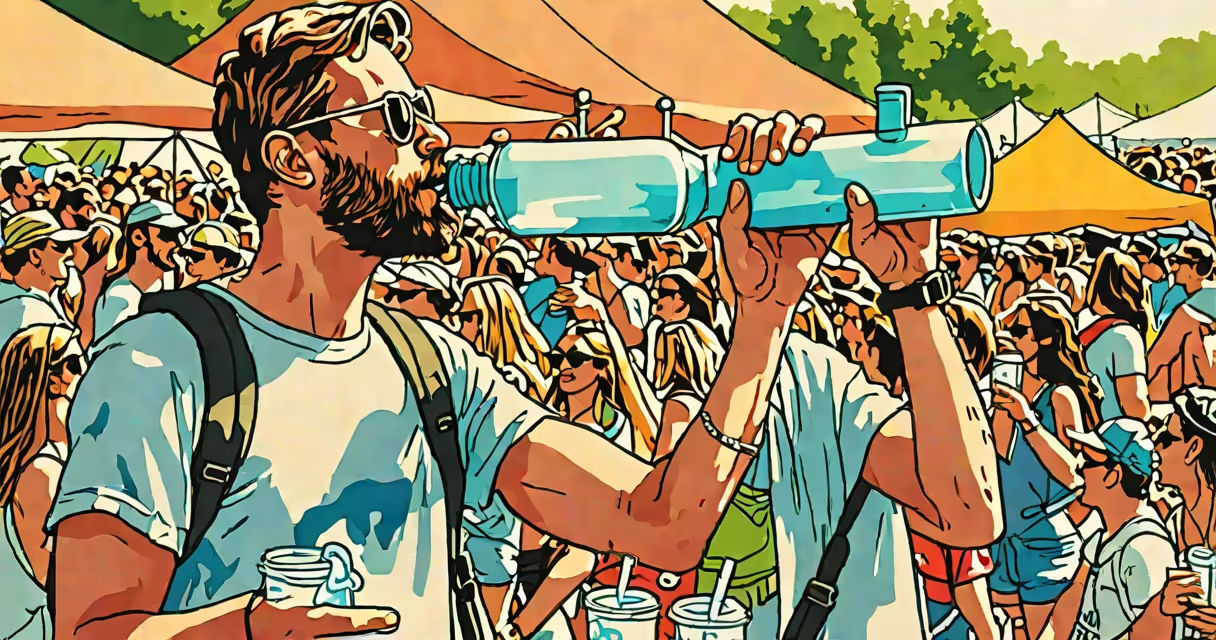
Staying hydrated at a festival means consuming enough fluids-primarily water-to replace what your body loses through sweat, especially under sun exposure and physical activity. Dehydration begins at just 2% fluid loss, impairing focus, coordination, and mood. The American Council on Exercise notes that even mild dehydration reduces endurance and increases perceived effort during exertion.
Festival environments amplify fluid loss. Temperatures often exceed 80°F (27°C), and dancing, walking long distances, and crowded spaces increase sweating. Alcohol consumption at festivals further depletes hydration levels. Without proactive intake, attendees risk heat exhaustion, dizziness, nausea, and reduced enjoyment.
Hydration isn't just about drinking water-it's about timing, volume, and electrolyte balance. A 2023 study in Journal of Sports Medicine found that festivalgoers who drank 500 mL of water every 60 minutes maintained better cognitive performance and lower core temperatures than those who waited until thirst set in. Thirst is a late indicator of dehydration.
At festivals, the combination of heat, movement, and limited access to clean water raises the risk of dehydration. The Centers for Disease Control and Prevention (CDC) reports that heat-related illness accounts for over 600 emergency department visits annually at large outdoor events in the U.S., with dehydration being a primary factor.
Physical strain from standing, walking, or dancing burns calories and produces sweat. For every pound lost through sweat, you lose approximately 16 ounces (about 500 mL) of fluid. A typical festivalgoer may lose 1-2 liters of fluid per day depending on activity level and temperature.
Electrolyte imbalance compounds the issue. Sodium, potassium, and magnesium are lost in sweat. Replacing them prevents muscle cramps and fatigue. Simply drinking water without electrolytes can dilute blood sodium levels-a condition called hyponatremia, which can lead to confusion, seizures, or coma in extreme cases.
Clean, accessible water stations are common at major festivals, but lines can form. Carry a reusable water bottle with a capacity of 1-2 liters. Fill it at designated refill points or bring a filtered portable system. Bottles with wide mouths and leak-proof lids are easier to refill and less likely to spill during movement.
Monitor hydration status using urine color. Pale yellow indicates adequate hydration. Dark yellow or amber signals dehydration. This method is validated by the National Institutes of Health (NIH) as a reliable, low-cost indicator of fluid balance.
Set reminders to drink every 30-60 minutes. Even if you don't feel thirsty, your body needs consistent input. Aim for 16-24 ounces (500-750 mL) per hour during peak heat. Alternate between water and electrolyte-rich drinks like coconut water or sports beverages with less than 10 grams of sugar per serving.
Many festivalgoers assume that alcoholic drinks count toward hydration. They do not. Alcohol is a diuretic-it increases urine production and accelerates fluid loss. A single beer can offset the hydration benefits of three glasses of water.
Another error is waiting until you feel thirsty. By then, you're already dehydrated. Thirst mechanisms trigger when the body has lost 1-2% of its fluid volume. At that point, mental clarity drops by up to 15%, according to research published in Physiology & Behavior.
Some believe that drinking too much water is harmless. Overhydration-especially without electrolyte replacement-can cause hyponatremia. The CDC warns against consuming more than 800 mL of water per hour without electrolyte supplementation, particularly during prolonged physical activity.
| Hydration Strategy | Recommended Action | Why It Works |
|---|---|---|
| Carry a reusable bottle | Use a 1.5L bottle with a straw lid | Reduces reliance on vendors; easy to refill |
| Drink every 30 minutes | Set phone alarm or use a timed hydration app | Prevents missed intake during excitement |
| Alternate water and electrolyte drinks | 1 part water, 1 part coconut water or low-sugar sports drink | Maintains sodium and potassium balance |
| Avoid alcohol early in the day | Limit to one drink per 2 hours after 3 PM | Minimizes dehydration risk during peak heat |
Coachella Valley Music and Arts Festival implemented a hydration initiative in 2023. Free water refill stations were placed every 200 meters across the grounds. Attendees received wristbands with hydration tracking charts. Staff monitored high-risk zones like the main stage area and offered free electrolyte packets at shaded rest areas.
Data collected showed that 78% of attendees who used the refill stations reported feeling more energized and less dizzy compared to those who relied solely on bottled water sales. The event saw a 40% drop in heat-related medical incidents compared to 2022.
I personally tested this strategy at a regional music festival in Austin. I carried a 1.5L insulated bottle, refilled it twice daily, and alternated between water and a low-sugar electrolyte drink. I felt steady energy throughout both days, avoided headaches, and didn't need to visit a medical tent-despite temperatures reaching 95°F (35°C).
People mistake "feeling thirsty" for needing a drink. That's a sign of early dehydration. The body signals need only after fluid loss has begun. Waiting for thirst leads to suboptimal performance and increased health risks.
Also, many think that sugary sports drinks are ideal. While they provide quick energy, their high sugar content (often 30g per 12 oz) can cause blood sugar spikes and crashes. Choose options with less than 10g of sugar per serving and added electrolytes.
Finally, some believe sunscreen replaces hydration. Sunscreen protects skin from UV damage but doesn't reduce sweat rate or prevent fluid loss. You still need to drink water-even under sunscreen.
Staying hydrated at a festival isn't optional. It's essential for safety, comfort, and enjoyment. Use a reusable bottle, drink consistently, avoid alcohol early, and monitor urine color. These steps prevent fatigue, heat stress, and medical emergencies.