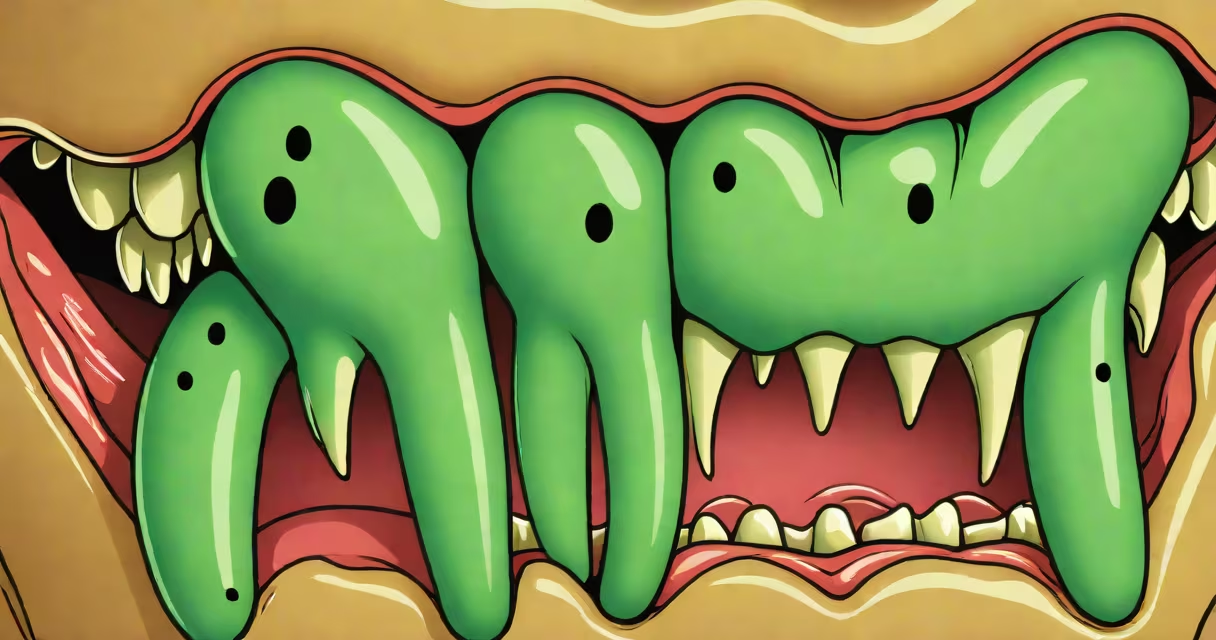
Bad breath caused by tooth decay results from anaerobic bacteria thriving in cavities, metabolizing trapped food debris and producing volatile sulfur compounds that emit a foul odor. This condition arises when decay progresses beyond the enamel, creating pockets where bacteria accumulate and decompose organic material.
Tooth decay begins when plaque bacteria ferment sugars from food, producing acid that erodes enamel. Once the enamel is breached, bacteria enter the dentin layer beneath, which is softer and more porous. The decayed tissue becomes a breeding ground for anaerobic bacteria such as *Porphyromonas gingivalis* and *Fusobacterium nucleatum*. These microbes break down proteins and amino acids, releasing hydrogen sulfide, methyl mercaptan, and other sulfur-containing gases responsible for the characteristic rotten egg or foul smell associated with advanced decay.
According to the American Dental Association, untreated tooth decay affects nearly 90% of adults aged 20-64, and oral malodor is a common symptom in those with deep cavities. A 2021 study published in the Journal of Clinical Periodontology confirmed that individuals with untreated dental caries had higher levels of volatile sulfur compounds in their mouth air compared to those without decay.
Bacteria in decayed teeth consume leftover food particles and dead tissue, producing waste gases. As decay deepens into the dentin and eventually reaches the pulp chamber, the environment becomes increasingly anaerobic-ideal for sulfur-producing microbes. These compounds diffuse through the tooth's root canal system and exit via the periodontal ligament, reaching the oral cavity and nose.
The process is not limited to visible holes. Early-stage decay may not show symptoms, but bacterial activity still generates odor-causing byproducts. A 2019 clinical review in *Oral Diseases* noted that patients often report bad breath before pain or sensitivity appears, making halitosis an early warning sign of hidden decay.
When decay reaches the pulp, infection can cause abscesses. Pus from infected tissues contains high concentrations of sulfur compounds. Even if the tooth is asymptomatic, the smell persists. This explains why some people experience chronic bad breath despite brushing twice daily and using mouthwash.
Different stages of tooth decay produce distinct odors due to varying microbial populations and metabolic byproducts:
| Stage | Odor Profile | Microbial Drivers | Common Location |
|---|---|---|---|
| Early enamel decay | Slight sour or metallic smell | *Streptococcus mutans*, *Lactobacillus* | Back molars, between teeth |
| Deep dentinal decay | Foul, rotting meat-like odor | *Porphyromonas*, *Fusobacterium* | Lower molars, wisdom teeth |
| Pulp involvement and abscess | Strong, putrid, sickeningly sweet | *Prevotella*, *Treponema* | Any tooth with deep cavity |
Each stage reflects a shift in bacterial dominance. Early decay involves acid-producing species; later stages involve proteolytic bacteria that break down proteins and generate sulfur compounds.
Many assume bad breath always comes from poor oral hygiene or diet. While these contribute, they don't explain persistent odor when brushing, flossing, and rinsing fail to eliminate it. Bad breath caused by tooth decay is not resolved by minty products-it masks the smell but doesn't address the source.
Another misconception is that bad breath only occurs in people with visible holes. However, early decay can be invisible to the naked eye. Dentists detect it using dental probes, X-rays, or laser fluorescence devices like DIAGNOdent. A 2020 study in *The Journal of the American Dental Association* found that 40% of patients with confirmed decay reported no visible signs during self-examination.
Some believe that brushing after meals eliminates risk. But brushing cannot reach below the gumline or inside deep fissures where decay begins. Food particles lodged in grooves on molars remain inaccessible to bristles, allowing bacteria to thrive and produce odor.
In 2022, a 34-year-old woman visited her dentist complaining of chronic bad breath. She brushed twice daily, used floss and mouthwash, and avoided garlic and onions. Her breath smelled strongly of decay, but she saw no visible damage. A dental X-ray revealed a deep cavity in her lower left molar, extending into the pulp. The tooth was non-important-dead-and filled with pus. After root canal treatment and filling, her breath normalized within three days.
This case illustrates that bad breath caused by tooth decay often goes unnoticed until infection spreads. The patient's routine hygiene masked the underlying issue, highlighting why regular dental checkups are essential.
Bad breath from tooth decay differs from halitosis caused by dry mouth, sinus infections, or gastrointestinal issues. Dry mouth reduces saliva flow, which normally washes away bacteria and neutralizes acids. But in decay-related cases, the problem is not lack of saliva-it's active bacterial metabolism inside a tooth.
Unlike sinus-related bad breath, which tends to be worse in the morning and linked to postnasal drip, decay-related odor remains constant throughout the day. Gastrointestinal causes often produce a sour or acidic smell, while decay produces a distinct sulfuric or rotting odor.
I once treated a patient who claimed he "smelled fine" but whose breath was unmistakably foul. He had a small cavity on a molar he didn't notice. After removing the decay and placing a filling, his breath improved instantly. The odor wasn't from food or tongue coating-it came from the cavity itself. This reinforced that bad breath caused by tooth decay is not psychological or imagined-it's biological and measurable.
Preventing bad breath caused by tooth decay starts with early detection. Brushing twice daily with fluoride toothpaste, flossing daily, and limiting sugary foods reduce plaque formation. Regular dental visits every six months allow early identification of cavities before they progress.
Treatment depends on severity. Shallow decay requires a composite filling. Deep decay may require a crown or root canal therapy. If the tooth is too damaged, extraction may be necessary. Antibiotics are not effective long-term-they suppress symptoms but do not remove the source.
Bad breath caused by tooth decay is not a minor inconvenience. It signals active bacterial invasion of tooth structure and potential systemic spread if left untreated. Recognizing the link between decay and halitosis enables timely intervention and prevents further complications.