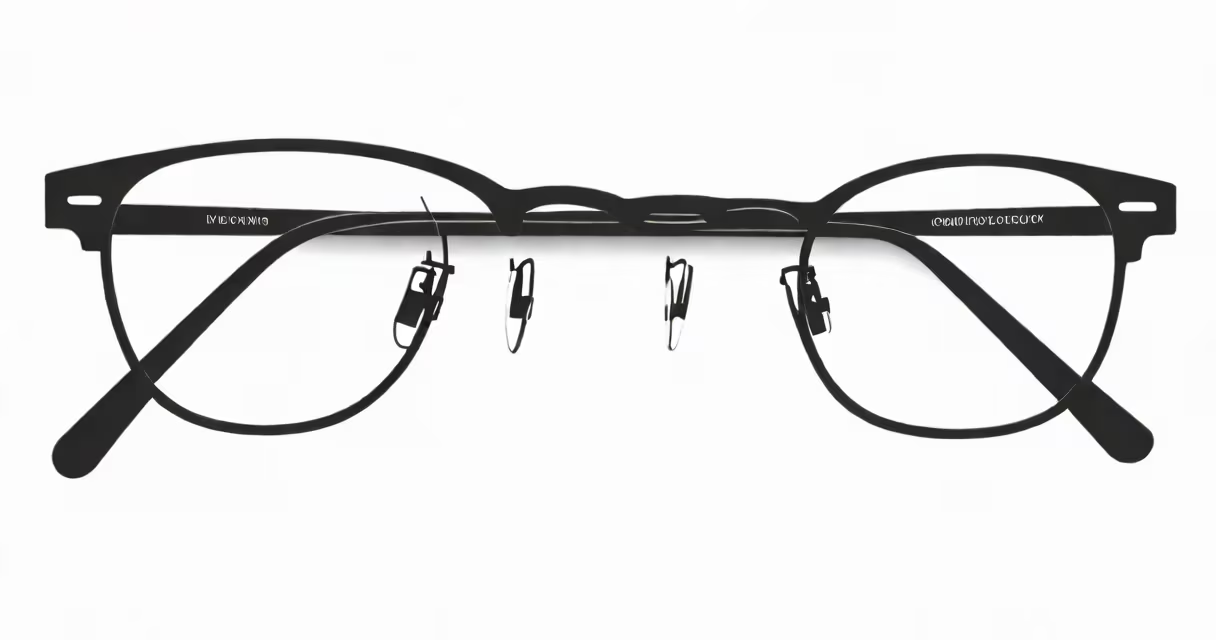
Single vision refers to a lens design in eyeglasses that corrects vision for one distance only-either near, intermediate, or far. These lenses have a uniform optical power across their entire surface, making them ideal for people who need correction for one specific purpose, such as reading or driving.
Unlike multifocal lenses, which contain multiple zones for different distances, single vision lenses provide consistent clarity in one plane. They're the most common type of corrective lens prescribed worldwide, used by approximately 65% of adults with refractive errors, according to the American Optometric Association.
For example, someone with myopia (nearsightedness) may wear single vision lenses set to focus distant objects. The lens bends light so images form directly on the retina, eliminating blur at distance. This is achieved through precise measurements taken during an eye exam.
These lenses work by adjusting the path of incoming light so it lands precisely on the retina. The degree of adjustment depends on the strength of the prescription, measured in diopters. A negative number (e.g., -2.00 D) indicates nearsightedness, while a positive number (e.g., +1.50 D) indicates farsightedness.
The lens material-typically plastic or polycarbonate-is shaped to match the required curvature. Thicker lenses are needed for stronger prescriptions, especially in high minus or plus values. Modern lens coatings reduce glare and improve durability, enhancing visual comfort.
A patient with a prescription of -3.00 D in both eyes would require a single vision lens that diverges light slightly before it enters the eye. Without this correction, distant objects appear blurred. With the lens, the image focuses correctly on the retina, restoring clear vision.
There are two primary categories based on intended use:
| Use Case | Prescription Type | Common For | Typical Lens Power Range |
|---|---|---|---|
| Distance Vision | Negative (myopia) | Driving, watching TV, seeing the board | -0.50 D to -10.00 D |
| Near Vision | Positive (hyperopia) | Reading, using a computer, sewing | +0.50 D to +6.00 D |
Some patients with astigmatism-where the cornea is irregularly curved-also receive single vision lenses with cylindrical correction. This adjusts for uneven light refraction across the eye's surface. A prescription like -2.00 -1.00 × 180 includes both spherical and cylindrical components to correct both myopia and astigmatism in one lens.
People who wear single vision lenses often choose them because they offer simplicity and clarity. There's no learning curve, no visual distortion between zones, and no risk of bumping into objects due to misjudging depth-a common issue with bifocals.
Many assume single vision lenses are only for young adults or those with mild vision problems. That's incorrect. People over 50 with stable prescriptions still benefit from single vision lenses, especially if they don't need reading support.
Another misconception is that single vision lenses are less advanced than progressive or bifocal lenses. In reality, they're simpler and more effective for focused tasks. Progressives offer multiple corrections in one lens but introduce visual distortions at the edges. Single vision lenses avoid this entirely.
A key distinction: single vision lenses do not correct for both near and far simultaneously. If someone needs to see at multiple distances-such as switching between screen work and street signs-they'll need separate pairs or multifocal lenses. This is why many professionals switch glasses depending on the task.
For example, a teacher might wear single vision lenses for distance viewing during class, then switch to reading glasses for grading papers. This avoids eye strain caused by trying to focus through a lens designed for only one purpose.
Consider Sarah, a 42-year-old graphic designer with -2.50 D in both eyes. She wears single vision lenses for her daily work, which involves long hours on a computer and frequent video calls. Her lenses allow her to see screens without squinting or experiencing headaches.
She doesn't need reading glasses yet because she hasn't developed presbyopia-the natural loss of near focusing ability that occurs around age 40. When she does, she can either add a new pair of single vision lenses for near tasks or consider progressive lenses. But for now, single vision suits her perfectly.
Her optometrist confirmed her prescription during a routine exam. The test included a phoropter, a device that allows quick changes in lens power to find the clearest vision. After testing, Sarah was given a lens with a precise curvature matched to her eye's refractive error.
As people age, the eye's lens loses flexibility. This condition, called presbyopia, makes it hard to focus on close objects. By age 45, about 80% of adults develop some degree of presbyopia, requiring additional correction for near tasks.
At that point, single vision lenses for near vision become necessary. But wearing them for distance leads to blurry vision. The solution is either two pairs of glasses-one for distance, one for near-or multifocal lenses like bifocals or progressives.
For individuals with astigmatism, single vision lenses can still be effective. However, they must be properly aligned. A misaligned cylinder axis can cause double vision or eye fatigue. An optician uses a tool called a lens clock to verify the lens's curvature and orientation during fitting.
One non-obvious fact: single vision lenses can be customized for blue light filtering. While not medically necessary, some patients report reduced eye strain during screen use. These filters are applied as thin coatings on the lens surface, not part of the optical power.
Single vision means one focal point in your glasses lens-correcting vision for a single distance. It's the most widely prescribed lens type because it delivers accurate, consistent clarity without complexity. Whether for distance, near, or astigmatism correction, single vision lenses are tailored to individual eye needs.
If you're unsure whether single vision is right for you, consult an optometrist. They'll perform a refraction test to determine your exact prescription. Understanding your lens type ensures better visual comfort and reduces eye strain over time.