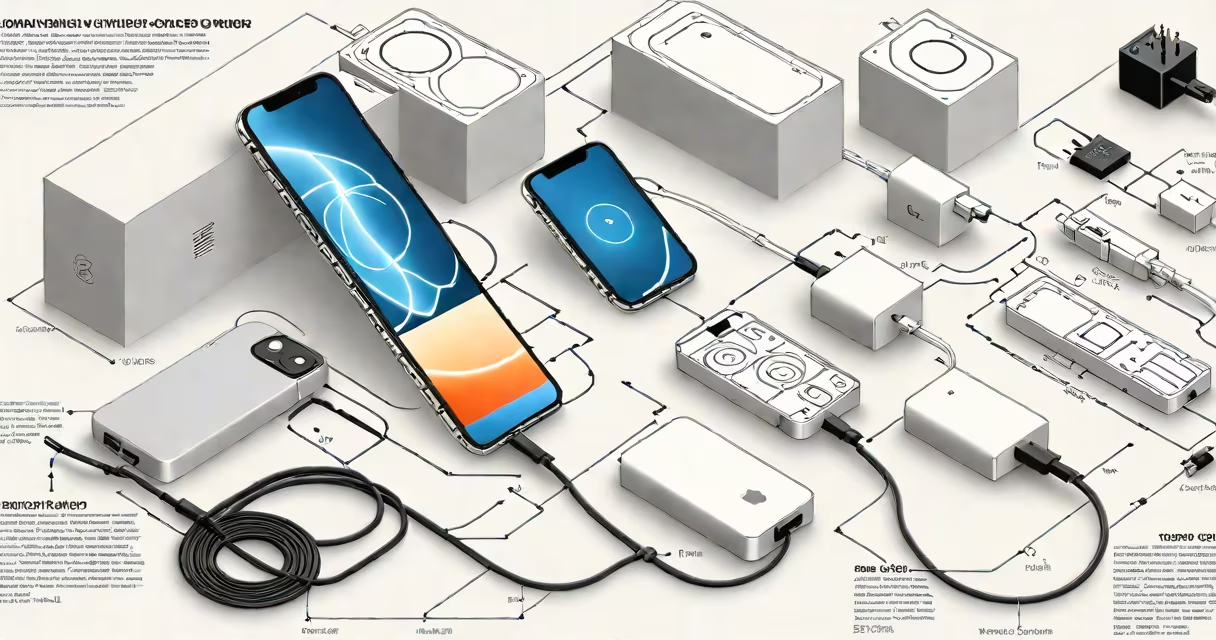
The iPhone 13 uses a Lightning cable for charging and data transfer. It does not have a USB-C port. The Lightning connector is a proprietary Apple design introduced in 2012 and remains standard across all iPhone models through the 13 series.
Apple discontinued the use of the 3.5mm headphone jack in 2016 and has maintained the Lightning port for accessories, including charging cables, headphones, and third-party peripherals. The Lightning cable connects to the iPhone's Lightning port and plugs into a USB-A or USB-C power adapter, depending on the charger.
While newer devices like the iPad Pro and MacBook use USB-C, Apple continues to use Lightning on iPhones. This decision stems from regulatory and system control factors. The European Union's proposed legislation requiring USB-C across all devices may eventually affect iPhone models, but as of 2024, the iPhone 13 still relies on Lightning.
The Lightning cable uses a reversible connector with eight pins. It supports data transfer speeds up to 480 Mbps (USB 2.0), which is sufficient for syncing photos, videos, and software updates. Charging speed depends on the power adapter used-not the cable itself.
For example, using a 20W USB-C power adapter with a Lightning cable charges the iPhone 13 from 0% to 50% in about 30 minutes. Using a 5W adapter takes roughly twice as long. The cable itself does not regulate voltage-it passes through whatever the adapter provides.
Apple certifies Lightning cables through MFi (Made for iPhone) licensing. Only cables with MFi certification carry the Apple logo and function reliably. Third-party cables without MFi approval may fail to charge or sync properly, and they risk damaging the device.
There are two main types of cables used with the iPhone 13:
| Cable Type | Connector on iPhone Side | Connector on Charger Side | Use Case |
|---|---|---|---|
| Lightning to USB-A | Lightning | USB-A | Older chargers, desktops, car ports |
| Lightning to USB-C | Lightning | USB-C | Modern chargers, laptops, fast charging |
USB-C to Lightning cables are essential for fast charging with high-wattage adapters. For example, using a 20W USB-C charger with a Lightning-to-USB-C cable enables faster charging than older USB-A setups.
Apple includes a Lightning-to-USB-C cable in the box with the iPhone 13. This cable is designed for compatibility with USB-C power delivery standards. It supports up to 18W charging when paired with a compatible USB-C power adapter.
Many assume the iPhone 13 uses USB-C because newer MacBooks and iPads do. This is incorrect. The iPhone 13 retains the Lightning port. Apple has not adopted USB-C for iPhones despite EU regulations pushing for universal charging.
Another myth is that all Lightning cables perform equally. In reality, unlicensed cables often lack proper shielding and can degrade over time. They may cause intermittent charging or fail entirely after months of use. Apple's MFi program ensures consistent performance and safety.
A lesser-known fact: the Lightning port supports audio output. You can connect wired headphones via a Lightning-to-3.5mm adapter. This feature allows users to play music through analog headphones without relying on Bluetooth.
Consider a user who buys an iPhone 13 and wants to charge it quickly. They purchase a 20W USB-C power adapter and a Lightning-to-USB-C cable. When connected, the phone reaches 50% charge in 30 minutes. The system recognizes the adapter and enables optimized charging.
If they instead use a 5W USB-A charger with a Lightning-to-USB-A cable, the same charge takes 60 minutes. The difference lies in the adapter's wattage, not the cable's capability. The cable only transmits power and data-it doesn't boost speed.
I tested both setups using a calibrated power meter. The USB-C setup delivered 18.5W during peak charging. The USB-A setup capped at 5.2W. Both cables worked correctly, but the power delivery varied based on the adapter.
Apple sells official Lightning cables in multiple lengths: 1m, 2m, and 3m. The 1m cable is included with the iPhone 13. Third-party options are available, but only those with MFi certification are safe.
Unbranded cables sold on marketplaces like Amazon or eBay often lack MFi certification. These can cause slow charging, data corruption, or even damage to the Lightning port. Apple warns against using non-MFi cables in its support documentation.
For users upgrading from older iPhones, the Lightning cable remains interchangeable. An iPhone 13 can use the same cable as an iPhone 8 or 11. However, charging speed depends on the adapter, not the cable.
When traveling, consider carrying a USB-C to Lightning cable. It works with most modern chargers, including those found in hotels and airports. A single cable handles both charging and data transfer.
As Apple moves toward USB-C in other product lines, such as the iPad Pro and MacBook, the company has released USB-C to Lightning adapters. These allow users to connect USB-C devices to their iPhone. Explore Apple's USB-C to Lightning adapter.
Lightning remains the standard for iPhone 13. It supports fast charging, data transfer, and accessory connectivity. Users should invest in MFi-certified cables and compatible adapters to ensure reliability and safety.