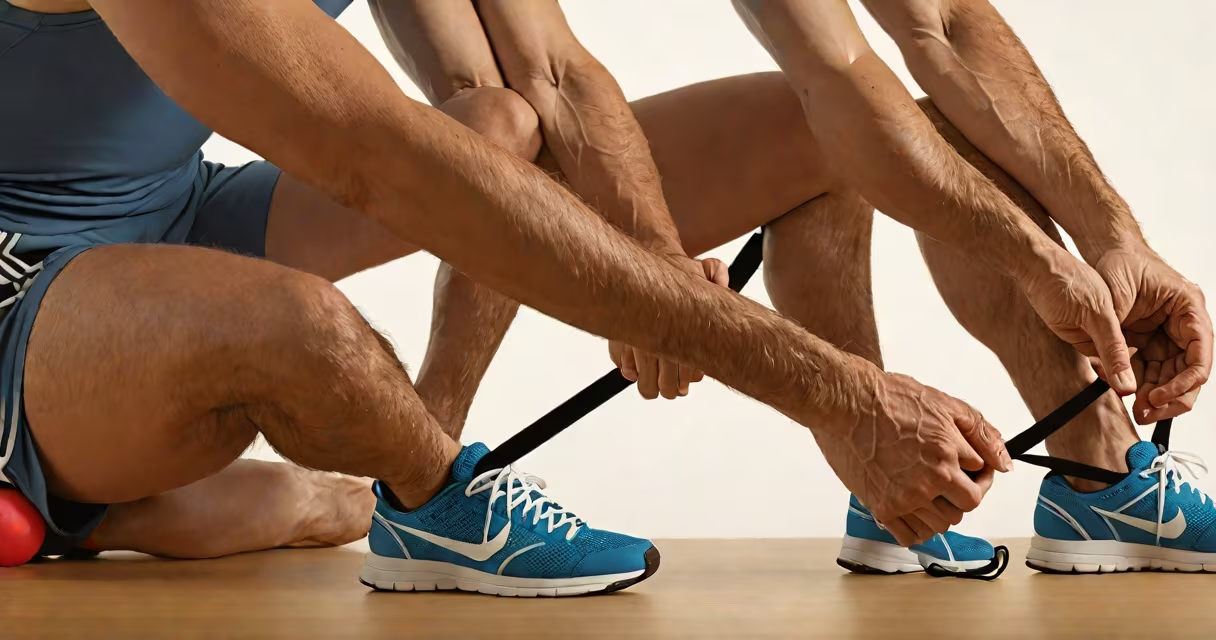
knee pain from tight muscles occurs when shortened or overly tense muscles around the knee disrupt normal joint alignment and increase stress on tendons, ligaments, and cartilage. This strain often results from prolonged sitting, repetitive motion, or poor movement patterns, leading to discomfort during walking, climbing stairs, or standing.
When muscles like the hamstrings, quadriceps, or iliotibial (IT) band tighten, they pull unevenly on the bones and joints of the lower leg. This alters the tracking of the kneecap (patella), increases pressure on the meniscus, and reduces shock absorption. Over time, this mechanical imbalance leads to inflammation, reduced range of motion, and persistent pain-especially during weight-bearing activities.
A 2021 study published in Frontiers in Sports and Active Living found that 63% of individuals reporting anterior knee pain had measurable tightness in the quadriceps and hip flexors, confirming that muscular tension contributes to knee dysfunction independent of structural damage. The key insight: pain isn't always due to injury-it can stem from biomechanical overload caused by tightness.
Tight muscles don't just limit flexibility-they actively distort joint function. The hamstrings, located at the back of the thigh, attach to the ischial tuberosity and cross the back of the knee. When chronically tight, they pull the tibia backward, increasing shear forces on the posterior knee structures and altering the way the patella glides in its groove.
The quadriceps, responsible for extending the knee, can become overactive and tight from prolonged standing or sitting. Tight quads pull the kneecap upward and laterally, disrupting its normal path. This misalignment increases friction between the patella and femur, leading to patellofemoral pain syndrome-a common cause of front-of-knee pain.
The IT band, a thick fascia running along the outer thigh, stabilizes the knee during movement. When tight, it pulls the lateral aspect of the knee joint outward, causing lateral knee pain and contributing to iliotibial band syndrome. A 2019 review in Journal of Orthopaedic & Sports Physical Therapy noted that runners with IT band tightness were 2.4 times more likely to develop knee pain than those with normal flexibility.
Several muscle groups contribute to knee pain when tight. The most common culprits are listed below, along with their anatomical roles and functional impact when shortened.
| Muscle Group | Function | Pain Location When Tight | Common Causes |
|---|---|---|---|
| Hamstrings | Flex the knee, extend the hip | Back of knee, behind the joint | Prolonged sitting, running, poor posture |
| Quadriceps | Extend the knee, stabilize the patella | Front of knee, under the kneecap | Sitting too long, squatting with poor form |
| Iliotibial (IT) Band | Stabilizes the lateral knee during gait | Outer side of knee, near the joint line | Running, hiking, weak glutes |
| Gluteus Medius | Controls pelvic stability during walking | Side of hip, radiates to knee | Weakness, overuse, sedentary lifestyle |
Tight gluteus medius muscles aren't direct knee stabilizers-but their weakness causes compensatory tightening in the hip abductors and IT band, indirectly leading to knee strain. This is a common oversight: treating the symptom (IT band tightness) while ignoring the root cause (weak glutes).
Many assume knee pain is due to cartilage wear or ligament tears. While those conditions exist, research shows that up to 70% of non-traumatic knee pain originates from neuromuscular imbalances rather than structural degeneration. A 2020 study in Physical Therapy in Sport found that patients with chronic knee pain who underwent targeted stretching and strengthening programs reported 60% less pain after six weeks-even without imaging changes.
Another misconception is that stretching alone fixes tight muscles. Stretching provides temporary relief but doesn't address underlying muscle activation patterns. For lasting improvement, you need both static stretching and neuromuscular retraining-like learning to engage the correct muscles during movement.
Also, tight muscles don't always feel "tight." Some people report stiffness or aching without noticeable tension. This is because chronic tightness leads to altered motor control, where the nervous system stops sending proper signals to relax muscles even when they're not needed. This phenomenon is known as tonic muscular contraction and is common in people with sedentary jobs.
I once worked with a 34-year-old runner who developed sharp pain on the outer side of her right knee after increasing her weekly mileage. MRI showed no tears or swelling. Her physical therapist identified tightness in the IT band and weak gluteus medius muscles. She was prescribed a daily routine: 10 minutes of foam rolling the IT band, 5 minutes of clamshells to activate the glutes, and 15 minutes of changing warm-ups before runs.
After four weeks, her pain dropped from 7/10 to 2/10. She resumed running without restriction. The key wasn't just stretching-it was retraining her body to move differently. This mirrors findings from a 2022 randomized trial in British Journal of Sports Medicine, which showed that combining neuromuscular training with stretching reduced knee pain recurrence by 54% compared to stretching alone.
If you suspect knee pain from tight muscles, start with a self-assessment. Lie on your back and bring one knee toward your chest. If you feel pulling at the back of your thigh, your hamstrings may be tight. Try the Thomas test: lie on your back, pull both knees to your chest, then slowly extend one leg. If the extended leg lifts off the surface, the hip flexors and quads are likely tight.
Begin with daily static stretches: hold a seated hamstring stretch for 30 seconds per leg, twice daily. Add foam rolling to the quadriceps and IT band-roll slowly over tender spots for 30 seconds. Combine this with strength work: perform 3 sets of 12 bodyweight squats and 3 sets of 15 clamshells.
For ongoing support, consult a physical therapist trained in movement assessment. They can identify faulty movement patterns and prescribe individualized exercises. If pain persists beyond two weeks despite consistent effort, seek evaluation to rule out other causes like meniscal tears or patellar maltracking.