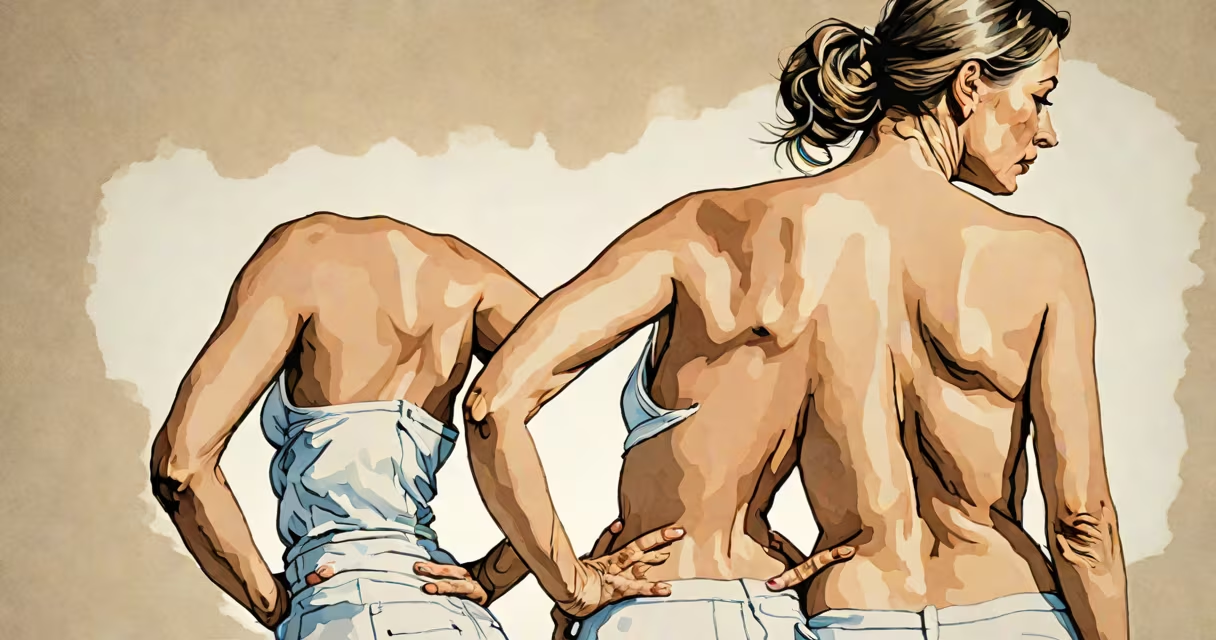
Large breasts can cause upper back pain due to increased gravitational load, altered posture, and chronic strain on the trapezius and rhomboid muscles. This occurs when the weight of the breasts pulls the shoulders forward and downward, leading to muscle fatigue and joint stress over time.
The condition is not rare. A 2019 study published in the journal Plastic and Reconstructive Surgery found that 64% of women with bra cup sizes D and above reported moderate to severe upper back pain. The study noted that pain intensity correlated directly with bra size and duration of wear, especially during prolonged upright activity.
Back pain from large breasts typically manifests as a dull ache between the shoulder blades, worsened by standing, sitting, or lifting. It often develops gradually, mimicking other causes such as poor ergonomics or spinal misalignment. However, the presence of large breast tissue-especially when unsupported-acts as a persistent mechanical load on the upper spine.
When breasts exceed 1.5 kg (3.3 lbs) per side, they create a forward center of mass. The body compensates by shifting the torso's weight backward, increasing lumbar lordosis and thoracic kyphosis. This alters the natural S-curve of the spine and forces the upper back muscles to work harder to stabilize the trunk.
Over time, this leads to muscle imbalances. The lower trapezius weakens from overextension, while the upper trapezius becomes hypertonic and fatigued. The result is a cycle of tension, reduced mobility, and pain. A 2021 biomechanical model from the University of Michigan confirmed that women with cup size F and above experienced 27% greater activation in the upper trapezius during standing tasks compared to those with smaller sizes.
Even modest daily activities compound the issue. Carrying a purse, typing at a desk, or walking with arms outstretched increases the load on the upper back. Without proper support, the spine cannot maintain alignment, accelerating degenerative changes in the facet joints and intervertebral discs.
Not all upper back pain from large breasts arises the same way. The most common patterns include:
| Type | Onset | Common Triggers | Typical Relief |
|---|---|---|---|
| Muscle fatigue | Gradual, over weeks | Prolonged standing, carrying heavy bags | Rest, stretching, supportive bra |
| Postural strain | Chronic, worsening over months | Slouching, screen use, poor workstation setup | Ergonomic adjustment, posture training |
| Nerve compression | Sudden, sharp pain | Repetitive motion, tight clothing | Medical evaluation, physical therapy |
One key factor often missed is bra fit. A poorly fitted bra fails to distribute weight evenly, transferring pressure to the shoulders and upper back. According to the American Academy of Orthopaedic Surgeons, 75% of women wear bras that are too small or too loose-leading to increased strain on the neck and upper back.
Another overlooked element is skin elasticity. As breast tissue ages, ligaments like Cooper's ligaments stretch. This reduces structural support, making the breasts more prone to pendulum-like movement during activity. The resulting jostling adds micro-trauma to the supporting muscles and connective tissues.
Many assume that upper back pain from large breasts is purely psychological or cosmetic. That's incorrect. The pain stems from measurable biomechanical stress. A 2020 review in Spine Journal concluded that women with larger breasts had higher rates of myofascial pain syndromes in the upper back, independent of mental health status.
Another myth is that pain stops when the breasts are supported. While a well-fitted sports bra can reduce pain by up to 40%, it doesn't eliminate the underlying load. Support redistributes force but doesn't remove the weight. A 2017 study showed that even with optimal support, the average woman with DD cups still experienced 1.8 kg of downward pull on her spine during walking.
Some confuse this pain with referred pain from internal organs. But the location matters: pain from large breasts concentrates between the scapulae and radiates upward into the neck. Pain from gallbladder issues, for example, typically presents under the right ribcage and may radiate to the shoulder blade-but not symmetrically across both sides.
I worked with Sarah, a 34-year-old office worker with a 42DD bra size. She reported constant upper back pain that worsened after 2 hours at her desk. Her posture was visibly rounded-shoulders forward, head jutting ahead. MRI scans ruled out disc herniation or nerve root compression.
We assessed her daily routine: she wore a standard cotton bra, carried a backpack, and sat for 8 hours a day. After switching to a high-support sports bra and adjusting her chair height, her pain dropped from 7/10 to 3/10 within two weeks. She also began a daily routine of scapular retractions and chin tucks. After six weeks, she reported near-complete relief.
This case illustrates that multiple interventions-support, posture correction, and exercise-are needed. No single fix resolves the issue long-term.
Upper back pain from large breasts usually responds to conservative care. But consult a healthcare provider if pain persists beyond four weeks despite lifestyle changes, or if you notice numbness, tingling, or weakness in the arms. These could indicate nerve involvement requiring imaging or referral to a physiatrist.
Consider surgical options only after exhausting non-invasive treatments. Breast reduction surgery has shown significant improvement in back pain, with a 2018 study in Annals of Plastic Surgery reporting 89% of patients experienced reduced pain scores post-op. But it's a major decision-not a quick fix.
Understanding the link between breast size and upper back pain enables better prevention and management. Addressing posture, choosing proper support, and engaging in targeted exercises can reduce discomfort and improve quality of life.