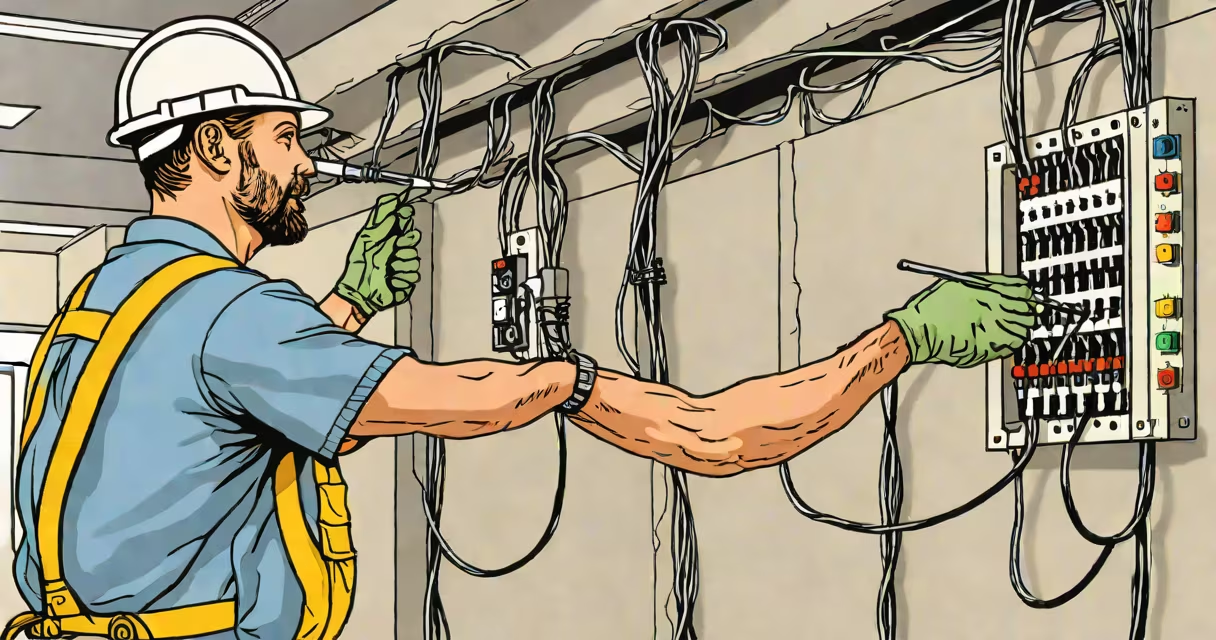
Low voltage wiring contractors specialize in installing, maintaining, and troubleshooting electrical systems that operate below 50 volts, including network cabling, security systems, audiovisual setups, and access control devices. These professionals ensure reliable communication and safety infrastructure in homes, offices, schools, and retail spaces.
These contractors work with signals rather than power. While traditional electricians handle high-voltage circuits for lighting and appliances, low voltage wiring contractors manage data, video, and control signals. Their installations support modern digital infrastructure-such as internet connectivity, surveillance, door entry systems, and smart home automation-without carrying enough current to pose a shock hazard.
They follow national standards set by the National Electrical Code (NEC) and industry guidelines from organizations like the Telecommunications Industry Association (TIA). For example, TIA-568-C.2 defines cabling requirements for structured cabling systems used in office networks. Contractors must also comply with local building codes and obtain permits where required.
Low voltage systems transmit data or control signals using small electrical currents. These signals travel through shielded twisted-pair cables like Cat6 or fiber optic lines. The low energy prevents harm during normal operation but still allows precise transmission of digital information over long distances.
A typical setup includes a central distribution point-often a patch panel or network switch-where cables from various locations converge. From there, signals route to endpoints such as IP cameras, VoIP phones, or thermostats. Proper termination, labeling, and testing ensure minimal interference and maximum uptime.
For example, a new office building may require 48 Ethernet ports distributed across 12 rooms. A low voltage wiring contractor installs Cat6 cables from each room to a centralized telecommunications closet, terminates them on a patch panel, and verifies connectivity with a cable tester. This process ensures every workstation receives stable gigabit-speed internet.
Contractors handle multiple categories of low voltage systems. Each requires specific training, tools, and certification. Common types include:
| System Type | Function | Typical Application | Standard Reference |
|---|---|---|---|
| Structured Cabling | Transmits data and voice signals | Office networks, server rooms | TIA-568-C.2 |
| Security & Surveillance | Monitors premises via cameras and sensors | Stores, warehouses, gated communities | NFPA 72 (Fire Alarm Code) |
| Audio/Visual (AV) | Delivers sound and video signals | Conference rooms, classrooms, theaters | ANSI/ITSDF 1000.1 |
| Access Control | Manages entry via card readers or biometrics | Corporate campuses, apartment complexes | UL 294 (Security Equipment Standard) |
Each system demands different expertise. Installing a PoE (Power over Ethernet) camera network requires understanding both data flow and safe power delivery within the cable. A contractor certified in BICSI's RCDD (Registered Communications Distribution Designer) credential is trained to design such complex layouts.
Commercial buildings rely heavily on low voltage wiring contractors to support daily operations. A hospital uses them to connect patient monitoring systems, nurse call stations, and emergency alert networks. A university campus depends on them for Wi-Fi coverage, classroom AV systems, and library security cameras.
Residential applications are growing too. Homeowners increasingly install whole-house audio, smart lighting, thermostat controls, and outdoor surveillance. A single-family home with five zones of lighting control and four security cameras may require 200 feet of Cat6 cable run through walls and attics-tasks best handled by experienced contractors.
One project I oversaw involved retrofitting a 1970s office building with modern network infrastructure. Original wiring was outdated, with unshielded cables running alongside HVAC ducts. We replaced all horizontal cabling with shielded Cat6A, installed new patch panels, and tested each connection. After completion, network speeds improved from 10 Mbps to 1 Gbps across the floor-directly impacting employee productivity.
Many people assume low voltage wiring is simpler or less regulated than high-voltage work. That's incorrect. NEC Article 725 governs low voltage systems and includes strict rules about routing, grounding, and separation from power conductors. Running low voltage cables in the same conduit as 120V circuits without proper shielding violates code and risks signal degradation or fire hazards.
Another misconception is that anyone can install a security camera system. While plug-and-play models exist, professional-grade installations require accurate cable runs, correct connector terminations, and compliance with local privacy laws. For instance, placing a camera near a restroom entrance may violate state data protection statutes-even if the system works technically.
Some confuse low voltage wiring with IT services. A network administrator manages software settings and user access. A low voltage wiring contractor handles physical infrastructure-the cables, outlets, and hardware mounts. The two roles are complementary but distinct. You wouldn't hire a plumber to fix your router.
Verify credentials before hiring. Look for licenses issued by your state's electrical board and certifications from recognized bodies like BICSI or NICET. Ask for proof of insurance and references from past projects. A qualified contractor provides detailed documentation, including as-built drawings and test reports.
For structured cabling, check whether they follow TIA-568 standards. For security systems, confirm adherence to NFPA 72. When upgrading an older building, ask if they perform a site survey to assess existing conditions and recommend upgrades based on future needs.
When selecting a provider, prioritize experience over price. A $2,000 job done poorly may cost $10,000 to fix later. A properly terminated Cat6 cable with consistent twist length and shield integrity reduces crosstalk and supports higher bandwidths over time.
Low voltage wiring contractors are essential to modern infrastructure. They build the invisible foundation for communication, safety, and automation in everyday environments. Their work helps networks stay fast, systems remain secure, and buildings function efficiently.