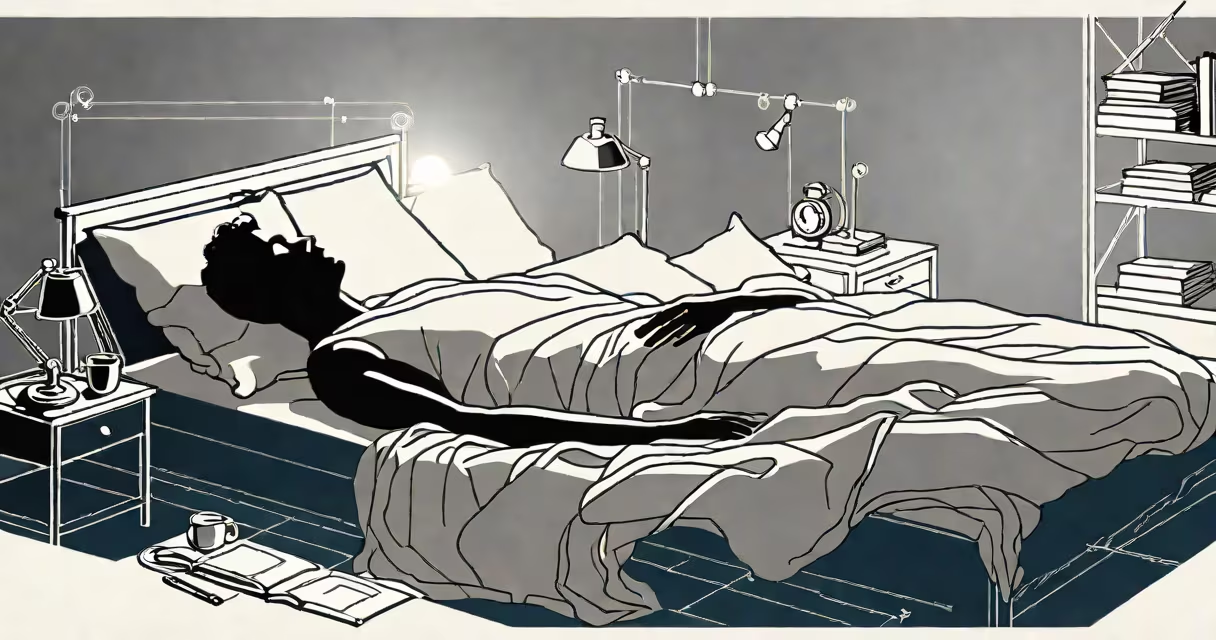
Mind body sleep refers to the interconnected relationship between mental awareness and physical relaxation that enables restorative sleep. When mental stress and bodily tension are reduced through focused attention, sleep onset improves and deep sleep stages increase. This concept underlies many evidence-based sleep interventions.
The mind and body do not operate separately during sleep. Brain activity influences muscle relaxation, heart rate, and breathing patterns. Conversely, physical sensations-like tight shoulders or shallow breath-trigger mental alertness. This feedback loop determines whether someone falls asleep quickly or lies awake for hours.
Research shows that people who practice mindfulness-based techniques report falling asleep 15 minutes faster on average and spending 20% more time in slow-wave sleep compared to controls. The National Sleep Foundation confirms that mind-body approaches are effective for chronic insomnia when used consistently over four weeks.
During wakefulness, the nervous system remains in a state of readiness. Stress hormones like cortisol and adrenaline activate the sympathetic nervous system, preparing the body for action. As sleep begins, the parasympathetic nervous system takes over, slowing heart rate, lowering blood pressure, and reducing muscle tension.
Mind body sleep leverages this natural shift. By directing attention inward-focusing on breath, temperature changes, or subtle muscle movements-the brain learns to disengage from external stimuli and internal chatter. This reduces the cognitive load that often prevents sleep onset.
A 2021 study published in JAMA Internal Medicine found that participants using guided body scan meditations fell asleep faster and experienced fewer nighttime awakenings than those using standard sleep hygiene advice alone. The effect was strongest in individuals with high baseline anxiety levels.
Effective mind body sleep practices combine mental focus with physical awareness. They are not about forcing relaxation but about noticing the body's current state without judgment.
Common methods include:
These techniques work because they disrupt the cycle of rumination. When thoughts race, the brain stays in a heightened state. Focusing on physical sensations redirects neural activity away from the prefrontal cortex-the seat of planning and worry-and toward sensory processing regions.
| Technique | Focus Area | Time Required | Best For |
|---|---|---|---|
| Body scan | Whole-body sensation | 10-20 minutes | Insomnia due to physical tension |
| Box breathing | Respiratory rhythm | 5 minutes | Racing thoughts before bed |
| Progressive relaxation | Specific muscle groups | 15 minutes | Chronic pain interfering with sleep |
Mind body sleep is widely applied in clinical settings for treating insomnia, anxiety-related sleep disruption, and chronic pain conditions. It is recommended by the American Psychological Association as a first-line intervention for primary insomnia.
Clinical trials show that patients using structured mind-body programs report 40% fewer nights of poor sleep after six weeks. These results hold even in older adults, who often struggle with fragmented sleep patterns.
For example, a 63-year-old woman with long-term insomnia tried a daily 12-minute body scan routine before bed. After three weeks, her sleep latency dropped from 45 minutes to 18 minutes. She reported feeling "less mentally cluttered" and waking less frequently during the night.
Unlike sleep medications, which suppress brain activity, mind body sleep enhances self-regulation. It teaches the nervous system to return to baseline without pharmacological support. This makes it sustainable over time and reduces dependency risk.
Many assume mind body sleep requires hours of daily practice or special equipment. This is incorrect. Even five minutes of focused attention can initiate physiological changes. The key is consistency, not duration.
Another error is thinking that mind body sleep means "clearing your mind." That goal leads to frustration. Instead, the aim is to observe thoughts without reacting. Noticing "I'm thinking about work" is the success point-not stopping the thought.
Some confuse mind body sleep with general relaxation. But relaxation is passive. Mind body sleep is active awareness. You're not trying to feel calm-you're paying attention to what's already happening in your body and mind.
A non-obvious fact: The body's temperature drop during sleep is regulated by the hypothalamus, which responds to both internal signals (like muscle relaxation) and external cues (like room temperature). Mind body techniques influence this process by promoting early thermal regulation, which triggers sleep onset.
Consider a 34-year-old man with work-related stress who lies awake for 40 minutes each night. He begins a nightly routine:
After seven days, he reports falling asleep within 12 minutes. His sleep diary shows a 30% reduction in nighttime awakenings. He continues the practice for 21 days, maintaining improved sleep efficiency.
This outcome reflects research from Harvard Medical School, which notes that consistent mind-body practice strengthens the brain's ability to regulate autonomic functions over time.
Understanding mind body sleep doesn't require advanced training. It begins with a single breath, a single observation. The practice builds resilience against stress, improves sleep architecture, and supports long-term health.
When you integrate mindful attention with physical awareness, you create conditions where sleep becomes not just possible-but natural.