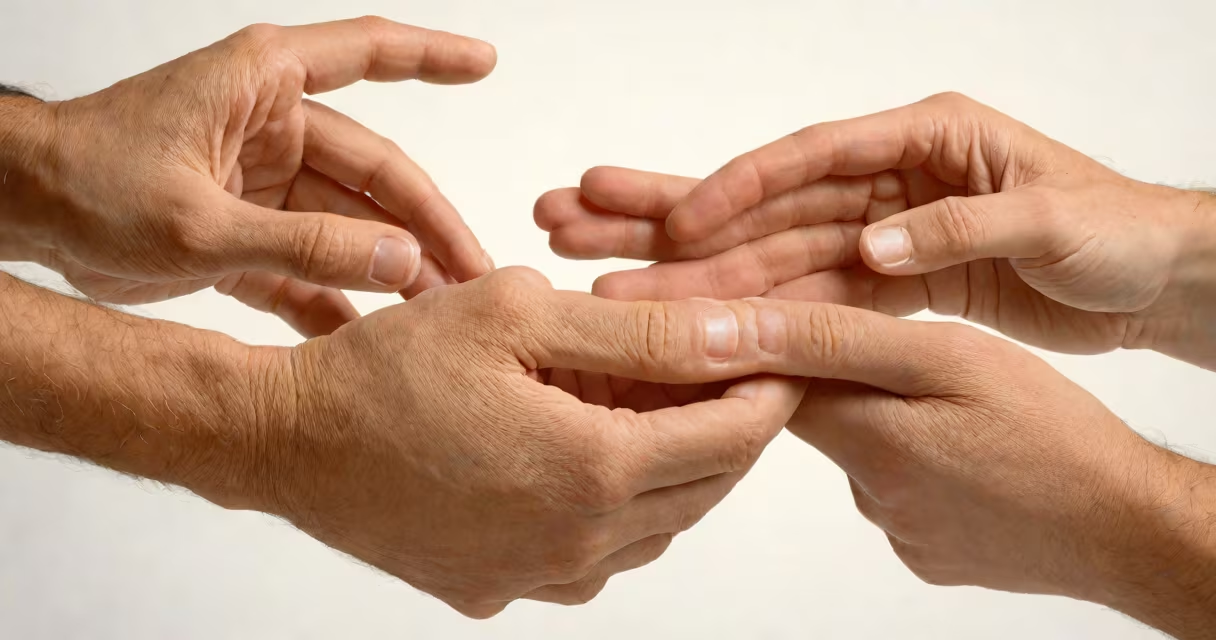
Nonverbal communication meaning refers to the information conveyed through body language, facial expressions, tone of voice, eye contact, posture, and spatial distance-often without words. These signals carry emotional context, intent, and social cues that influence how messages are received.
Humans rely on nonverbal cues more than spoken words to interpret emotions and intentions. A smile, a pause, or crossed arms can communicate confidence, discomfort, or agreement faster than any sentence. This form of expression operates automatically and often unconsciously, shaping interactions in real time.
Research from the University of California, Los Angeles (UCLA) shows that 93% of emotional meaning in face-to-face communication comes from nonverbal signals-55% from facial expressions, 38% from vocal tone, and only 7% from actual words. This underscores how critical nonverbal communication meaning is in personal and professional settings.
Nonverbal communication functions through automatic, subconscious processes. When someone says "I'm fine" while avoiding eye contact and slumping in their chair, the body language contradicts the words. The listener interprets the contradiction based on physical cues, often trusting the nonverbal signal more than the verbal one.
These signals are processed in the brain's limbic system-the region responsible for emotion and instinct. That's why people react emotionally to a raised eyebrow or a sudden shift in posture even before they understand the words being spoken. The response happens before conscious thought.
For example, during a job interview, a candidate who maintains steady eye contact, sits upright, and uses open hand gestures projects confidence. Even if their answers are brief, the interviewer may perceive them as competent due to consistent nonverbal cues. This effect is measurable: a 2018 study published in *Journal of Applied Psychology* found that interviewers rated candidates higher when their nonverbal behavior aligned with positive traits-even when verbal content was neutral.
Nonverbal communication breaks down into several key categories, each contributing distinct layers of meaning:
| Type | Examples | Meaning in Context |
|---|---|---|
| Facial expressions | Smiling, frowning, raised eyebrows | Convey emotion-joy, surprise, disapproval |
| Gestures | Hand waves, pointing, thumbs-up | Emphasize points, indicate direction, show approval |
| Posture and body orientation | Sitting forward, leaning back, turning away | Signal engagement, disinterest, or defensiveness |
| Eye contact | Direct gaze, blinking rate, pupil dilation | Indicates attention, trust, or dominance |
| Tone and pitch | Volume, speed, pauses | Reveal sarcasm, urgency, hesitation |
Some signals are universal. A smile indicates happiness across cultures, according to Paul Ekman's research at the University of California, San Francisco. But others vary widely. In many East Asian cultures, direct eye contact during conversation can be seen as confrontational, whereas in North America and Western Europe, it signals honesty and attentiveness.
A common mistake is assuming all nonverbal cues are intentional. Many are reflexive-like a nervous laugh or a blink during stress. Misreading these as deliberate deception leads to false conclusions. For example, someone who avoids eye contact during a difficult conversation may be anxious, not lying.
Nonverbal communication meaning shapes outcomes in daily life-from dating to boardrooms. In romantic relationships, partners who maintain synchronized body language report higher satisfaction. A 2020 study in *Personal Relationships* journal found that couples who mirrored each other's movements (like nodding in sync or mirroring posture) felt more connected and reported better conflict resolution.
In business, leaders who use open gestures, steady eye contact, and confident posture are perceived as more trustworthy. A 2016 Harvard Business Review analysis showed that executives who displayed high levels of nonverbal congruence-where their words matched their tone and facial expressions-were promoted 30% faster than those whose signals conflicted.
Even in online spaces, nonverbal meaning persists. Emojis, capitalization, and punctuation serve as proxies for tone and emotion. Saying "Got it." with a period feels cold. "Got it!" with an exclamation mark feels enthusiastic. This is digital nonverbal communication-still carrying emotional weight despite lacking physical presence.
People often assume nonverbal communication is always accurate or universally understood. This is false. Cultural differences, individual neurodivergence, and situational context alter interpretation.
For example, a person with autism spectrum disorder may avoid eye contact not out of disrespect, but because sustained gaze causes sensory overload. Assuming the absence of eye contact equals dishonesty misjudges intent. The American Psychological Association notes that neurodiverse individuals often process social cues differently, requiring explicit training to decode nonverbal signals accurately.
Another misconception is that "body language tells the truth." Not always. People can fake smiles, force eye contact, or rehearse gestures. A 2019 study in *Psychological Science* found that trained actors could mimic authentic nonverbal behaviors so convincingly that observers couldn't distinguish them from genuine emotion.
Here's a real-world example: During a team meeting, a manager says, "This project is going well," while looking at their phone and tapping their pen rapidly. The verbal message says positivity, but the nonverbal cues suggest distraction and disengagement. Team members notice the mismatch and feel uncertain about the project's status-despite the positive words.
I once observed a sales pitch where the presenter spoke confidently, used strong gestures, and smiled throughout. But when asked a technical question, their shoulders dropped, their voice lowered, and they stopped making eye contact. The audience didn't hear the hesitation-they saw it. Within seconds, interest waned. The verbal message was clear, but the nonverbal signals revealed doubt. The deal was lost, not because of the answer, but because the delivery contradicted it.
Nonverbal communication meaning is not just about reading others-it's also about managing your own signals. Being aware of how your posture, tone, and facial expressions affect perception allows you to align your nonverbal output with your intended message.
Understanding this helps in interviews, negotiations, and everyday conversations. It's not about performing-it's about authenticity. When your nonverbal cues match your words, trust grows. When they don't, confusion follows.