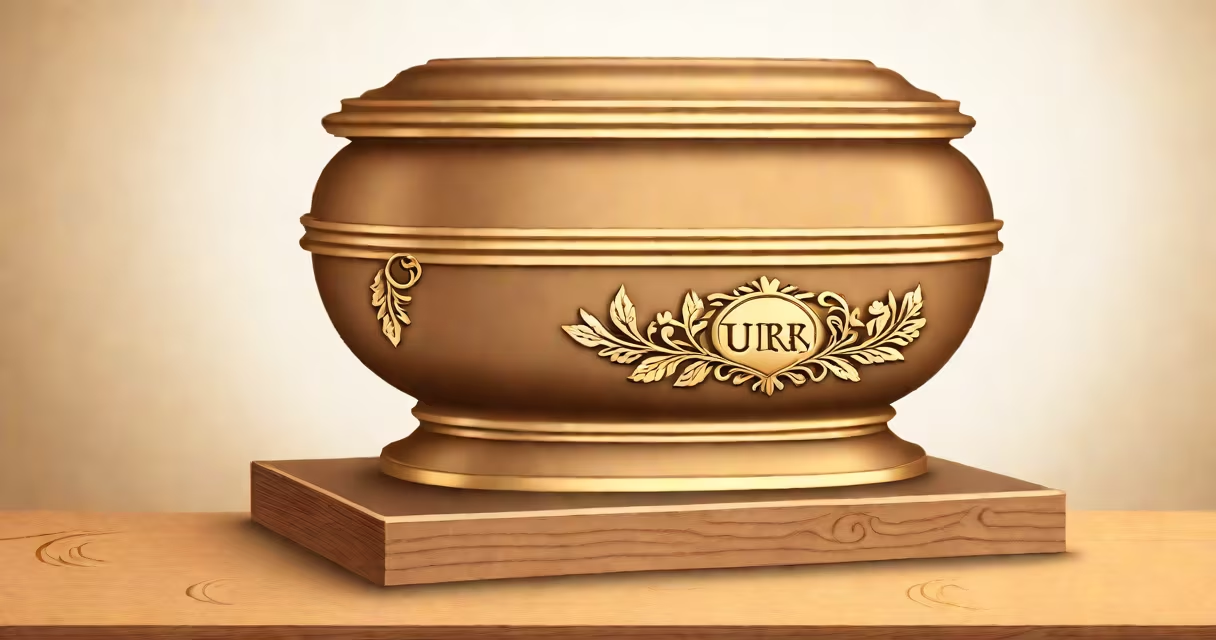
An urn is a vessel designed to hold cremated remains, typically used in funerary practices. It serves both practical and symbolic purposes in mourning rituals across cultures and religions.
Urn meaning extends beyond physical storage. It represents remembrance, continuity, and the transition from life to afterlife. The term "urn" derives from Latin *urna*, meaning "small jar," and was originally used in ancient Rome for voting and storing sacred objects. Today, it's most commonly associated with human remains after cremation.
Modern urns come in materials like metal, wood, ceramic, and biodegradable substances. They vary in size-most standard adult urns hold between 200 and 300 cubic inches of ash-and often feature engravings, inscriptions, or personalized designs. Some are meant for burial, others for display or scattering.
After a person dies, their body may be cremated through high-temperature incineration. The resulting ashes-about 3 to 5 pounds for an average adult-are placed inside an urn. This process ensures dignity, containment, and ease of transport during memorial services.
Funeral homes usually provide basic urns, but families often choose custom ones. A typical selection includes:
For example, a family might select a walnut wood urn with a laser-engraved name and birth/death dates. After the service, they place it in a columbarium niche or bury it in a garden plot. The choice reflects personal values, cultural traditions, and emotional connection.
Different urn types serve distinct purposes based on tradition, environment, and intent. Below is a comparison of common options:
| Type | Material | Best For | Environmental Impact |
|---|---|---|---|
| Standard Metal | Bronze, aluminum | Burial, display, columbarium | Low (recyclable) |
| Wooden | Walnut, oak, pine | Home display, private burial | Moderate (non-recyclable unless treated) |
| Biodegradable | Paper, salt, bamboo | Scattering, natural burial | High (fully decomposes) |
| Keepsake | Glass, ceramic | Family sharing, memorial jewelry | Varies |
Some cultures have specific requirements. In Japan, for instance, families often use ceramic urns in ancestral shrines. In Hinduism, ashes are traditionally scattered in the Ganges River, so a lightweight, water-soluble urn may be preferred. In contrast, Western Christian traditions often favor sealed metal urns for church cemetery plots.
A lesser-known fact: not all urns are meant to be permanent. The U.S. Department of Transportation allows small keepsake urns in carry-on luggage during air travel, but larger ones require special handling. Airlines typically permit urns containing ashes under 300 cubic inches in checked baggage, provided they're properly sealed and declared.
People often confuse an urn with a coffin or a casket. An urn is not used during the funeral itself-it holds remains after cremation. Coffins are for bodies before burial or cremation. Using the wrong term can cause confusion during planning.
Some assume urns must be expensive. While luxury options cost $500+, basic models start at $25. A local funeral home may offer a simple cardboard urn for $10. Prices depend on material, craftsmanship, and brand-not inherent meaning.
I once helped a friend select an urn after her father's cremation. She wanted something meaningful but affordable. We chose a hand-crafted ceramic urn from a local artist. It had a subtle wave pattern-her father loved the ocean-and held exactly 220 cubic inches of ash. We placed it in a garden at a state park where he'd often walked. The simplicity of the design made it feel personal, not ceremonial.
This example shows that what is urn mean depends on context. For her, the urn wasn't just a container-it was a tribute to his love of nature and a place to visit. That emotional weight is part of the deeper meaning behind the object.
What is urn mean varies by culture, belief, and individual memory. It's not just about holding ashes-it's about honoring someone's life, preserving their legacy, and offering comfort to those left behind.