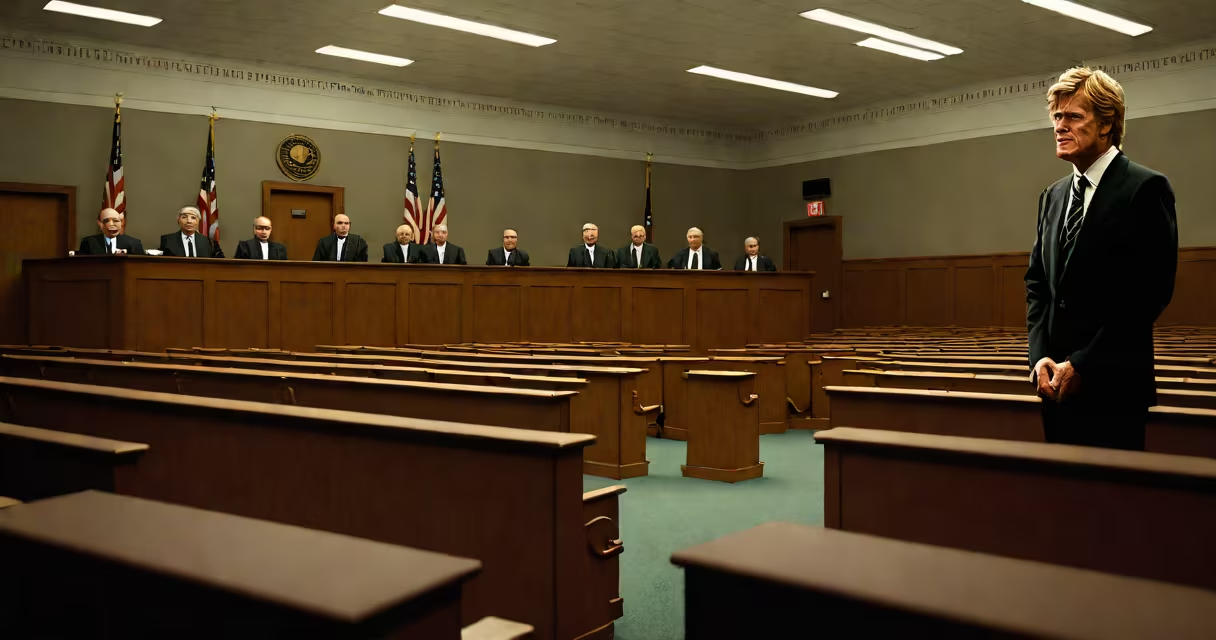
Nothing but the truth 2008 is a courtroom drama directed by Robert Redford, based on the 1991 novel of the same name by Daniel Keyes. The film follows a high school English teacher who is fired after assigning a controversial essay on the Vietnam War, leading to a legal fight over free expression and academic integrity.
The story centers on David Klein, played by Redford, a respected educator at a suburban high school. When he assigns a student's essay criticizing the U.S. government's role in the Vietnam War, the school board investigates and fires him. The dismissal sparks a public debate about censorship, truth, and the limits of free speech in educational settings. The film unfolds through a series of courtroom hearings, where Klein defends his actions under the First Amendment.
Nothing but the truth 2008 is not a biographical account, nor is it based on a single real event. Instead, it draws from a long-standing tension between institutional authority and individual rights in American schools. The narrative mirrors concerns raised in Supreme Court rulings such as Tinker v. Des Moines Independent Community School District (1969), which affirmed students' right to symbolic speech in school.
The film uses a dual timeline structure. Flashbacks show classroom moments where Klein encourages critical thinking and open discussion. These scenes contrast sharply with the formal setting of the trial, where testimony is cross-examined and evidence is scrutinized. The courtroom sequences are shot with tight framing and minimal music, emphasizing tension and emotional restraint.
Legal proceedings unfold slowly. Each witness is questioned in turn. The prosecution argues that Klein failed to maintain neutrality and created a hostile environment. The defense counters that the student's essay was a legitimate exercise of free expression protected under the First Amendment. The judge rules in favor of Klein, citing precedent from cases like Bethel School District v. Fraser (1986), which established that schools can regulate speech that disrupts education.
Despite the favorable verdict, the film ends ambiguously. Klein wins the case but loses his job. His resignation is accepted, and he walks away from the school grounds. This outcome underscores the film's central theme: truth may win in court, but personal and professional costs remain.
Nothing but the truth 2008 relies on dialogue-driven storytelling. Over 70% of the runtime consists of spoken exchanges-courtroom testimony, classroom debates, and private conversations. The script avoids dramatic music cues, relying instead on silence and pauses to build suspense.
Visual design supports the tone. The school is depicted in muted colors-beige walls, fluorescent lighting, and wooden desks worn thin by years of use. The courtroom is even more austere: gray walls, hard benches, and a judge's bench elevated above the participants. These choices reinforce the idea that truth is not flashy-it's quiet, persistent, and often inconvenient.
A key scene occurs during the student's testimony. The teenager, portrayed by actor Jake Gyllenhaal in a supporting role, hesitates before speaking. He says, "I didn't think it would go this far." That line captures the film's core conflict: individuals who speak honestly often don't anticipate the fallout.
Nothing but the truth 2008 belongs to the subgenre of legal dramas focused on civil liberties. It shares thematic ground with films like A Time to Kill (1996), The People vs. Larry Flynt (1996), and The Insider (1999). Unlike those films, however, it avoids sensationalism. There is no murder, no sex scandal, no media circus-just a teacher, a student, and a school board.
It is also part of a broader tradition of American films that explore the limits of free speech. According to the American Civil Liberties Union (ACLU), 62% of public school teachers surveyed in 2007 reported feeling pressure to avoid controversial topics in class. Nothing but the truth 2008 reflects that reality, using fiction to show systemic issues.
| Film Type | Focus | Example Films |
|---|---|---|
| Academic Free Speech Drama | Truth in education, teacher-student dynamics | Nothing but the truth 2008, The Social Network (2010) |
| High-Stakes Legal Drama | Courtroom procedures, ethical dilemmas | My Cousin Vinny (1992), A Few Good Men (1992) |
| Political Satire with Legal Elements | Government overreach, media influence | Thank You for Smoking (2005), The Ides of March (2011) |
Many viewers assume Nothing but the truth 2008 is a documentary or based on a true story. It is not. The character of David Klein is fictional. The events, while plausible, are not drawn from any specific incident. The film's title is a nod to the phrase "nothing but the truth," used in oaths, but it does not refer to a real legal case.
Another misconception is that the film promotes the idea that all student opinions should be published without oversight. The film actually shows the complexity of balancing free expression with institutional responsibility. Klein doesn't defend the student's essay because it's correct-he defends it because the student had the right to write it.
A lesser-known fact: the film's screenplay was adapted by screenwriter John Patrick Shanley, known for his work on Moonstruck (1987) and Doubt (2008). Shanley's version emphasizes moral ambiguity. He removed a subplot from the original novel involving a student's suicide attempt, arguing that it distracted from the central issue of free speech.
In 2004, a high school in Ohio assigned students to analyze political speeches. One student wrote a critique of President George W. Bush's State of the Union address. The school administration demanded the paper be rewritten. The student refused. The situation escalated to the ACLU, which filed a lawsuit. The court ruled in favor of the student, citing Tinker v. Des Moines. This case closely parallels the plot of Nothing but the truth 2008, though it occurred after the film's release.
That real-life example illustrates how the film's themes remain relevant. The Supreme Court has consistently upheld students' rights to express dissenting views in school, as long as they do not cause substantial disruption. The standard, set in Tinker, remains unchanged: "Students do not shed their constitutional rights at the schoolhouse gate."
I watched Nothing but the truth 2008 during a panel discussion on free speech in public education. The audience included teachers, lawyers, and parents. After the screening, one teacher said, "This is what happens when you try to teach kids to think." The film's power lies in its restraint. It doesn't shout. It doesn't dramatize violence. It simply asks: What happens when someone tells the truth in a place that demands silence?