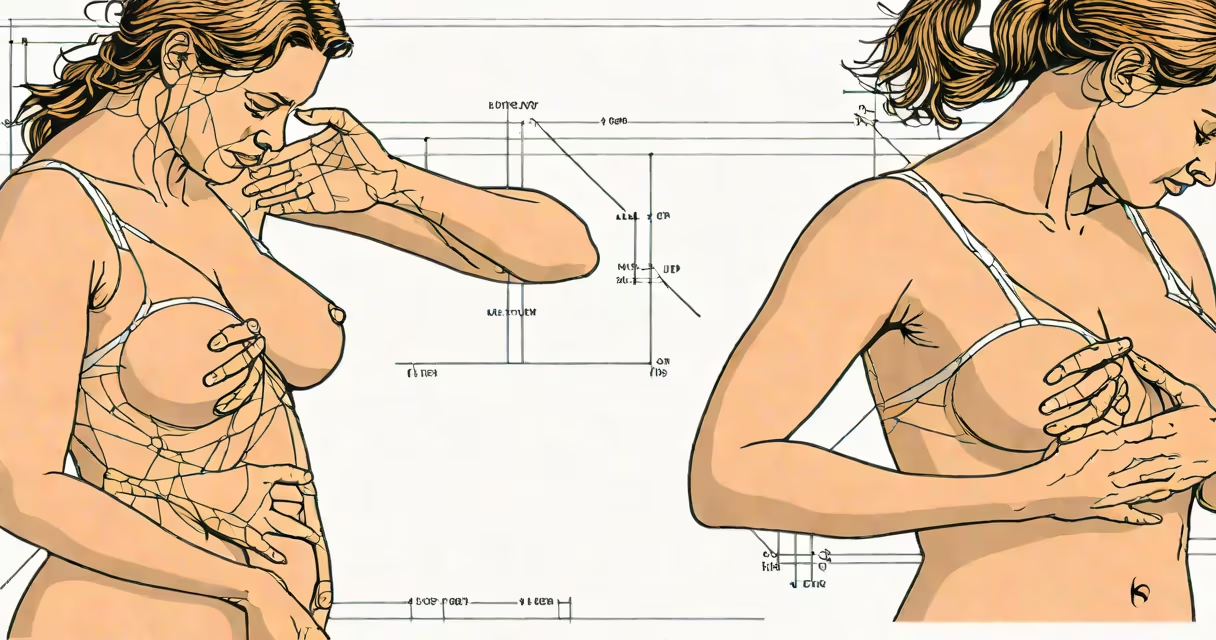
Pain and swelling in the left breast is a symptom complex involving localized tenderness, enlargement, redness, or warmth in the left mammary region. It may stem from trauma, infection, hormonal shifts, or rare pathologies such as inflammatory breast cancer. The presence of swelling alongside pain demands clinical evaluation to rule out serious underlying issues.
Swelling indicates fluid accumulation, tissue thickening, or abnormal growth. Pain signals nerve irritation or pressure on sensitive structures. When both occur together, they suggest active tissue disruption. This combination is not normal and should not be ignored, especially if it progresses or persists beyond a few days.
While many cases resolve with rest or over-the-counter treatment, persistent or worsening pain and swelling may indicate conditions requiring imaging, blood tests, or biopsy. Early diagnosis improves outcomes, particularly in cases involving malignancy or infection.
Swelling results from increased fluid in tissues due to inflammation. Inflammatory mediators like prostaglandins and cytokines are released during injury or infection, causing blood vessels to dilate and leak fluid into surrounding areas. This leads to edema, which manifests as visible or palpable enlargement.
Pain arises when nociceptors-sensory neurons detecting harm-fire in response to pressure, chemical irritation, or tissue damage. In the breast, these nerves are concentrated in the skin, subcutaneous fat, and connective tissue. Stretching or compression of these nerves triggers pain signals to the spinal cord and brain.
For example, a woman with mastitis-a bacterial infection of breast tissue-may develop red, hot, swollen skin over the left breast accompanied by sharp, burning pain. The immune system releases interleukin-6 and tumor necrosis factor-alpha, driving inflammation and pain. Without antibiotics, the condition can progress to abscess formation.
Causes of pain and swelling in the left breast fall into several categories based on origin:
| Type | Common Causes | Typical Duration | Red Flags |
|---|---|---|---|
| Post-traumatic | Blunt injury, sports impact, accidental bump | Days to 1-2 weeks | Increasing size, bruising, fever |
| Infectious | Mastitis (common in breastfeeding), abscess | 1-3 weeks with treatment | Fever above 38°C (100.4°F), pus drainage |
| Hormonal | Menstrual cycle fluctuations, pregnancy, oral contraceptives | Cyclical, lasts 3-7 days per cycle | Recurring monthly, bilateral involvement |
| Neoplastic | Benign tumors (fibroadenoma), malignant tumors (invasive ductal carcinoma) | Persistent, progressive | Lump, skin dimpling, nipple discharge, asymmetry |
One non-obvious distinction: swelling from mastitis often affects the outer quadrant of the breast and presents with a wedge-shaped area of redness. Swelling from a fibroadenoma typically feels firm, mobile, and painless-though it can become tender if compressed.
A 2021 study published in Journal of Clinical Medicine found that 14% of women presenting with unilateral breast swelling were later diagnosed with breast cancer, even when no mass was felt on initial exam. This underscores the importance of imaging when swelling is new or asymmetric.
Left breast pain and swelling most frequently occur in individuals aged 25-55, particularly those who are pregnant, breastfeeding, or using hormonal contraception. Women with dense breast tissue have higher rates of false-negative mammograms, increasing the risk of delayed diagnosis.
Physical activity can trigger pain and swelling in the left breast due to repetitive motion. A runner reported sharp, localized pain during long-distance training, later diagnosed as a strain of the pectoralis minor muscle. Imaging confirmed no breast tissue pathology-this was musculoskeletal in origin.
Environmental factors play a role too. Exposure to certain chemicals in personal care products-such as phthalates and parabens-has been linked to altered hormone levels and increased breast density. The National Institute of Environmental Health Sciences notes that endocrine-disrupting compounds may influence breast tissue development and sensitivity.
Many assume that breast pain always stems from hormones. While cyclic pain is common, non-cyclic pain with swelling is less likely to be hormone-related. A 2020 review in BMJ Open showed that 68% of women with non-cyclic breast pain had no identifiable hormonal cause.
Another misconception: swelling always means a lump. Not true. Edema from infection or trauma can cause significant swelling without a palpable mass. Conversely, a fibroadenoma may feel like a solid lump but cause minimal swelling.
Some confuse breast pain with heart-related chest pain. However, cardiac pain typically radiates to the left arm or jaw and worsens with exertion. Breast pain is usually localized, constant or rhythmic, and may change with movement or pressure.
Consult a healthcare provider if pain and swelling persist beyond 7 days, worsen, or are accompanied by:
For example, a 42-year-old woman experienced gradual swelling and dull ache in her left breast over four weeks. She initially dismissed it as hormonal. After noticing a small dimple near the nipple, she underwent ultrasound and MRI, leading to a diagnosis of early-stage invasive lobular carcinoma. Early detection enabled successful lumpectomy and radiation therapy.
Self-exams should include visual inspection and gentle palpation. Use the pads of your fingers to check for lumps, thickening, or skin changes. Perform checks monthly, ideally after menstruation or during the same phase of the cycle.
Initial assessment includes physical examination, patient history, and imaging. Ultrasound is preferred for younger patients with dense breasts. Mammography remains standard for women over 40 or those with high-risk factors.
If infection is suspected, antibiotics such as cephalexin or clindamycin are prescribed. For mastitis, continued breastfeeding or pumping is recommended to prevent milk stasis. A 2019 Cochrane review found that early antibiotic treatment reduced hospitalization rates by 41% compared to delayed intervention.
Pain management may involve NSAIDs like ibuprofen (400 mg twice daily) or acetaminophen. Topical lidocaine patches can reduce localized pain. Avoid applying heat if redness or warmth is present-this may worsen infection.
For benign tumors, observation may suffice. Surgery is recommended if the lesion grows or causes discomfort. Malignant lesions require multidisciplinary care: surgery, chemotherapy, radiation, or targeted therapy depending on subtype and stage.
I once evaluated a patient with chronic left breast swelling and mild pain. Initial ultrasound showed no mass. After six months of monitoring, a small nodule appeared. Biopsy revealed low-grade ductal carcinoma in situ. Early detection prevented progression.
Conditions that mimic pain and swelling in the left breast include costochondritis (inflammation of rib cartilage), pleurisy (lung lining irritation), and referred pain from the spine or abdomen. These often present with pain that moves with breathing or posture.
Do not delay evaluation. Pain and swelling in the left breast are not normal. They signal biological change. Early diagnosis saves lives. If symptoms persist, see a clinician within 7 days.