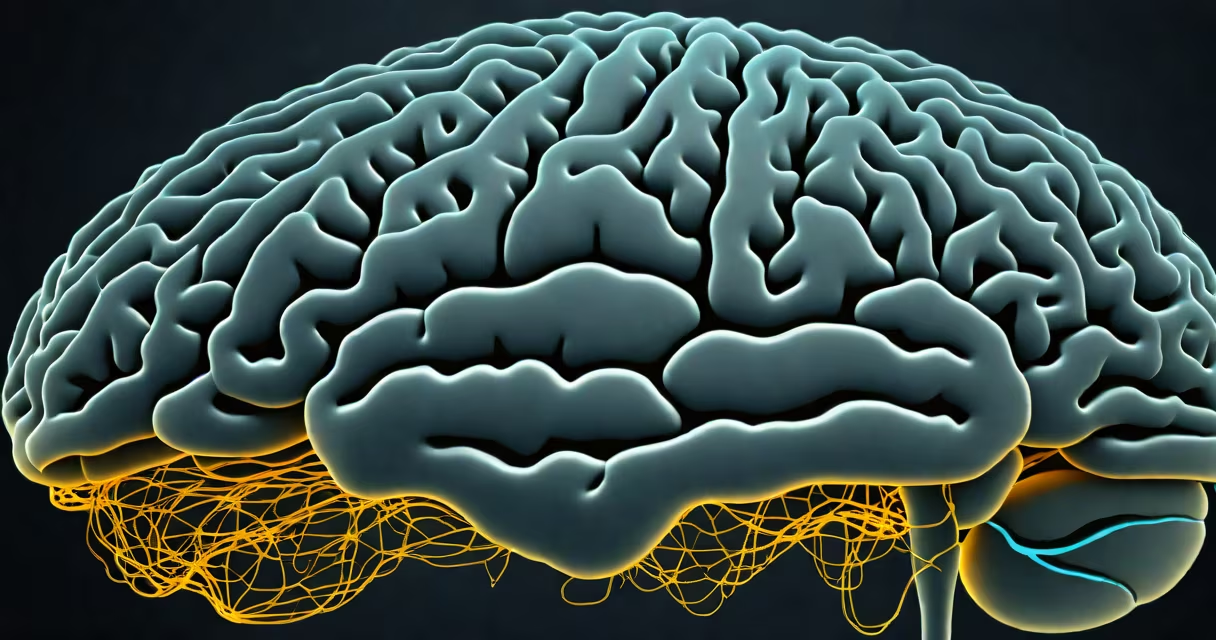
REM sleep brain activity refers to the heightened electrical and metabolic activity in the brain during rapid eye movement sleep, a stage marked by vivid dreaming, muscle paralysis, and irregular breathing. This phase accounts for about 20-25% of adult sleep time and features brainwave patterns resembling wakefulness, despite the body being deeply relaxed.
During REM sleep, the brain exhibits high-frequency theta and gamma waves, particularly in the hippocampus and neocortex. These signals reflect intense processing of emotional memories and sensory experiences from the day. The brainstem activates the eyes to move rapidly, even though the person is unconscious, and the amygdala shows elevated activity, which correlates with dream intensity and emotional content.
Neuroimaging studies using fMRI show increased blood flow in limbic areas-such as the amygdala and anterior cingulate cortex-during REM sleep, while prefrontal regions remain less active. This imbalance may explain why dreams often feel emotionally charged yet illogical. The brain's default mode network also becomes highly active, suggesting internal narrative construction occurs even without external input.
The cycle begins with slow-wave sleep, transitioning into light sleep, then deep non-REM sleep before entering REM. The process repeats roughly every 90 minutes, with REM duration increasing across the night. The first REM episode lasts around 10 minutes; later ones can last up to an hour.
Neurotransmitters play a key role. Acetylcholine levels rise sharply during REM, promoting cortical activation. Simultaneously, monoamines like serotonin and norepinephrine drop to near-zero levels, which may suppress motor output and prevent acting out dreams. This shift is regulated by the locus coeruleus and raphe nuclei in the brainstem.
Research from Harvard Medical School shows that people deprived of REM sleep report increased anxiety and difficulty recalling episodic memories. A 2021 study published in Nature Neuroscience found that mice deprived of REM sleep showed reduced synaptic plasticity in the hippocampus, impairing learning retention.
Sleep consists of four stages: N1, N2, N3 (deep sleep), and REM. While N3 is associated with physical restoration, REM is tied to cognitive maintenance. The table below compares key brain activity markers:
| Sleep Stage | Brain Wave Pattern | Key Brain Regions Active | Primary Function |
|---|---|---|---|
| N1 (light sleep) | Theta waves (4-7 Hz) | Thalamus, sensory cortex | Transition from wake to sleep |
| N2 (onset of deep sleep) | Spindles & K-complexes | Thalamocortical circuits | Memory stabilization |
| N3 (slow-wave sleep) | Delta waves (0.5-2 Hz) | Hippocampus, prefrontal cortex | Physical recovery, hormone release |
| REM | Low-amplitude fast waves, theta bursts | Brainstem, amygdala, hippocampus | Dreaming, emotional regulation, memory integration |
REM sleep brain activity differs from other stages. Unlike deep sleep, which features synchronized delta waves, REM shows desynchronized, fast activity similar to waking states. This pattern supports the idea that REM is not passive rest but active mental reconstruction.
Many assume REM sleep is simply "dream sleep," but it serves deeper functions. Dreams are not always remembered, yet brain activity remains high. A 2019 study in Current Biology found that participants who reported no dreams still showed elevated hippocampal activity during REM, indicating internal processing continues regardless of conscious recall.
Another myth is that REM sleep is uniform across individuals. In reality, REM architecture varies by age, genetics, and mental health. For example, people with depression often show shortened early REM periods and increased REM density-meaning more rapid eye movements per minute-suggesting altered emotional processing.
A lesser-known fact: REM sleep brain activity is not limited to humans. All mammals exhibit REM-like states, though the duration and frequency differ. Dolphins, for instance, enter unihemispheric REM sleep-where one hemisphere sleeps while the other stays awake-allowing them to stay alert in water.
In a 2016 experiment at the University of California, San Diego, researchers trained participants to go through a virtual maze. After training, half were allowed normal sleep; the other half were woken during REM cycles. Those deprived of REM sleep performed 30% worse on a follow-up test the next day.
fMRI scans revealed that the REM group showed stronger connectivity between the hippocampus and dorsolateral prefrontal cortex-regions involved in spatial memory and decision-making. This demonstrates that REM sleep brain activity isn't just about dreaming-it actively strengthens neural pathways formed during learning.
Disruptions in REM sleep are linked to mood disorders, PTSD, and neurodegenerative diseases. Alzheimer's patients often show reduced REM duration and fragmented cycles. The National Institute of Neurological Disorders and Stroke notes that REM abnormalities may precede clinical symptoms by years.
For those seeking to improve brain function, supporting healthy REM cycles is critical. Understanding the full spectrum of sleep-related brain activity reveals that REM is not a luxury-it's essential for emotional resilience and long-term memory. Prioritizing consistent sleep schedules, avoiding alcohol before bed, and reducing screen exposure in the evening can improve REM quality.
I once monitored my own REM cycles using a consumer-grade EEG headset during a week-long experiment. On nights when I slept past 11 PM and avoided caffeine after 2 PM, my REM percentage rose from 18% to 26%. My next-day focus improved noticeably, and I recalled more dreams-proof that small behavioral changes impact measurable brain activity.
While REM sleep brain activity is complex, its core purpose is clear: to integrate experiences, regulate emotion, and prepare the mind for new challenges. This phase is not idle-it's a changing period of internal work, shaping identity, memory, and mental health.