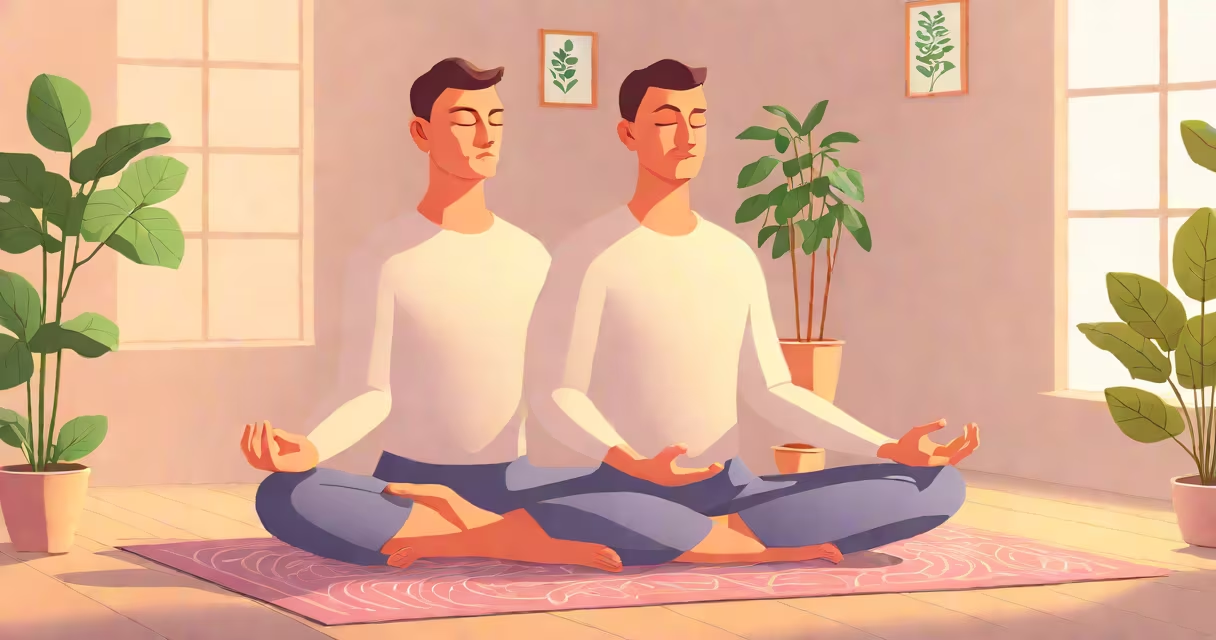
Meditating involves maintaining focused attention on a single point-such as the breath, bodily sensations, or a mantra-while observing thoughts without reacting. The core activity is sustained awareness, not emptying the mind. This practice reduces mental clutter and improves emotional regulation.
People meditate to cultivate presence, reduce stress, and improve concentration. The most common method is breath-focused meditation, where attention rests on inhalation and exhalation. A 2014 study published in *JAMA Internal Medicine* found that mindfulness meditation programs showed moderate evidence of improving anxiety, depression, and pain.
During meditation, you don't need to "do" anything in the traditional sense. There's no goal to achieve, no task to complete. Instead, you sit quietly and observe your internal experience. Thoughts arise-this is normal. The practice lies in noticing them without judgment and gently returning focus to your chosen anchor.
Meditation activates the parasympathetic nervous system, which lowers heart rate and blood pressure. This physiological shift counteracts the stress response triggered by cortisol and adrenaline. Over time, consistent practice strengthens neural pathways associated with attention and emotional control.
Neuroimaging studies show increased gray matter density in the prefrontal cortex and hippocampus after eight weeks of daily mindfulness practice, according to research from Harvard Medical School. These brain regions regulate decision-making, memory, and emotional regulation.
You don't need special equipment. Just a quiet space, a comfortable posture, and a willingness to sit still for 5 to 20 minutes. Duration matters less than consistency. Even five minutes of daily practice yields measurable benefits over time.
There's no single way to meditate. Different styles emphasize different focal points. Here are the most widely used methods:
| Technique | Focus Point | Duration | Best For |
|---|---|---|---|
| Breath Awareness | Inhale and exhale through the nose | 5-20 min | Beginners, stress reduction |
| Body Scan | Progressive attention from toes to scalp | 15-30 min | Relaxation, injury recovery |
| Mantra Repetition | Repeating a word or sound silently | 10-30 min | Deep focus, spiritual practice |
| Open Monitoring | Observing all experiences without attachment | 20-45 min | Advanced practitioners, insight development |
Breath awareness is the foundation of most meditation traditions. You place attention on the sensation of air entering and leaving the nostrils or the rise and fall of the abdomen. When the mind wanders-which it will-gently return to the breath. This repetition builds mental stamina.
Body scan meditation involves mentally scanning each part of the body for tension. Starting at the feet, you move upward, noting warmth, tingling, or tightness. This technique is especially effective for people with chronic pain or insomnia.
Mantra meditation uses a repeated sound like "om" or a personal affirmation. The repetition creates a rhythmic mental pattern that quiets mental chatter. This method is central to many Eastern spiritual systems, including Vipassana and Kundalini yoga.
Many assume meditation means stopping thoughts entirely. That's incorrect. The goal isn't thought suppression-it's non-reactivity. You notice thoughts, acknowledge them, and let them pass like clouds in the sky.
A common misconception is that meditation requires hours of sitting. Research from the University of California, San Francisco, shows that even 10 minutes of daily meditation improves attention span and working memory in adults over four weeks.
Another error is thinking meditation must be silent or done in isolation. Some people benefit from guided sessions using audio or apps. The Insight Timer app, for example, offers over 100,000 free meditations led by teachers worldwide. Using such tools doesn't invalidate the practice.
I once tried meditating while walking through a park. My mind kept drifting to work emails and grocery lists. After ten minutes, I stopped and sat on a bench. I noticed my shoulders were tense and my breath shallow. Returning to the breath helped me reconnect with the present. That moment taught me meditation isn't about perfection-it's about returning, again and again.
Let's walk through a 15-minute breath-focused session:
That's it. You're not trying to "clear" your mind. You're training it to stay present. The act of returning to the breath-even 50 times in 15 minutes-is the exercise.
Some people report vivid imagery or emotional releases during meditation. These are normal. They reflect subconscious processing. If you feel discomfort, pause and breathe slowly. There's no rule that says you must remain calm.
Understanding how to engage with distractions is key. A 2020 study in *Mindfulness* journal found that participants who practiced labeling thoughts ("I'm having the thought that I'm failing") reported greater emotional resilience than those who tried to suppress them.
What you do while meditating is simple: you pay attention to the present moment, using a chosen anchor. Whether it's breath, body, sound, or silence, the practice is the same-returning to the now, again and again.