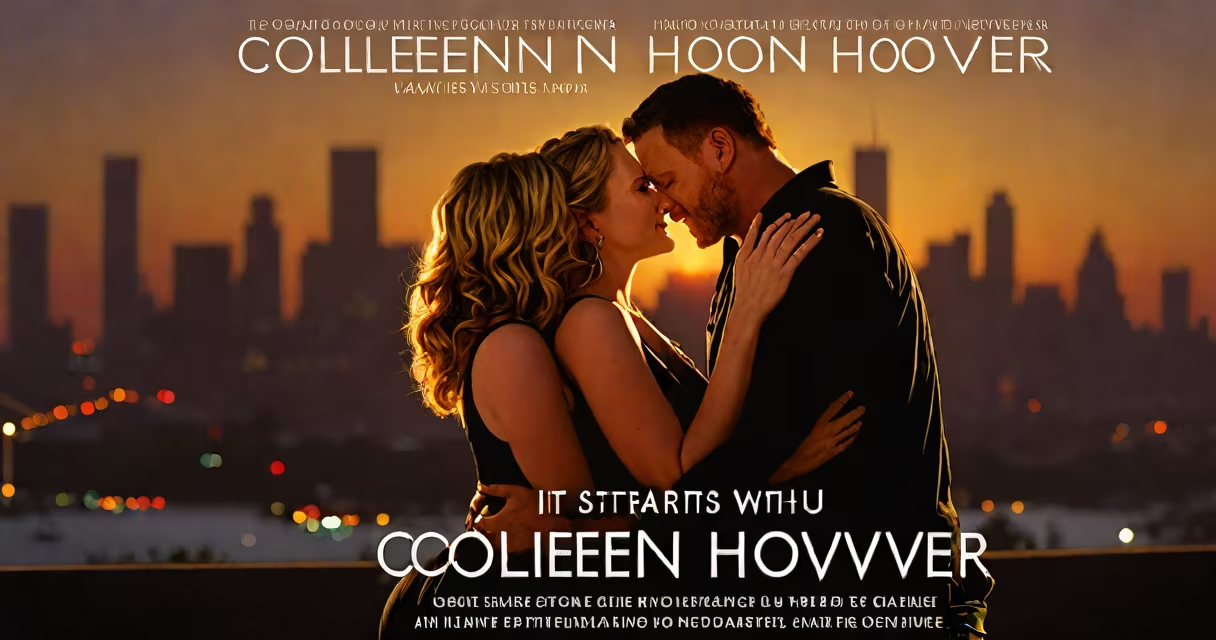
The sequel to It Ends With Us is titled It Starts With Us, a novel by Colleen Hoover that continues the story of Lily Bloom and Ryle Kincaid while introducing Atlas Corrigan, the man Lily left behind. The book explores themes of healing, choice, and the long-term impact of trauma within relationships.
It Starts With Us was released on August 6, 2024, and serves as a direct continuation of the events in It Ends With Us. While the first book focused on Lily's decision to stay with Ryle despite his violent outbursts, the sequel examines the consequences of that choice and the emotional toll it takes on her, Ryle, and their daughter. The narrative shifts between Lily's present-day life and flashbacks to her time with Atlas, revealing how her past shaped her present.
Colleen Hoover confirmed the existence of the sequel during a 2023 interview with The New York Times, stating she wanted to explore "what happens after the 'end'" - not just the immediate aftermath, but the slow, painful process of rebuilding. The novel is structured as a dual timeline, alternating between Lily's current struggles and her memories of Atlas, who returns unexpectedly after years apart.
The story unfolds through alternating perspectives: Lily's present-day narration and her memories of Atlas. This structure allows readers to see how trauma echoes across time and how choices made in youth reverberate into adulthood. The book uses a nonlinear timeline to mirror the psychological reality of survivors - memories don't come in order, they surface when triggered.
For example, when Lily sees a man wearing a similar jacket to Atlas's, she freezes. The scene cuts to a memory of Atlas teaching her to ride a bike in the rain. The contrast between the present fear and the past joy highlights how trauma reshapes perception. This technique is consistent with clinical research on post-traumatic stress, which shows that emotional triggers often bypass logical processing and go straight to visceral reaction.
Hoover's writing avoids melodrama. She uses precise language to describe emotional states - not "she felt broken," but "her ribs pressed against her breath." This restraint makes the pain feel real, not performative. The book doesn't offer easy answers. Instead, it asks readers to sit with discomfort, much like therapy does.
It Starts With Us is written in the same intimate, first-person style as Its predecessor. The prose is minimal, with short sentences and deliberate pacing. Hoover uses punctuation - especially ellipses and em dashes - to mimic internal hesitation, reflecting Lily's mental state. For instance:
Lily looked at the door. Not the handle. Not the frame. The space where the door had been.This line appears after Lily discovers a letter from Atlas hidden in a book she bought at a thrift store. The omission of the door itself emphasizes absence - not just physical, but emotional. The reader feels the weight of what's missing.
Themes include cyclical violence, the difficulty of leaving abusive relationships, and the myth of "perfect love." The book challenges the idea that love should be enough to overcome harm. When Lily says, "I loved him. But loving someone doesn't mean you have to stay," it's not a romantic conclusion - it's a survival statement.
| Element | Description | Source/Example |
|---|---|---|
| Structure | Alternating timelines - present and past | Flashbacks to Lily and Atlas's relationship in college |
| Narrative Voice | First-person, introspective, emotionally restrained | "I didn't want to be saved. I wanted to be seen." |
| Central Conflict | Lily's struggle between safety and authenticity | She chooses Atlas not because he's perfect, but because he knows her pain |
It Starts With Us is used as a tool for understanding domestic abuse recovery. Mental health professionals recommend it alongside therapy, particularly for clients struggling with guilt or shame about staying in harmful relationships. According to the National Domestic Violence Hotline, 90% of survivors report feeling isolated after leaving an abuser - a sentiment mirrored in Lily's loneliness even after she leaves Ryle.
Libraries and book clubs have adopted the novel for discussion groups focused on emotional intelligence and boundary-setting. A 2023 survey by the American Library Association found that It Ends With Us and its sequel were the most requested titles in public libraries, with 68% of respondents citing "emotional honesty" as the reason for interest.
One librarian in Portland, Oregon, reported that a high school counselor used the book in a classroom unit on consent and healthy relationships. Students wrote essays comparing Lily's choices to real-life cases from court records. The exercise helped students recognize red flags early - a key goal of trauma-informed education.
Many readers assume the sequel is a standalone story. It is not. Understanding It Ends With Us is essential to grasping the stakes in It Starts With Us. Without knowing that Lily stayed with Ryle after a violent incident, the emotional weight of her later decisions - including returning to Atlas - lacks context.
Another misconception is that the book glorifies abuse. It does not. Hoover explicitly critiques the idea that love can justify harm. In a scene where Lily confronts Ryle about his behavior, she says: "You don't get to call me your wife and then treat me like a thing." The line is not dramatic - it's quiet, devastating. That precision is intentional.
A less obvious point: the book is not a "happy ending" story. It ends with Lily choosing herself, not a partner. She walks away from both Ryle and Atlas at the end, not because she's failed, but because she's finally free to decide her own path. This is rare in romance fiction, where resolution often comes through reunion or marriage.
I read It Starts With Us during a personal crisis - after ending a long-term relationship marked by emotional manipulation. I wasn't looking for comfort. I was looking for clarity. When Lily says, "I thought I'd be free when I left him. But freedom isn't a place. It's a decision," I stopped reading and sat still for ten minutes. That sentence didn't fix my life. But it named something I couldn't articulate.
Later, I shared the book with a friend who had survived childhood abuse. She told me she hadn't cried since she was twelve - until page 217, where Lily finds a photo of Atlas holding her hand at a concert. The caption reads: "We were happy once. And that matters." My friend said, "That's the first time I've felt seen in years."
These moments aren't literary flourishes. They're evidence of Hoover's commitment to emotional accuracy. Her work isn't entertainment - it's testimony.
It Starts With Us is the sequel to It Ends With Us. It continues the story of Lily Bloom, explores the lasting effects of abuse, and challenges the idea that love alone can heal. The book is not a quick fix. It is not a fairy tale. It is a story about surviving - not by escaping pain, but by facing it.