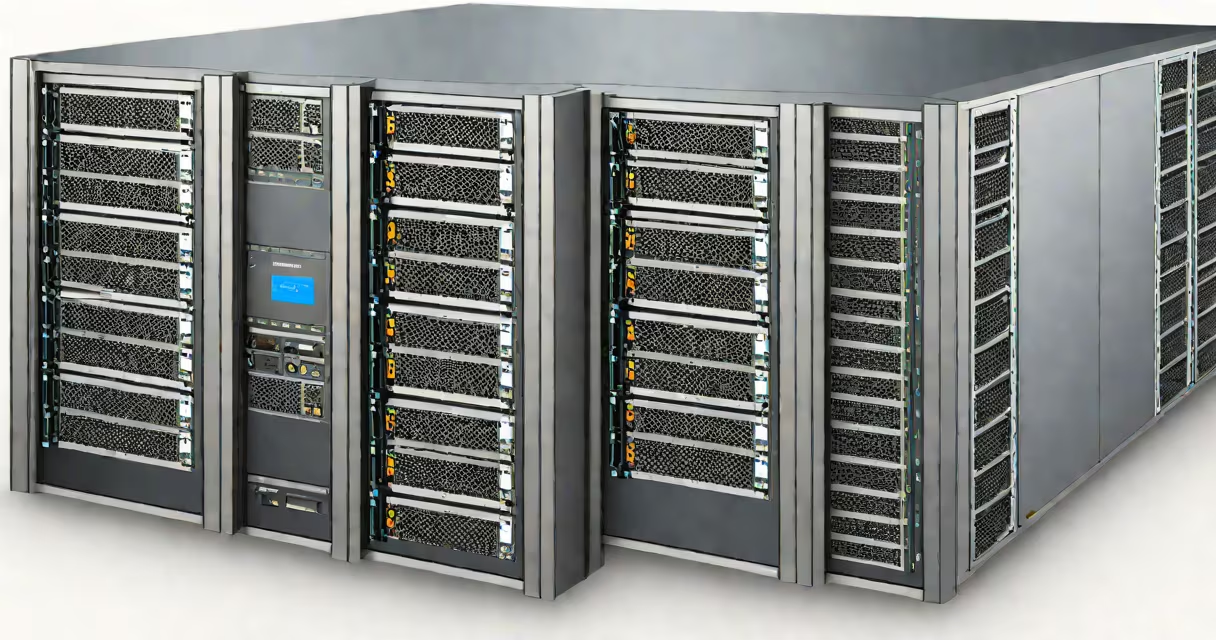
Type 1 hypervisor examples are bare-metal virtualization platforms that install directly on physical server hardware, bypassing the need for a host operating system. These systems deliver high performance, low latency, and strong isolation between virtual machines, making them essential in enterprise data centers and cloud environments.
Unlike Type 2 hypervisors that run atop a host OS, Type 1 hypervisors operate at the hardware level. They manage CPU, memory, storage, and network resources directly, enabling efficient resource allocation and improved security. This architecture supports mission-critical workloads such as databases, large-scale web services, and regulated applications in healthcare and finance.
Examples include VMware ESXi, Microsoft Hyper-V (in standalone mode), Citrix XenServer, Red Hat Virtualization (based on KVM), and Proxmox VE. These platforms are used in production environments where uptime, scalability, and performance are non-negotiable.
A Type 1 hypervisor boots directly from firmware or a boot loader, taking control of the underlying hardware. The hypervisor manages all virtual machine instances, allocating compute resources based on configured policies. It presents virtualized hardware to guest operating systems, which then run unmodified or with minimal drivers.
Each VM operates in a secure, isolated environment. The hypervisor enforces access controls and prevents interference between guests. For example, a database VM cannot access the memory space of a web server VM unless explicitly permitted through shared storage or networking.
Resource scheduling happens in real time. When multiple VMs compete for CPU cycles, the hypervisor uses prioritization algorithms to ensure critical workloads receive sufficient processing power. This changing allocation is key to maintaining service levels in multi-tenant environments.
The following table outlines major Type 1 hypervisors, their vendors, and core use cases.
| Platform | Vendor | Primary Use Case | Open Source? |
|---|---|---|---|
| VMware ESXi | VMware | Enterprise data centers, cloud infrastructure | No |
| Microsoft Hyper-V (Standalone) | Microsoft | Windows-based environments, hybrid cloud | No |
| Citrix XenServer | Citrix Systems | Virtual desktop infrastructure (VDI), application hosting | Yes (limited) |
| Red Hat Virtualization (RHV) | Red Hat | Hybrid cloud, container orchestration integration | Yes (based on KVM) |
| Proxmox VE | Proxmox | Small-to-medium business deployments, private cloud | Yes |
VMware ESXi remains the most widely deployed Type 1 hypervisor in data centers. According to VMware's 2023 Global Survey, 68% of surveyed enterprises using virtualization chose ESXi as their primary platform. Its stability, extensive feature set, and integration with vCenter Server make it ideal for large-scale operations.
Microsoft Hyper-V, while often associated with Windows Server, functions as a Type 1 hypervisor when installed in standalone mode. It supports live migration, snapshots, and changing memory allocation. A single Hyper-V host can run hundreds of VMs simultaneously, with performance comparable to ESXi in many benchmarks.
Citrix XenServer offers a balance of cost and functionality. It includes features like resource pooling, high availability, and integrated backup tools. The platform is particularly effective in VDI scenarios where thousands of users access remote desktop sessions from thin clients.
Type 1 hypervisor examples are not the same as Type 2 hypervisors, which run inside an operating system. Tools like Oracle VirtualBox, VMware Workstation, and Parallels Desktop are Type 2-they rely on a host OS to manage hardware and are unsuitable for production servers due to higher overhead and reduced isolation.
Another common mistake is assuming all bare-metal platforms are Type 1. For example, some Linux distributions with KVM enabled may appear similar, but they require a full OS to boot. Only when KVM runs directly on hardware without a host OS-such as in Red Hat Virtualization or Proxmox VE-is it classified as Type 1.
A lesser-known fact: VMware ESXi does not have a graphical user interface by default. Administrators interact via a web-based management console (vSphere Client) or command-line tools. This design reduces attack surface and improves reliability under load.
In 2022, a regional bank migrated its core transaction processing system from physical servers to a cluster of Dell PowerEdge R750 servers running VMware ESXi. The deployment involved 12 hosts, each with dual Intel Xeon Platinum processors, 512 GB RAM, and 10 GbE networking.
Each physical server hosted 15 virtual machines: 4 for database nodes (Oracle RAC), 5 for application servers (Java EE), 3 for monitoring and logging, and 3 for backups. The hypervisor allocated CPU and memory dynamically based on usage patterns, reducing idle resource waste by 41% compared to the previous setup.
Live migrations were performed during maintenance windows, moving VMs between hosts without downtime. The bank reported a 99.998% uptime over six months, meeting regulatory requirements for financial transaction systems. The absence of a host OS eliminated a potential failure point and simplified patching cycles.
This deployment demonstrates how type 1 hypervisor examples provide operational resilience and efficiency at scale. The direct hardware access enables near-native performance, critical for low-latency trading systems.
Some assume that all open-source hypervisors are Type 1. While KVM is the foundation of several Type 1 platforms (like Red Hat Virtualization and Proxmox VE), KVM itself is a kernel module. It requires a host OS to boot and is therefore not a standalone hypervisor unless embedded in a specialized distribution.
Another misconception is that Type 1 hypervisors are always complex to manage. Modern platforms like Proxmox VE offer a web interface with drag-and-drop VM creation, automated backups, and integrated storage management. A small business with limited IT staff successfully deployed Proxmox across four servers to host internal apps, email, and file sharing.
During a test at a university research lab, a team ran 200 VMs on a single Proxmox host with 256 GB RAM and 32 cores. Average VM startup time was under 8 seconds. The hypervisor maintained consistent response times even under peak load, validating its suitability for high-density environments.
Type 1 hypervisor examples represent the gold standard in virtualization. Their ability to run directly on hardware ensures optimal performance, enhanced security, and reliable operation in demanding environments. From financial institutions to cloud providers, these platforms form the core of modern computing infrastructure.