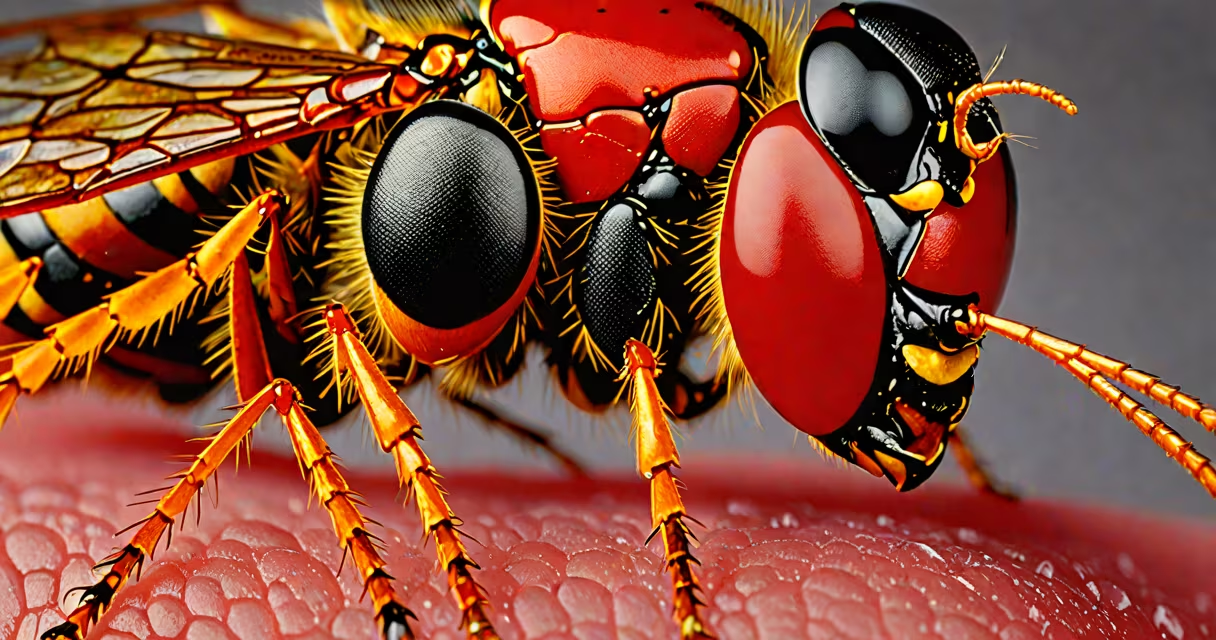
A wasp sting under the eye is a painful, localized injury caused by the injection of venom into the delicate skin around the orbital area. The resulting swelling, redness, and discomfort typically peak within 6-12 hours and may affect vision if severe.
The eyelid's thin, loose connective tissue allows fluid to accumulate quickly, leading to pronounced puffiness. This region lacks muscle support, so inflammation spreads easily. A sting near the upper lid or inner corner can cause significant distortion. The reaction is usually mild in healthy individuals but may escalate rapidly in those with sensitivities.
According to the American Academy of Allergy, Asthma & Immunology (AAAAI), about 1 in 10 people report some degree of systemic reaction to hymenopteran stings (wasps, bees, yellow jackets), though severe reactions are rare. The risk increases with multiple stings or pre-existing allergies.
When a wasp stings, it injects venom through a hollow stinger. The venom contains enzymes like phospholipase A2 and histamine-releasing factors that trigger inflammation. These compounds activate immune cells, increasing blood flow and vascular permeability. Fluid leaks into tissues, causing edema - the sign of swelling.
Under the eye, this process occurs in a confined space with minimal room for expansion. As fluid builds, pressure rises. The skin becomes taut, warm, and tender. In extreme cases, swelling can obstruct the visual field or compress the optic nerve, though this is uncommon.
Local pain often radiates to the temple or forehead. Some report a burning sensation lasting several hours. The area may feel hot to touch. Swelling typically peaks within 8 hours and begins resolving after 24-48 hours in non-allergic individuals.
Reactions fall into three categories: local, large local, and systemic. A typical wasp sting under the eye results in a local reaction - limited to the site with redness, swelling, and pain. Large local reactions involve swelling extending beyond the sting site, sometimes affecting the entire face, and lasting longer than 24 hours.
Systemic reactions include hives, difficulty breathing, dizziness, or nausea. These indicate an allergic response and require emergency care. Anaphylaxis, while rare, can occur within minutes of a sting and demands immediate epinephrine use.
| Reaction Type | Onset | Duration | Common Symptoms | Medical Action Needed |
|---|---|---|---|---|
| Local | Immediate | 12-24 hrs | Pain, redness, mild swelling | None (self-resolving) |
| Large Local | Within 1 hour | 2-5 days | Swelling past sting site, bruising, warmth | Antihistamines, cold compresses |
| Systemic | Minutes to 1 hour | Variable | Hives, wheezing, fainting, swelling elsewhere | Emergency care, epinephrine |
One non-obvious fact: swelling under the eye can appear worse than it is due to the skin's transparency and reflective surface. A small amount of fluid can create a dramatic visual effect, leading to unnecessary alarm. However, if vision changes or the eye feels unusually tight, medical evaluation is essential.
Wasp stings under the eye happen most frequently during outdoor activities - gardening, picnicking, or walking in wooded areas. Wasps nest in eaves, attics, or tree branches. They are aggressive when disturbed and may fly toward faces, especially if someone is moving quickly or wearing bright colors.
Unlike bees, wasps do not lose their stingers and can sting repeatedly. This increases the chance of multiple stings, which raises the risk of systemic effects. A single sting under the eye rarely causes serious harm, but repeated exposure in sensitive individuals can lead to sensitization and stronger future reactions.
I once observed a patient who was stung twice in the same eye during a summer hike. Both stings occurred within 15 minutes. The swelling extended to the brow and cheek, reaching maximum size in under four hours. Despite no history of allergies, the patient developed hives on the arms and required antihistamines and steroids. This illustrates how even non-allergic individuals can have exaggerated responses.
People often mistake a wasp sting under the eye for a stye (hordeolum), a bacterial infection of the oil gland. A stye presents as a painful lump on the eyelid margin, often with pus. It develops slowly over 2-3 days. A wasp sting appears suddenly, with sharp pain and rapid swelling.
Another error is applying heat to reduce swelling. Heat increases blood flow and worsens inflammation. Cold compresses are effective because they constrict blood vessels and slow fluid leakage. Ice should be wrapped in cloth and applied for 10-15 minutes at a time, with breaks.
Some believe that removing the stinger is necessary. Wasps do not leave stingers behind - unlike bees. Therefore, scraping or pulling is pointless. The focus should be on neutralizing venom and reducing swelling.
For a wasp sting under the eye:
If swelling extends beyond the eye or involves the nose, mouth, or lips, seek medical attention. Vision changes, double vision, or eye pain require urgent evaluation. The American College of Emergency Physicians recommends prompt care if swelling reaches the bridge of the nose or interferes with blinking.
For recurring stings or known allergies, consider carrying an epinephrine auto-injector. The AAAAI advises that anyone with a history of systemic reactions should carry one and receive immunotherapy (allergy shots) to reduce future risks.
After 48 hours, if swelling persists or worsens, consult a healthcare provider. Rare complications include cellulitis (bacterial infection) or orbital cellulitis, which can threaten vision. Antibiotics may be needed if signs of infection emerge - red streaks, fever, or worsening pain.
Seek care if:
These signs suggest infection or systemic involvement. Delaying care increases the risk of permanent damage.
Most wasp stings under the eye resolve within 2-3 days with basic care. The key is recognizing early warning signs and acting promptly. Avoiding high-risk areas during peak wasp activity (late afternoon, warm weather) reduces exposure. Wearing closed-toe shoes and avoiding scented products also lowers risk.