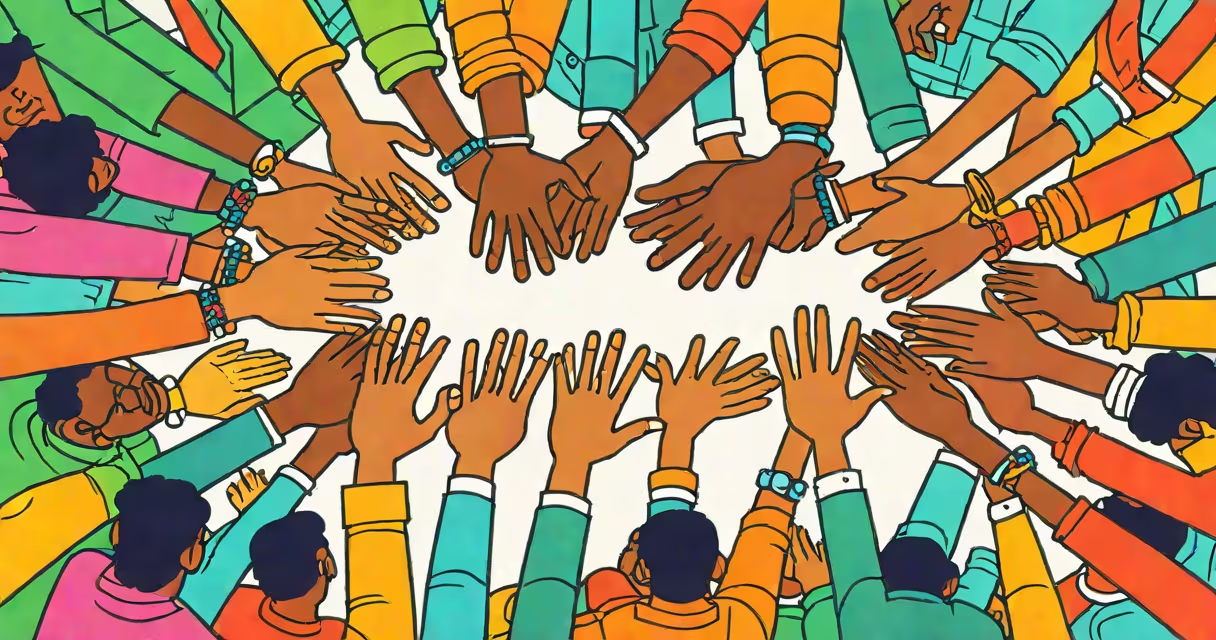
The social contract is an agreement-explicit or implied-where individuals surrender some freedoms to a governing authority in exchange for protection, order, and shared benefits. This concept underpins modern democratic systems and explains how societies maintain stability without constant conflict.
Philosophers from ancient Greece to the Enlightenment developed versions of the idea. Thomas Hobbes argued in *Leviathan* (1651) that life without rules is "solitary, poor, nasty, brutish, and short," so people agree to submit to a sovereign to avoid chaos. John Locke, in *Two Treatises of Government* (1689), saw the contract as a mutual arrangement where government protects life, liberty, and property-and can be overthrown if it fails. Jean-Jacques Rousseau, in *The Social Contract* (1762), believed citizens collectively form a "general will" that binds them to act for the common good, not individual interests.
Modern democracies operate on this principle. When you pay taxes, follow traffic laws, or serve on a jury, you're fulfilling your part of the social contract. The state provides infrastructure, public safety, education, and legal enforcement. Without this balance, society risks breakdown or authoritarian control.
Every time you obey a law you don't personally support-like wearing a seatbelt or paying income tax-you're participating in the social contract. You accept rules because they create conditions where everyone benefits, even if you don't always agree with them.
Consider a city with a public transit system. Riders pay fares or taxes to fund service. Drivers and passengers follow rules: no blocking doors, no loud music, no fare evasion. These behaviors aren't enforced by personal preference-they're part of the unwritten agreement that keeps the system functional. If enough people ignore the rules, the system fails. If everyone follows them, it works efficiently for all.
A real-world example: during the 2020 pandemic, many people complied with mask mandates and lockdowns despite personal discomfort. Their actions were driven by the understanding that individual sacrifice supports community health. This reflects the social contract's core idea: collective well-being outweighs isolated convenience.
Not all social contracts are the same. They vary based on culture, history, and political structure. Here are three distinct models:
| Type | Core Idea | Example |
|---|---|---|
| Hobbesian | Order through absolute authority | Authoritarian states where citizens trade freedom for security |
| Lockean | Government exists to protect rights | United States Constitution, with checks and balances |
| Rousseauian | Collective will shapes laws | Direct democracy in Swiss cantons |
These models show that the social contract isn't a single idea-it's a structure adapted to different values. A Lockean version emphasizes individual rights and limited government. A Rousseauian model prioritizes group decisions and shared purpose. Neither is inherently better; each fits different societal goals.
Many people confuse the social contract with legal contracts. A legal contract is written, enforceable, and between specific parties. The social contract is informal, widely accepted, and applies to all members of a society. It's not signed-it's lived.
Another error is assuming the social contract requires unanimous consent. That's not true. Most people don't vote on every rule. Consent is expressed through participation: voting, paying taxes, serving in civil roles. Absence of protest doesn't imply acceptance-but continued engagement implies ongoing agreement.
A key distinction often missed: the social contract is not about fairness in outcomes. It's about fairness in process. People may disagree on how wealth is distributed, but most agree that rules should be applied equally. The contract ensures procedural justice, not equal results.
In 1940, the U.S. implemented the Selective Training and Service Act, requiring men aged 21-35 to register for military service. This was a formalized expression of the social contract: citizens agreed to defend the nation in exchange for national protection and civic rights.
When the draft ended in 1973, the U.S. shifted to an all-volunteer military. Critics argued this weakened the social contract-fewer citizens served, reducing shared sacrifice. Supporters said voluntary service respects individual choice. The debate continues: does a society remain cohesive when only a small portion bears the burden of defense?
I observed this tension firsthand during a 2018 town hall in rural Iowa. A veteran spoke about feeling disconnected from younger generations who had never served. He said, "I gave my time, my body, my peace of mind. But now people don't understand what that cost." His experience shows how the social contract relies on shared experience-even when formal obligations fade.
With rising polarization and distrust in institutions, the social contract faces strain. Surveys from the Pew Research Center (2022) show that only 37% of Americans believe others in their country share basic values. When trust erodes, so does cooperation. Without mutual belief in shared rules, society fragments.
Still, the concept remains important. As political theorist Danielle Allen notes in *Our Declaration* (2018), "The social contract is not a document. It's a practice-a daily act of choosing to live together." This view shifts focus from abstract theory to everyday behavior: showing up, listening, following rules, respecting others' rights.
Understanding what does social contract mean helps clarify responsibilities beyond laws. It's not just about avoiding jail-it's about contributing to a functioning society. When you recycle, report a crime, or volunteer, you're reinforcing the social contract.