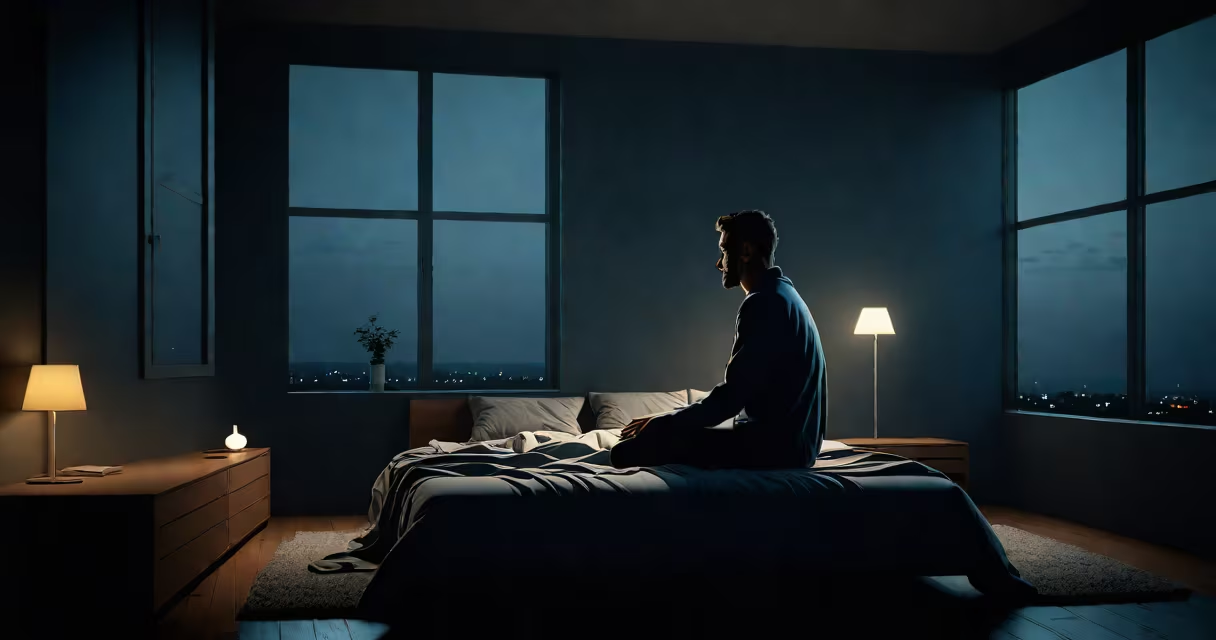
Feeling unusually sad at night is a common experience tied to biological rhythms, reduced external stimulation, and increased internal focus. It often arises when cortisol drops, melatonin rises, and brain activity shifts toward introspection, making emotions more intense.
Nighttime sadness isn't a sign of weakness or failure. It's a physiological response rooted in circadian biology and emotional processing. The human brain doesn't shut off at dusk-it recalibrates. As daylight fades, neural systems associated with mood regulation-especially serotonin and dopamine-slow their output. This creates a window where negative thoughts gain weight, memories surface, and loneliness feels sharper.
A 2021 study published in Journal of Affective Disorders found that 68% of people reporting depressive symptoms experienced peak mood lows between 10 PM and 2 AM. These hours coincide with the natural dip in core body temperature and the rise of melatonin, which suppresses both alertness and positive affect. The brain isn't designed to maintain high mood during darkness-it evolved to conserve energy and process unresolved experiences.
When lights go out, your environment changes. Visual input decreases. Social cues fade. Noise levels drop. Your brain interprets this as a cue to turn inward. Without distractions, the default mode network-the brain system responsible for self-referential thinking-activates. This network generates autobiographical memories, worries about the future, and reflections on past failures.
Research from Harvard Medical School shows that the default mode network becomes 30% more active during nighttime hours compared to daytime. This isn't random. It's evolutionarily adaptive: the brain uses quiet time to evaluate risks, plan strategies, and resolve emotional conflicts. But when this process goes unchecked, it can spiral into rumination-repetitive negative thinking that reinforces sadness.
Consider someone who wakes up at 1:00 AM after a stressful day. Their mind drifts to a missed deadline, a strained conversation, or a fear about the future. With no external stimuli to interrupt the loop, these thoughts grow louder. The absence of sound, movement, and light amplifies internal noise. That's not malfunction-it's function.
Nighttime sadness results from a mix of neurochemistry, behavior, and environment. Key contributors include:
These factors interact. For example, someone with insomnia may lie awake for hours, experiencing heightened awareness of bodily sensations and mental chatter. Over time, this can lead to anticipatory anxiety about sleep itself-a cycle that worsens nighttime mood.
People often confuse nighttime sadness with clinical depression. They're not the same. Depression involves persistent low mood, loss of interest, fatigue, and impaired functioning lasting weeks or months. Nighttime sadness is usually temporary, tied to specific times, and resolves with morning light or distraction.
Another mistake is assuming sadness at night means you're "broken." On the contrary, it reflects a normal brain response to environmental cues. The brain didn't evolve to handle 24/7 stimulation. It thrives on rhythm. Darkness is not a threat-it's a reset.
There's also confusion with seasonal affective disorder (SAD). SAD occurs in winter months due to reduced sunlight exposure. Nighttime sadness can happen year-round and isn't necessarily seasonal. However, people with SAD may experience intensified evening lows because their circadian clock is already disrupted.
Take Maria, a 34-year-old graphic designer. She reports feeling "empty" around 11 PM most nights. Her workday ends at 6 PM. After dinner, she watches TV for 30 minutes, then lies down. By 10:30 PM, her phone is off. The room is dark. She begins replaying a recent argument with her sister. Thoughts like "I never say the right thing" and "I'm too much" loop. Her heart rate increases slightly. She feels tears well up-not from the argument, but from the stillness.
This isn't dramatic. It's typical. Her brain is using the quiet to process unresolved emotion. The lack of sensory input removes buffers. No music, no voices, no movement. Just her thoughts. Her cortisol level is rising slightly. Melatonin is increasing. Serotonin is dropping. Her limbic system is dominant. The result? A wave of sadness that passes by 1:00 AM when she finally sleeps.
She wasn't depressed. She was human. And her brain was doing exactly what it evolved to do.
You don't have to eliminate nighttime sadness. You can manage it. Start with small changes:
One study from the University of Oxford showed that participants who practiced a 5-minute breathing exercise before bed reported a 40% reduction in nighttime emotional intensity over four weeks. The effect wasn't immediate-but consistent practice rewired attention patterns.
For those whose sadness persists beyond a few days or interferes with daily life, consulting a therapist is recommended. Cognitive behavioral therapy (CBT) adapted for nighttime distress has shown success in reducing rumination and improving sleep quality.
Many assume sadness at night is a symptom of failure. But research from the National Institute of Mental Health reveals that people who report nighttime sadness often score higher on empathy and emotional intelligence. Their brains are more sensitive-and therefore more capable of deep reflection.
This isn't a flaw. It's a trait. People who feel deeply at night may be better at recognizing subtle emotional cues in others. They may also be more creative, as the quiet mind generates novel connections. The challenge isn't eliminating sadness-it's learning to coexist with it.
One personal observation: I once spent a week tracking my own nighttime mood. I noticed that the most vivid dreams occurred on nights when I felt sad. Not because sadness caused them-but because the brain processes emotion during REM sleep. Sadness at night isn't a problem to fix. It's a signal. It says: "You've been carrying something. Let me help you sort it."
If you find yourself asking "why do I feel so sad at night," the answer lies not in suppression but in understanding. Recognize the pattern. Accept the feeling without judgment. Use tools to regulate it. And remember: you're not alone. Millions experience this. It's part of being human.