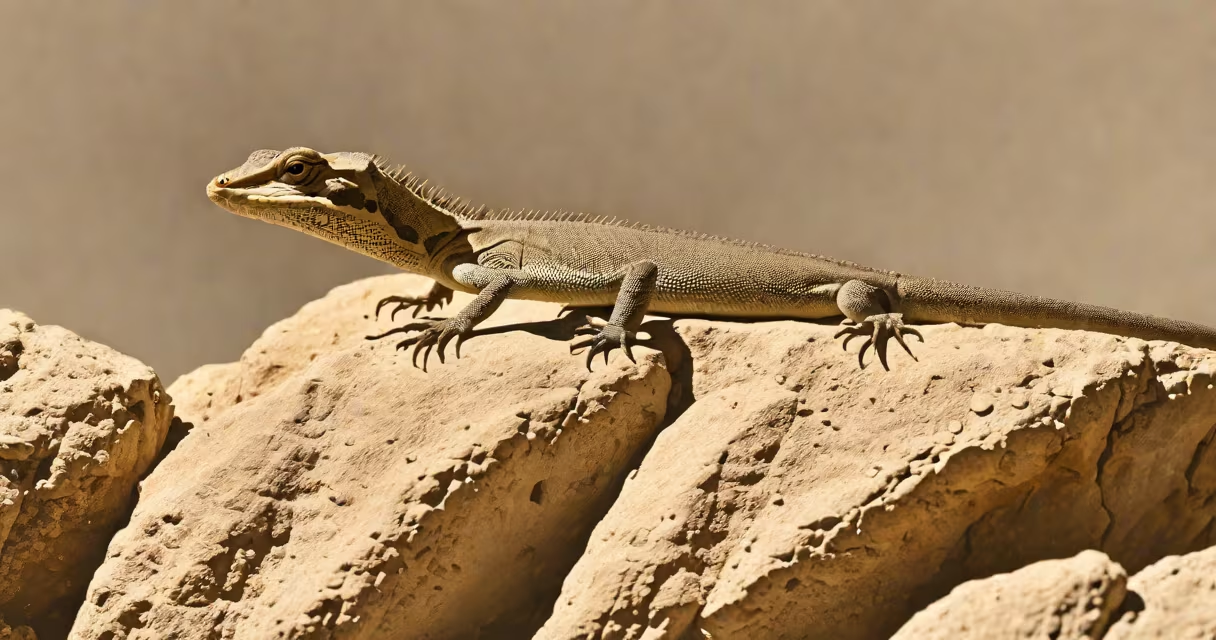
The Bible identifies lizards as unclean creatures under ancient Israelite dietary and ceremonial law. They appear in Leviticus and Deuteronomy as part of a list of animals prohibited for consumption due to their classification as creeping things that do not meet the criteria for clean food.
Lizards are specifically mentioned in Leviticus 11:30 and Deuteronomy 14:18. The Hebrew word used is *ṣārōṣ*, which refers to small, ground-dwelling reptiles such as geckos, skinks, and other similar species common in the arid regions of the ancient Near East. These animals were excluded from the diet of Israelites because they did not have split hooves or chew the cud, and they moved on their bellies rather than walking upright.
Leviticus 11:30 states: "And these are the ones you shall regard as unclean among the swarming things that swarm on the earth: the mole, the mouse, the great lizard, the gecko, the monitor lizard, the sand lizard, the chameleon." This passage forms part of a larger system of purity regulations designed to distinguish Israelite practices from those of neighboring cultures. The prohibition was not based on health risks but on ritual separation.
Under Mosaic law, animals were categorized as clean or unclean based on specific physical traits. Clean animals had both split hooves and chewed the cud (like cattle and sheep). Unclean animals lacked one or both traits. Lizards failed both criteria-they neither chewed the cud nor had hooves. Their movement on their belly further emphasized their status as creeping things, a category associated with impurity in ritual contexts.
The distinction wasn't about morality or inherent evil. It was about maintaining ritual boundaries. Consuming unclean animals could defile a person's state of ritual cleanliness, especially during sacred observances like Passover or Yom Kippur. Priests and temple officials enforced these rules strictly.
Modern scholars confirm that the term *ṣārōṣ* includes various small lizards native to the Levant. Archaeological evidence from ancient Israelite sites shows that animal remains found in domestic contexts rarely include lizard bones, supporting the idea that these animals were avoided intentionally.
The Bible does not distinguish between specific lizard species. Instead, it groups them under the broader category of *ṣārōṣ*, which covers multiple genera of small, terrestrial reptiles. The Hebrew text lists several similar creatures together, suggesting a shared religious and cultural significance rather than biological precision.
| Biblical Term | Modern Interpretation | Source Reference |
|---|---|---|
| ṣārōṣ | Small ground-dwelling lizards (geckos, skinks) | Leviticus 11:30, Deuteronomy 14:18 |
| šālōm | Unknown creature; possibly a type of lizard or amphibian | Deuteronomy 14:18 (variant reading) |
| ḥaṣṣār | Desert-dwelling lizard, possibly a sand lizard | Leviticus 11:30 (contextual interpretation) |
Some translations render *ṣārōṣ* as "great lizard" or "monitor lizard," but these are interpretive choices. The original Hebrew likely refers to any small, ground-hopping reptile that does not walk on four legs with hooves.
Many people assume lizards in the Bible carry symbolic meaning related to sin, temptation, or evil. This is incorrect. There is no direct link between lizards and spiritual symbolism in the biblical text. Unlike serpents, which represent deception and temptation (Genesis 3), lizards are never used metaphorically in Scripture.
Another misconception is that the prohibition against eating lizards applies today. For Christians following New Proof teachings, dietary laws from Leviticus are no longer binding. Acts 10:15 records Peter's vision: "Do not call anything impure that God has made clean." This marked a shift in early Christian practice, allowing believers to eat previously forbidden foods.
A lesser-known fact is that some ancient Jewish texts, including the Mishnah, classify certain lizards as ritually unclean even if consumed. However, this is a later development and not part of the original biblical structure. The Bible itself never discusses the spiritual implications of eating lizards.
In 2017, archaeologists uncovered a cache of animal bones at Tel Arad, a fortified city in southern Israel dating to the 8th century BCE. Among the remains were fragments of sheep, goats, and cattle-but no lizard bones. This absence supports the view that lizards were deliberately excluded from the diet, consistent with biblical law.
Similarly, in the Dead Sea Scrolls, particularly the Temple Scroll (11Q19), dietary regulations closely mirror those in Leviticus. The scroll explicitly bans "all creeping things that move on the ground," including lizards, reinforcing the continuity of these laws in Second Temple Judaism.
Understanding what the Bible says about lizards requires context from broader religious laws. For example, the prohibition of unclean animals connects to the concept of holiness-being set apart for God's purposes. This principle extends beyond food to clothing, marriage, and worship practices.
While lizards appear briefly in Scripture, their presence underscores a larger pattern: the Bible uses physical categories to express spiritual boundaries. The exclusion of lizards was not about fear of reptiles but about maintaining ritual clarity in a community devoted to holy living.
The biblical reference to lizards shows that religious laws often reflect cultural and ecological realities. Modern readers may find the details obscure, but they reveal how ancient Israelites structured their relationship with God through daily actions like eating and cleaning.
When exploring what the Bible says about lizards, remember: the focus is not on the animal itself but on the system of separation it represents. The answer lies not in symbolism but in context-ancient dietary law, ritual purity, and the enduring human effort to live in alignment with divine standards.