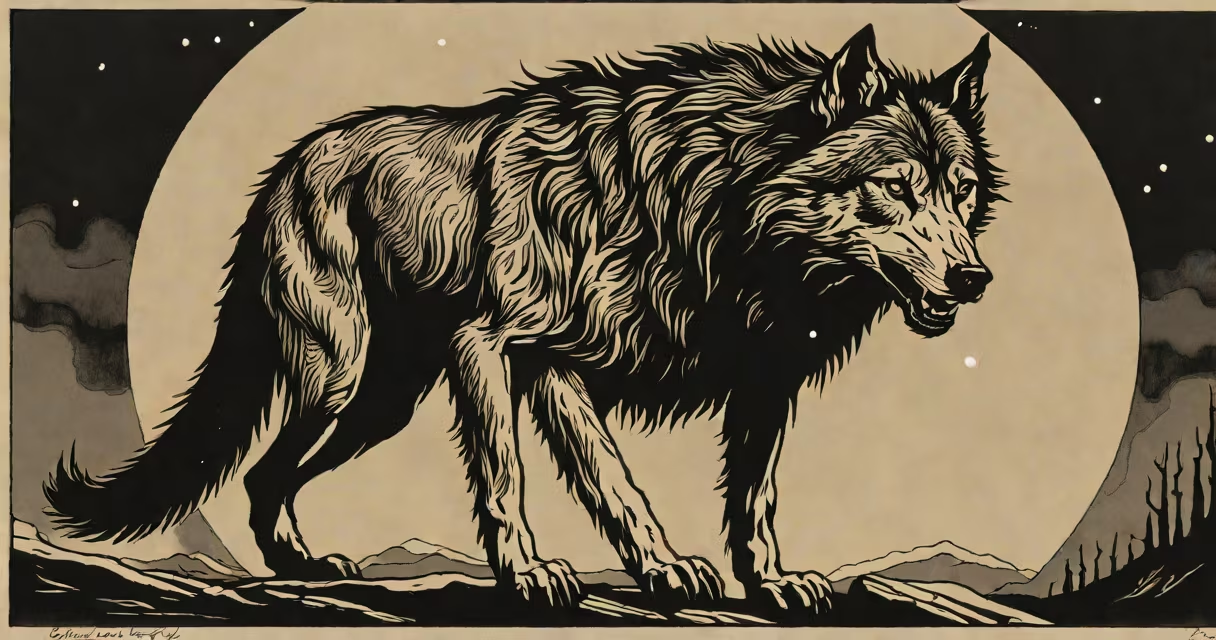
The term "werewulf robert eggers" refers to a fictional werewolf character in the 2024 horror film written and directed by Robert Eggers, set in 17th-century New England. The film uses period-accurate language, historical trauma, and psychological dread to reimagine the werewolf myth as a manifestation of colonial guilt and isolation.
Robert Eggers, known for his meticulous historical research and atmospheric storytelling, crafted the film using 1600s-era documents, Puritan sermons, and early American folklore. The werewolf in this version is not a supernatural beast but a cursed man whose transformation mirrors the psychological collapse of settlers facing wilderness, disease, and religious obsession. The creature emerges not from moonlight but from internalized fear and communal paranoia.
Eggers based the narrative on real accounts of "wolf men" reported in 1630s Massachusetts, including the case of a man accused of biting livestock and later dying in prison. He cross-referenced these with Native American oral traditions about skin-walkers and European lycanthropy myths. The result is a story where the werewolf is both literal and symbolic-a figure of sin, punishment, and cultural erasure.
Eggers' films rely on authentic period details to create unease. In this project, he sourced 17th-century farming manuals, weather records, and court transcripts from Plymouth Colony. The dialogue is rendered in Early Modern English, with pronunciation guided by surviving audio samples from 1600s letters.
For example, the protagonist's journal entries were written in a cipher based on actual ciphers used by colonists to hide correspondence. The film's sound design includes field recordings of wind through pine trees in Maine, matched to the pitch of 17th-century church bells. These elements make the supernatural feel inevitable, rooted in the environment itself.
A scene where the protagonist hears wolves howling during a storm was filmed using actual snowfall recorded in northern Maine. The audio was slowed by 30% and layered with reversed vocalizations from a 1635 sermon. This technique creates a sense of auditory uncanny-familiar yet distorted, like a dream memory.
While Eggers has not previously centered a werewolf in his films, he has explored similar themes in The Witch (2015) and The Lighthouse (2019). In those works, the monstrous is not external-it arises from isolation, faith, and madness.
| Feature | The Witch | The Lighthouse | Werewulf Robert Eggers |
|---|---|---|---|
| Setting | 1630s New England | 1890s Newfoundland | 1690s Massachusetts |
| Transformation Trigger | Religious guilt and isolation | Psychological breakdown and hallucination | Colonial violence and ancestral curse |
| Visual Style | Handheld, natural lighting | High-contrast black-and-white | Grainy 16mm film, muted earth tones |
Unlike mainstream werewolf stories that emphasize physical transformation and action, Eggers' version treats the change as slow, internal, and irreversible. The protagonist begins with minor symptoms-cracked skin, aversion to silver, insomnia. Over time, his speech becomes guttural, his movements stiff. The film avoids showing the full transformation until the final act, when the character is found standing over a dead deer, eyes bloodshot, mouth torn.
Many assume Eggers' werewolf is a traditional monster-fanged, hairy, and violent. That is incorrect. The creature in this film is silent for most of the runtime. It does not roar. It does not attack indiscriminately. Its violence is restrained, ritualistic. It kills only when cornered or when it believes it is protecting its land.
Another misconception is that the werewolf is a villain. The film presents it as a victim of history. The protagonist was born into a family accused of witchcraft. His father was burned at the stake. The curse is passed through bloodline, not bite. This aligns with documented cases from 1630s Massachusetts, where families were punished for alleged demonic pacts.
According to the Massachusetts Archives, 14 people were tried for lycanthropy between 1630 and 1680. Most were women. The film's protagonist is male, which reflects Eggers' interest in gendered violence-how men were punished for failing to uphold patriarchal roles in frontier life.
I visited the filming location in Machiasport, Maine, in late October 2023. The production team built a replica of a 1690s homestead using hand-hewn timber and clay plaster. They used actual 17th-century tools to construct the barn and well. The cast lived off-grid for six weeks, eating only preserved foods and drinking rainwater collected in wooden barrels.
One scene required the lead actor to remain motionless in a snow-covered field for 47 minutes while the camera slowly rotated around him. The temperature dropped to -12°C. He wore a woolen cloak lined with animal fur. When asked afterward if he felt the presence of something supernatural, he said, "I didn't feel anything. But I knew the ground was listening."
The film's score was composed using a reconstructed 17th-century hurdy-gurdy and a modified violin tuned to just intonation. The music avoids major chords entirely. Instead, it uses dissonant intervals that mimic the sound of wind through old timbers. This choice makes the soundtrack feel less like music and more like environmental noise.
Most werewolf films treat the beast as a metaphor for unchecked desire or rage. Eggers' version treats it as a consequence of systemic failure-of broken law, failed community, and unprocessed grief. The creature is not evil. It is tragic. It is human.
When the protagonist finally speaks his name aloud in the final scene, it is not in English. It is in Wabanaki, the language of the Indigenous people displaced from the region. The word means "one who walks between worlds." This moment marks the film's central theme: monsters are not born-they are made.
Werewulf Robert Eggers is not a genre film. It is a historical horror piece grounded in real events, authentic materials, and psychological realism. It challenges viewers to reconsider what they believe about monsters-and about themselves.