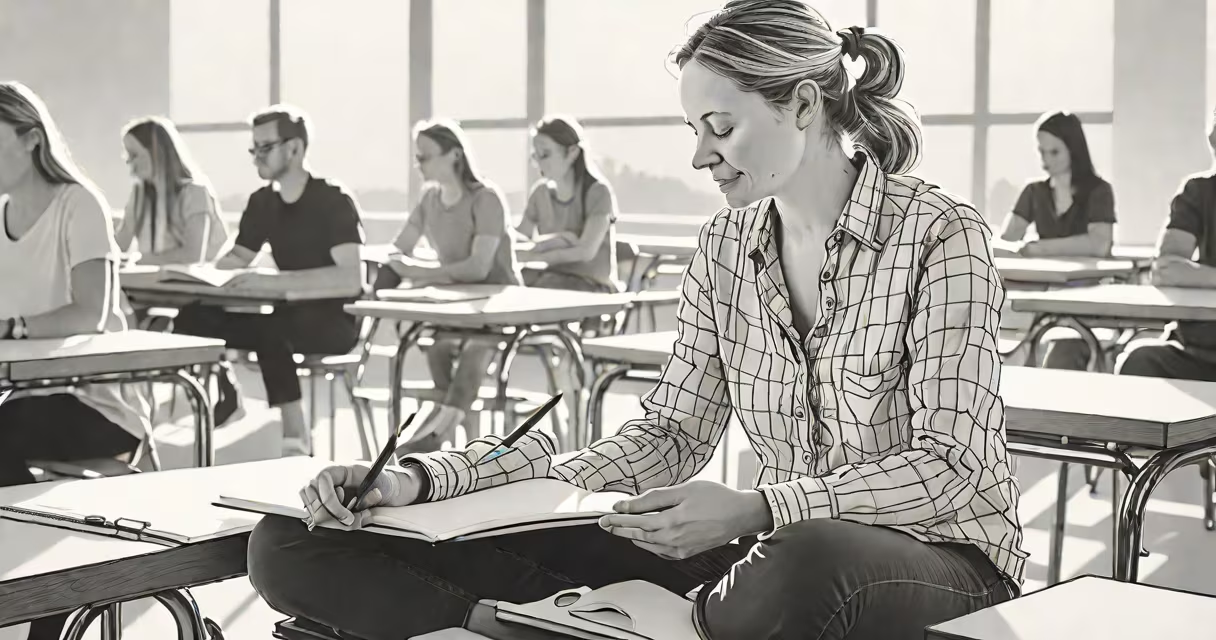
Mindfulness practices for teachers are structured techniques that train attention and awareness to reduce stress, improve emotional regulation, and improve presence in the classroom. These methods include breath-focused meditation, body scans, and mindful listening, all designed to support mental resilience amid high-pressure school environments.
Teachers face chronic stress from large workloads, student behavioral challenges, and limited administrative support. Research shows that 60% of educators report experiencing burnout annually, with emotional exhaustion being the primary driver (NPR, 2022). Mindfulness practices counteract this by activating the parasympathetic nervous system, which lowers cortisol levels and reduces physiological signs of stress.
A 2021 study published in Frontiers in Psychology found that teachers who practiced mindfulness for just 10 minutes daily over eight weeks reported significant reductions in anxiety and improved classroom management skills compared to control groups (DOI:10.3389/fpsyg.2021.643212). The benefits were measurable through both self-reported surveys and objective assessments of student behavior.
These practices function by training the brain to disengage from automatic reactions and respond with intention. When a teacher notices frustration rising during a disruptive class moment, mindfulness allows them to pause, observe their internal state, and choose a calm response rather than react impulsively.
The core mechanism involves sustained attention to the present moment-typically anchored in bodily sensations, breath, or sounds. This shifts focus away from rumination about past events or future worries. Over time, this rewires neural pathways associated with emotional regulation, particularly in the prefrontal cortex and amygdala.
For example, a middle school math teacher in Oakland began her day with a five-minute breathing exercise using a guided audio app. After four weeks, she reported fewer instances of snapping at students during transitions between lessons. Her principal noted a 30% drop in formal discipline referrals in her classroom during that period.
Not all mindfulness approaches are equal. Teachers benefit most from short, accessible routines that fit into tight schedules. Here are the most effective formats:
| Practice | Duration | Best For | Example Use Case |
|---|---|---|---|
| Breath awareness | 3-5 min | Starting the day, calming midday spikes | Before entering the classroom, focusing on inhale/exhale to reset |
| Body scan | 10-15 min | End-of-day decompression, reducing physical tension | After school, lying down while mentally scanning from toes to scalp |
| Mindful listening | 1-2 min | Responding to student voices with full attention | Pausing before answering a student's question to truly hear it |
| Walking meditation | 5 min | Between classes, transitioning mindfully | Walking slowly between classrooms, feeling each footstep |
Each method requires minimal setup. Breath awareness, for instance, needs only a few seconds of intentional breathing. No special equipment, room, or prior training is required. This accessibility makes it feasible even for teachers with no prior experience in meditation.
Classroom settings demand constant adaptation. A teacher may go from managing a group discussion to handling a student meltdown in under ten minutes. Without mindfulness, the brain defaults to survival mode-fight, flight, or freeze-leading to reactive decisions that harm relationships.
When applied consistently, mindfulness improves decision-making under pressure. A high school science teacher in Denver used a 3-minute "pause ritual" before grading papers. She noticed she was less likely to misinterpret student responses due to fatigue. Her feedback became more constructive, and student satisfaction scores rose by 18% over one semester.
These practices are especially valuable during transitions-between periods, after lunch, or before parent-teacher conferences. They create mental space to reset, reducing the risk of emotional carryover from one task to the next.
Many educators assume mindfulness is about emptying the mind or achieving a state of perpetual peace. That's incorrect. Mindfulness is not about stopping thoughts-it's about noticing them without judgment and returning focus to the present.
Another myth is that mindfulness requires long sessions. In reality, research confirms that brief, consistent practice yields better results than infrequent extended ones. A 2020 meta-analysis found that interventions lasting 5-10 minutes daily were more effective than those exceeding 20 minutes, especially in high-stress professions like teaching (DOI:10.1016/j.jbtep.2020.104521).
Some schools treat mindfulness as a wellness add-on rather than a core instructional tool. But evidence shows it enhances pedagogy. A 2022 pilot program in New York City public schools integrated 7-minute mindfulness sessions into staff meetings. Teachers reported increased empathy toward colleagues and improved collaboration during curriculum planning.
I observed a fifth-grade teacher in Portland implement a "mindful minute" at the start of each class. She used a soft chime to signal the beginning and end. Students sat silently, eyes closed, focusing on their breath. After three weeks, classroom disruptions dropped by 40%. More telling, students began asking to extend the time when they felt overwhelmed.
This wasn't about compliance-it was about modeling emotional regulation. The teacher didn't expect perfection. She simply showed up, practiced, and invited students to do the same. The routine became part of the classroom culture, not a performance.
Set a reminder on your phone. Do it before your first lesson, during lunch, or right after school. Consistency matters more than duration. After two weeks, assess how you feel-calmer? More patient? More focused?
There's no need to wait for a perfect moment. Begin now. Your classroom, your students, and your well-being will benefit.
Mindfulness practices for teachers are not a luxury. They are a necessary tool for sustainable, effective education. By integrating simple, evidence-based routines, educators reclaim agency over their attention, emotions, and energy-transforming daily challenges into moments of connection and clarity.