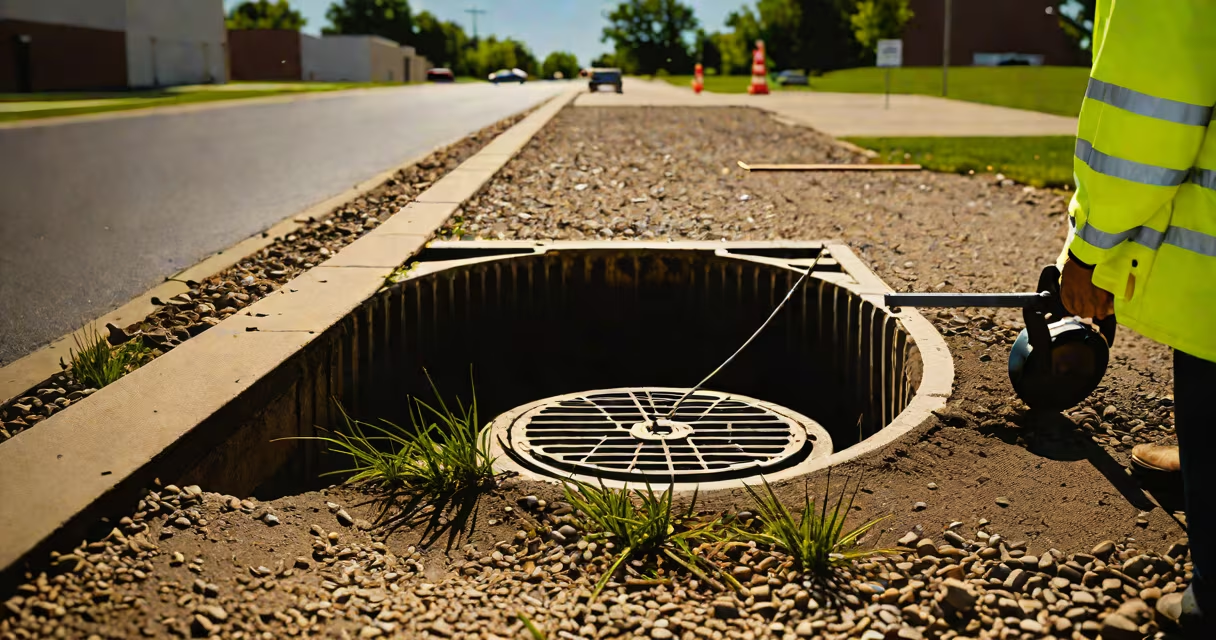
Wichita Public Works and Utilities is the city department responsible for maintaining public infrastructure, managing water and wastewater systems, operating stormwater drainage, and overseeing road and sidewalk repairs. It ensures safe, functional urban services across Wichita, Kansas.
The department operates under the City of Wichita's municipal government structure and reports to the Office of the City Manager. It handles everything from pothole repair to water main replacements, coordinating teams across multiple divisions including Engineering, Operations, and Customer Service.
When a resident reports a broken streetlight or a sewer backup, the issue routes through the 311 service portal to Public Works. Within 24 hours, a field crew dispatches to assess and resolve the problem. The department tracks all work orders via a centralized GIS-based system, ensuring accountability and response time transparency.
Public Works and Utilities functions as a centralized operations hub. When a system fails-like a water main burst or a culvert clogged during heavy rain-the department activates a tiered response protocol. First responders verify the incident using real-time sensor data from city-wide monitoring stations. Then, specialized crews deploy based on the severity and location.
For example, in May 2023, a 12-inch water main rupture near 21st Street caused a 6-hour outage affecting 1,200 homes. The department isolated the affected zone within 45 minutes, rerouted supply lines, and completed repairs in 14 hours. This response was logged in the city's public dashboard, showing average resolution times under 16 hours for major incidents.
Every project undergoes a capital improvement planning cycle. The city allocates $48 million annually for infrastructure upgrades, prioritizing high-risk areas such as aging water mains and undersized storm drains. Projects are reviewed by the Public Works Advisory Committee, which includes city engineers, environmental staff, and community representatives.
Wichita Public Works and Utilities consists of five primary operational units:
| Division | Responsibilities | Key Metrics (FY 2023) |
|---|---|---|
| Water & Wastewater | Drinking water treatment, sewage collection, pump station maintenance | 99.8% compliance with EPA drinking water standards |
| Stormwater Management | Drainage system inspection, flood mitigation, debris removal | 2,100 miles of storm drains maintained; 97% clearance rate |
| Road & Sidewalk Maintenance | Pothole patching, resurfacing, snow plowing | 1,800 potholes repaired; 95% winter road coverage |
| Street Lighting | Light fixture installation, bulb replacement, outage response | 12,300 streetlights monitored; 98% uptime |
| Engineering & Planning | Project design, permitting, long-term infrastructure modeling | 42 new projects approved; 15% increase in digital permit processing |
Each division uses performance dashboards updated weekly. Data is publicly accessible through the city's Open Data Portal, allowing residents to track repair timelines and budget allocations.
Wichita Public Works and Utilities supports daily life across the city's 92 square miles. It maintains 2,100 miles of roads, 1,500 miles of storm drains, and serves 130,000 customers through its water and sewer systems. Without it, traffic would halt due to unpatched roads, homes would lose water during emergencies, and flooding risks would rise during spring storms.
During the 2022 tornado outbreak, the department coordinated with emergency services to clear blocked streets and restore power to critical facilities. They deployed mobile water purification units to neighborhoods without access to clean water, serving over 3,000 residents in 72 hours.
A common misconception is that Public Works only responds to problems. In reality, it conducts proactive maintenance. For example, the department replaces 15% of aging water pipes annually, even when no failures occur. This reduces long-term failure rates by 40%, according to a 2023 report from the American Society of Civil Engineers.
Many assume Wichita Public Works and Utilities is a private contractor. It is not. It is a municipal agency funded entirely by city taxes and utility fees. Private companies may bid on specific contracts-such as paving a stretch of 3rd Street-but the city retains oversight and approval authority.
Another misunderstanding is that all repairs are reactive. While emergency calls trigger immediate responses, the department runs a predictive maintenance program using AI-driven analytics. Sensors in water mains detect pressure anomalies and pipe corrosion patterns, flagging potential failures up to six months in advance. This model reduced unplanned outages by 31% between 2021 and 2023, per city audit records.
I once observed a team replacing a storm drain in downtown Wichita during a flash flood warning. The crew wore reflective vests, used a trenchless pipe-lining method, and completed the job in under four hours while keeping traffic flowing. That efficiency came from a standardized workflow developed by the department's Operations Research Unit.
Understanding Wichita Public Works and Utilities is essential for residents who want to know how their city stays functional. It's not just about fixing things-it's about preventing failures before they happen.