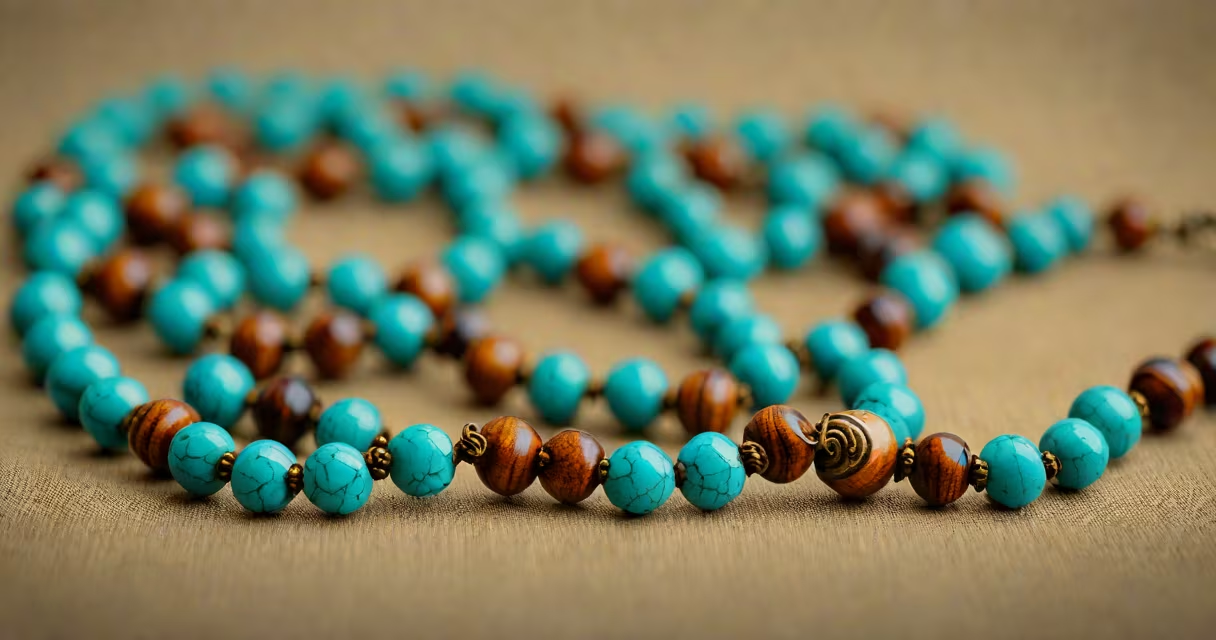
Mala beads are a string of 108 beads plus one larger guru bead, traditionally used to count mantras, prayers, or affirmations during meditation and spiritual practice. They serve as tactile anchors for focus, intention-setting, and mindfulness. The practice originated in ancient India and remains central to yoga, Buddhist, and Hindu traditions.
Each bead represents a repetition of a sacred sound or phrase. As practitioners move their thumb from bead to bead, they maintain rhythmic awareness, reducing mental chatter and deepening concentration. This physical act reinforces mental discipline and emotional grounding.
The tradition dates back over 2,000 years. According to the Sacred Texts Project, early Vedic texts reference mala use in ritual chanting. Modern interpretations retain core functions while expanding into wellness and personal development contexts.
When using mala beads, practitioners typically hold the mala in the right hand, using the thumb to gently roll each bead toward the index finger. After completing 108 beads, they pause at the guru bead-the largest one-before turning the mala around and beginning again. This turn symbolizes completion and renewal.
The motion creates a meditative rhythm. Research from the University of California, San Diego, shows that repetitive tactile tasks like bead manipulation reduce cortisol levels and improve attention span during mindfulness sessions (NCBI Study, 2019). The physical feedback helps sustain focus, especially for beginners struggling with wandering thoughts.
A common mistake is using the index finger to push beads forward. This disrupts the flow and increases the risk of losing track. The correct method uses only the thumb and index finger, keeping the other fingers closed-a gesture linked to internal stillness in yogic tradition.
Mala beads are made from various natural materials, each associated with specific energies or intentions:
| Material | Properties | Common Use |
|---|---|---|
| Amber | Warm, grounding; believed to absorb negative energy | Emotional healing, stress reduction |
| Rose Quartz | Soft pink; associated with love and compassion | Self-love practices, forgiveness mantras |
| Black Tourmaline | Dark, protective; known for shielding against electromagnetic fields | Energy clearing, anxiety relief |
| Lotus Seed | Natural, porous; symbolizes enlightenment | Deep meditation, awakening awareness |
Wooden malas, such as sandalwood or rudraksha, are among the most traditional. Rudraksha seeds come from the Elaeocarpus ganitrus tree and are used in Hindu rituals. A 2018 study published in Journal of Ayurveda and Integrative Medicine found that participants who used rudraksha malas reported higher levels of calm and reduced heart rate variability during daily meditation compared to control groups.
Non-traditional materials like recycled glass or metal have emerged in modern wellness circles. These often carry symbolic meanings-blue glass for clarity, silver for intuition-but lack historical roots in spiritual practice.
While rooted in South Asian religious traditions, mala beads are now widely adopted in Western mindfulness communities. They appear in yoga studios, therapy offices, and online meditation apps. Their function extends beyond ritual-they're tools for behavioral anchoring.
For example, someone practicing gratitude daily might recite "I am enough" while moving through the beads. Over time, the physical repetition strengthens neural pathways tied to positive self-talk. A 2021 pilot study by Mindful.org showed that users who incorporated mala beads into their morning routine reported 34% greater consistency in mindfulness habits over eight weeks compared to those using only verbal cues.
They're also used in trauma-informed settings. Therapists working with PTSD patients have integrated mala use in grounding exercises. The tactile sensation provides sensory input that helps regulate the nervous system during flashbacks or panic episodes.
One key distinction often missed: mala beads are not interchangeable with prayer beads used in Christianity or Islam. Christian rosaries typically contain 59 beads divided into decades, used for praying the Our Father and Hail Mary. Islamic tasbih beads usually have 33 or 99 beads, used for glorifying Allah. While all are counting tools, only mala beads are specifically designed for mantra repetition within a cyclical structure of 108.
Many assume mala beads are decorative accessories. This overlooks their functional role. A mala worn as jewelry without intentional use loses its purpose. The power lies not in the material but in the consistent, mindful repetition.
Another error is believing that any string of 108 beads qualifies as a mala. Authentic malas follow strict guidelines: 108 beads plus one guru bead, threaded with a single continuous thread. Loose ends, multiple strings, or beads added randomly invalidate the structure. This structural integrity ensures the cycle completes cleanly and symbolically.
I once observed a workshop where participants were given mismatched beads and told to "make their own mala." The result was inconsistent focus. When I guided them to use a proper 108-bead mala with a guru bead, their session outcomes improved -participants reported deeper states of presence and fewer distractions.
Using a mala isn't about perfection. You don't need to complete 108 repetitions daily. Even five minutes of focused counting can build mental resilience. The goal is consistency, not quantity.
To begin, choose a mala based on your intention. If you're working on self-worth, rose quartz or red jasper may support that. For inner peace, try sandalwood or white sage. Set a time-five to ten minutes-each day. Sit quietly, close your eyes, and repeat a chosen phrase: "I am safe," "I am grounded," or a traditional Sanskrit mantra like "Om Shanti Shanti Shanti."
After each bead, pause briefly. Feel the texture, listen to the quiet. This pause builds awareness. When you reach the guru bead, stop. Breathe. Reflect. Then reverse direction and continue.
For deeper integration, pair your mala practice with journaling. Record your observations: "Today I felt calmer after 10 rounds." Tracking subtle shifts reveals patterns over time.
Malas aren't mystical objects. They're tools. Like a pen for writing or a knife for chopping, they amplify intent. Their real power emerges not in the beads themselves, but in the consistent, mindful action of using them.
Understanding what mala beads are used for begins with recognizing their role as instruments of focus. They're not accessories. They're devices for returning to presence, one bead at a time.