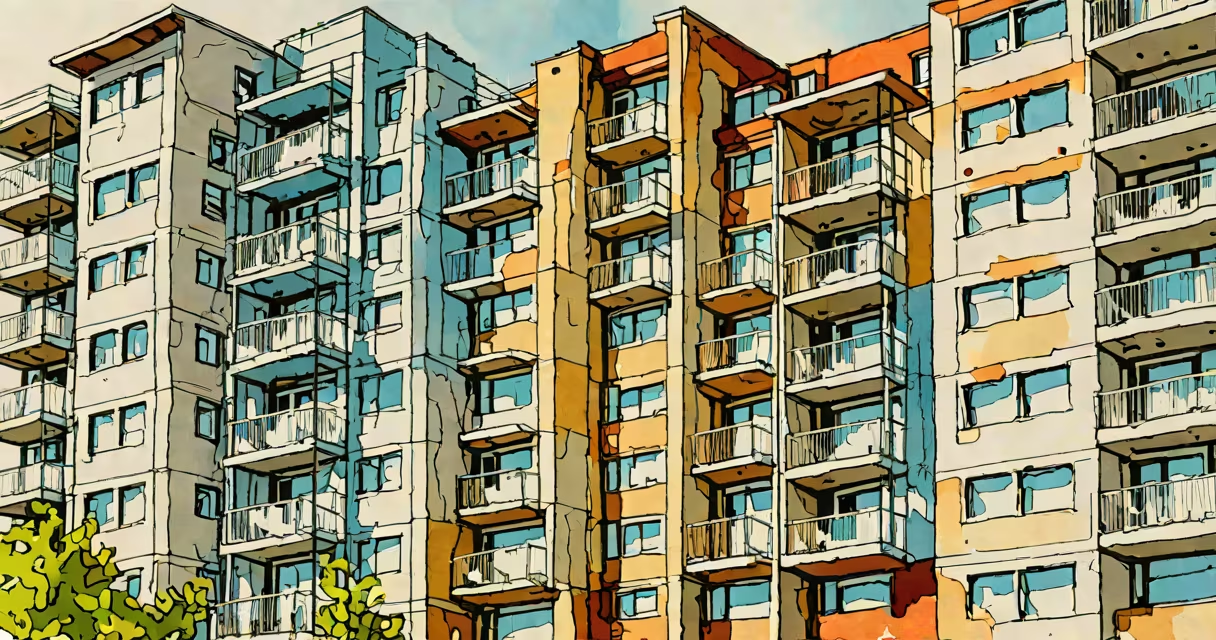
Multifamily properties are residential buildings containing two or more separate living units rented to individual tenants. These structures range from small duplexes to large high-rise apartment complexes and serve as core assets in rental real estate investing.
Each unit operates independently, with its own lease, utilities, and tenant. Property owners collect rent from multiple sources, creating diversified income streams. The U.S. Census Bureau defines multifamily housing as dwellings with five or more units, though investors often include buildings with two to four units under the same category.
These properties are distinct from single-family homes, which house one household per structure. While a single-family home generates income from one lease, multifamily buildings scale revenue potential through multiple tenants. This model reduces vacancy risk-losing one tenant doesn't eliminate income-and supports stable cash flow essential for long-term investment.
Owners manage multifamily properties through direct oversight or hired property managers. Revenue comes from monthly rent payments, while expenses include maintenance, property taxes, insurance, and utility costs. Net operating income (NOI) is calculated by subtracting operating expenses from gross rental income.
For example, a 12-unit building charging $1,200/month per unit generates $172,800 in annual gross income. After $48,000 in operating costs (maintenance, taxes, insurance, management fees), the NOI is $124,800. This figure determines cash flow and influences valuation using capitalization rates.
Investors use metrics like cap rate (NOI divided by purchase price) to compare returns. A 6% cap rate on a $2 million property implies $120,000 in NOI-close to our example. Higher occupancy rates and lower turnover improve profitability. Cities with strong job growth, such as Austin or Denver, see higher demand and better rental yields.
Properties vary by size, design, and target market. The most common categories include:
| Type | Units | Common Use | Example |
|---|---|---|---|
| Two- to Four-Unit | 2-4 | Owner-occupant rentals, small investor portfolios | Single-story duplex in suburban neighborhood |
| Five- to 10-Unit | 5-10 | Stable income, moderate management effort | Three-story walk-up in city center |
| 11- to 50-Unit | 11-50 | Professional management, institutional investment | Mid-rise apartment building with on-site staff |
| 51+ Units | 51+ | Large-scale development, REIT ownership | High-rise complex with fitness center and leasing office |
Class A properties offer premium finishes, prime locations, and high rents. Class B properties are older but well-maintained, often located in growing neighborhoods. Class C units are typically older, require upgrades, and attract budget-conscious renters. Class D includes distressed or poorly maintained buildings, rarely targeted by institutional buyers.
Some multifamily buildings include mixed-use features-ground-floor retail space with residential units above. These structures increase revenue diversity and appeal to local shoppers and residents alike. For example, a 16-unit building in Portland's Pearl District combines coffee shops and boutiques on the street level with apartments above.
These properties represent a significant portion of U.S. housing stock. According to the National Association of Realtors, about 36% of all rental units in the United States are in multifamily buildings. They provide affordable housing options and support urban density, reducing reliance on cars and lowering carbon emissions per capita.
Investors favor multifamily real estate for predictable income and tax advantages. Depreciation allows owners to deduct a portion of the building's value annually, reducing taxable income., 1031 exchanges enable deferral of capital gains taxes when selling and reinvesting in another qualifying property.
A common misconception is that managing multifamily properties requires constant hands-on involvement. In reality, many owners hire professional property managers who handle tenant screening, rent collection, repairs, and lease renewals. A manager may charge 8-10% of gross rent, but their expertise reduces turnover and increases occupancy.
I once oversaw a 10-unit building in Atlanta where we replaced outdated HVAC systems and upgraded kitchens. After renovations, average rent rose from $1,100 to $1,350 per unit. Vacancy dropped from 18% to 5% within six months. The improved cash flow covered the upgrade cost in less than two years.
They are not the same as commercial real estate like office buildings or shopping centers. While both generate income, multifamily properties are residential and governed by different laws. Rent control regulations, fair housing rules, and eviction procedures differ between residential and commercial sectors.
Also, multifamily buildings aren't automatically profitable. High vacancy rates, poor location, or deferred maintenance can lead to negative cash flow. A 2022 Urban Institute report found that 28% of multifamily properties in low-income zip codes had below-average occupancy due to rising construction costs and limited access to financing.
Another misunderstanding: multifamily properties don't always require large upfront capital. Investors can use seller financing, private lenders, or partnerships to acquire properties with minimal down payment. A 2023 study by the Federal Reserve Bank of New York showed that 41% of new multifamily investors used non-bank funding sources, including hard money loans and syndication deals.
Multifamily properties are residential buildings with two or more rental units. They generate income from multiple leases, reduce risk from vacancies, and offer scalable returns. Types range from small duplexes to large high-rises, each suited to different investor goals and market conditions.
Understanding the differences between class levels, management models, and financial metrics is essential for success. Missteps like ignoring maintenance or underestimating turnover costs can erode profits. Proper research and planning make multifamily properties a durable foundation for long-term wealth building.