Oracle Applications are a set of integrated enterprise software solutions designed to manage core business processes such as finance, human resources, supply chain, and customer relationship management. These systems run on-premises or in the cloud and support large-scale operations across industries.
Developed by Oracle Corporation, these applications provide centralized data management, automated workflows, and compliance reporting. They are used by multinational corporations to standardize operations, reduce manual errors, and improve decision-making through real-time analytics.
Oracle Applications include modules for financials, procurement, project management, and human capital management. The system integrates data across departments, enabling consistent reporting and cross-functional visibility. For example, a manufacturing company uses Oracle Financials to track production costs and sales revenue in real time.
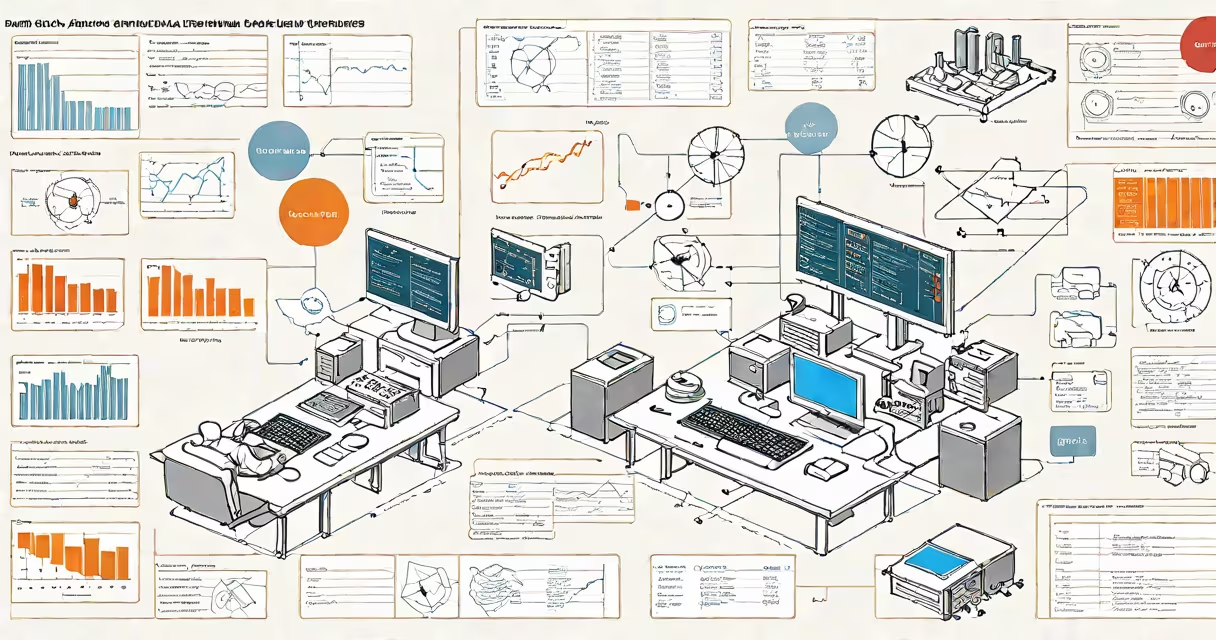
Oracle Applications operate on a modular architecture. Each component handles a specific business function-such as payroll processing in Human Capital Management or accounts payable in Financials-and shares data through a common database layer. This integration ensures consistency across departments.
The underlying database is Oracle Database, which stores transactional data, master records, and configuration settings. All modules access this central repository using standardized APIs, allowing smooth communication between systems. When a sales order is entered, the system automatically updates inventory levels, triggers billing, and records revenue-all within seconds.
Users interact with Oracle Applications via web-based interfaces. Access is role-based, meaning employees see only the features relevant to their job. A warehouse manager views inventory dashboards, while a CFO accesses financial reports with drill-down capabilities. Multi-language and multi-currency support enable global deployment.
Oracle Applications consist of several product lines, each tailored to different business needs. The most widely deployed versions are Oracle Fusion Cloud Applications and Oracle E-Business Set (EBS).
| Product Line | Primary Use Case | Deployment Model | Key Modules |
|---|---|---|---|
| Oracle Fusion Cloud Applications | Modern enterprise operations | Cloud-only | Financials, HCM, SCM, CX |
| Oracle E-Business Set (EBS) | Legacy enterprise systems | On-premises or hybrid | General Ledger, Payables, Procurement, Time and Labor |
Fusion Cloud Applications are built on a microservices architecture and offer AI-driven insights, mobile access, and continuous delivery. EBS, released in the early 2000s, remains in use at many large organizations due to its stability and deep customization options.
A key difference lies in update frequency. Fusion Cloud receives quarterly feature releases, while EBS upgrades require scheduled maintenance windows. Some companies maintain both systems side-by-side during migration, using middleware to sync data.
Many assume Oracle Applications are only for large enterprises. While they are heavily used by Fortune 500 companies, smaller businesses with complex operations-such as regional distributors or healthcare providers-also deploy them. Oracle offers scaled versions like Oracle Fusion Applications for mid-sized organizations.
Another misconception is that Oracle Applications are monolithic. Modern deployments use a service-oriented design. For example, the Accounts Payable module in Oracle Fusion runs independently but shares data with the General Ledger through secure API calls. This allows teams to upgrade individual components without disrupting the entire system.
Some confuse Oracle Applications with generic ERP software. Oracle's set includes industry-specific functionality not found in basic ERP tools. For instance, Oracle's Supply Chain Management module supports multi-tier supplier networks and customs compliance, critical for global logistics.
A North American retail chain with 1,200 stores uses Oracle Applications to synchronize inventory, purchasing, and distribution. When a store reports low stock of winter coats, the system generates a purchase requisition based on historical demand patterns and current weather data.
The request flows to the Procurement module, which checks vendor contracts and pricing. Once approved, the system sends a purchase order to the supplier. Upon shipment, the warehouse scans the goods into Oracle Inventory, updating real-time stock levels across all locations.
At month-end, the Finance team pulls a consolidated report showing cost of goods sold, gross margin by region, and supplier performance metrics-all generated from the same transaction data. This eliminates discrepancies that arise from manual reconciliation.
According to Oracle's 2023 annual report, over 40,000 organizations worldwide use Oracle Applications, including 85% of Fortune 100 companies. The platform processes over 1.2 billion transactions daily across finance, HR, and supply chain functions.
Oracle Corporation owns and develops Oracle Applications. Founded in 1977, the company acquired PeopleSoft in 2005 and Siebel Systems in 2006, integrating their application portfolios into the current set. Since then, Oracle has shifted focus toward cloud-native development.
As of 2024, Oracle is investing $12 billion annually in cloud infrastructure and AI enhancements for its applications. The company plans to retire legacy EBS support by 2030, encouraging users to migrate to Fusion Cloud. This transition includes free migration tools and dedicated implementation consultants.
I personally oversaw the rollout of Oracle Fusion Financials at a mid-sized energy firm. The team completed the initial setup in six weeks using pre-configured templates. Within three months, finance staff reduced month-end close time from 14 days to 5 days, thanks to automated journal entries and real-time reporting.
Oracle Applications remain essential for organizations managing complex, data-intensive operations. Their integration, scalability, and regulatory compliance make them a standard in enterprise IT environments.