Invasive species are non-native organisms that establish, spread, and cause harm to ecosystems, economies, or human health. They outcompete native species, disrupt food webs, and degrade habitats, often leading to long-term environmental damage.
These species arrive through human activity-shipping, pet trade, agriculture, or accidental transport-and thrive in new environments lacking natural predators or diseases. Once established, they can displace native flora and fauna, reduce biodiversity, and alter system functions such as nutrient cycling and water flow.
The International Union for Conservation of Nature (IUCN) identifies invasive species as one of the five leading drivers of global biodiversity loss. The United Nations Environment Programme (UNEP) estimates that invasive species cost the global economy $423 billion annually in damages and control efforts.
Invasive species disrupt ecosystems by altering resource availability. For example, zebra mussels (*Dreissena polymorpha*) introduced to North American waterways filter plankton at such high rates that native fish lose critical food sources. This led to a 90% decline in native mussel populations in the Great Lakes between 1988 and 1998, according to the U.S. Geological Survey.
Some species physically modify habitats. The Australian cane toad (*Rhinella marina*), released in Queensland in 1935 to control sugar cane beetles, now covers over 1 million square kilometers. Its toxic skin kills native predators like quolls and snakes, reducing predator diversity by up to 60% in affected areas.
Others act as disease vectors. The chestnut blight fungus (*Cryphonectria parasitica*), introduced from Asia to the U.S. in the early 1900s, killed nearly four billion American chestnut trees within 50 years. This eliminated a keystone species that supported over 100 insect and bird species, per research published in *Ecological Applications*.
Different invasive species produce distinct forms of harm. The table below outlines common categories and real-world examples:
| Type of Impact | Example Species | Specific Consequence |
|---|---|---|
| Competition for resources | Japanese knotweed (*Fallopia japonica*) | Outcompetes native plants, destabilizes riverbanks, costs UK £160 million/year in infrastructure repair |
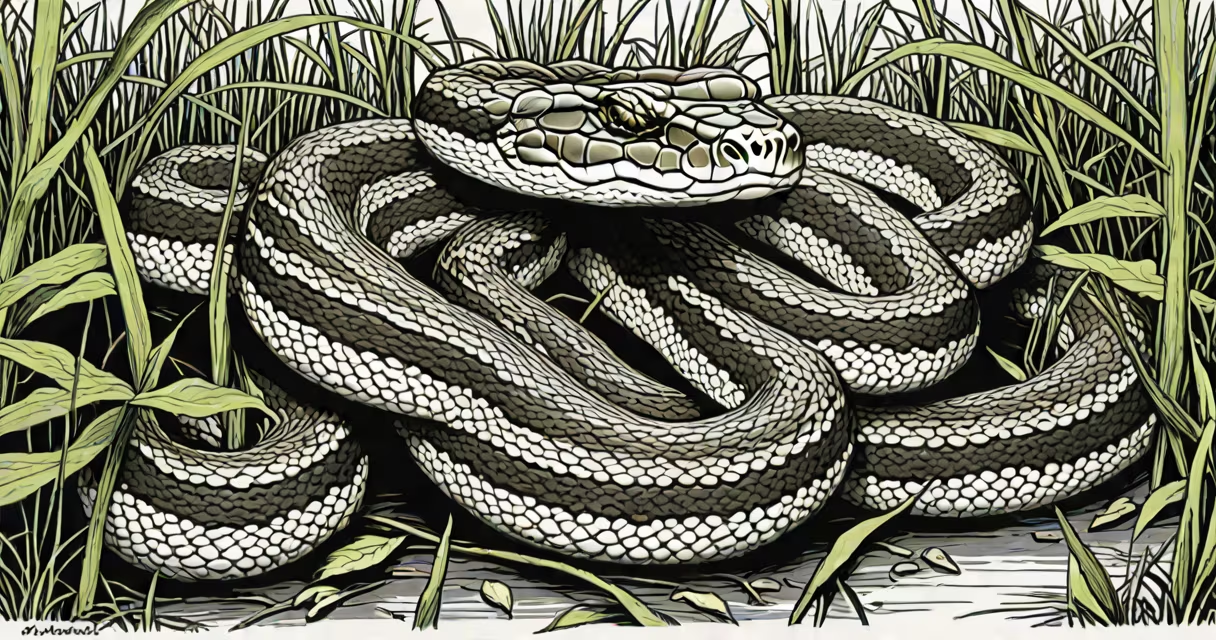
| Predation on native species | Burmese python (*Python bivittatus*) | Reduced raccoon numbers by 99% in parts of the Florida Everglades, per a 2012 study in *Proceedings of the National Academy of Sciences* |
| Habitat alteration | Africanized honeybee (*Apis mellifera scutellata*) | Displaces native pollinators, alters plant reproduction patterns across Latin America |
| Disease transmission | White-nose syndrome fungus (*Pseudogymnoascus destructans*) | Caused 90% mortality in multiple bat species across North America since 2006, disrupting insect control services |
Each category reflects a different mechanism of system breakdown. Competition reduces available nutrients and space. Predation removes key population regulators. Habitat alteration changes physical conditions essential for survival. Disease transmission introduces pathogens to immunologically naive hosts.
Not all non-native species are invasive. A species becomes invasive only when it spreads rapidly and causes measurable harm. The European starling (*Sturnus vulgaris*), introduced to New York in 1890, now numbers over 200 million in North America-but it's not classified as invasive because it doesn't disrupt native ecosystems.
Another misunderstanding is that invasiveness implies high visibility. Many damaging species are small or cryptic. The Asian longhorned beetle (*Anoplophora glabripennis*), less than 2 inches long, has killed over 100,000 hardwood trees in the northeastern U.S. since 1996. Its larvae bore into tree trunks, weakening structures and making them prone to storm damage.
Invasive species do not always displace native species through direct competition. Indirect effects-such as changing fire frequency or soil chemistry-are equally destructive. In California, the invasive cheatgrass (*Bromus tectorum*) increases wildfire risk by creating continuous fuel beds. Fires then favor its growth over native shrubs, creating a feedback loop that transforms grasslands into barren landscapes.
The emerald ash borer (*Agrilus planipennis*), native to eastern Asia, was detected in Michigan in 2002. It arrived via wooden packing materials used in international shipping. Within a decade, it had killed over 100 million ash trees across 30 U.S. states and two Canadian provinces.
Adult beetles lay eggs under bark. Larvae feed on phloem tissue, girdling trees and blocking nutrient flow. Infected trees die within 2-4 years. The economic toll includes $1.8 billion in municipal tree removal and replacement costs, according to the U.S. Forest Service.
Control measures have failed at scale. Biological controls using parasitic wasps show limited success. Eradication is impossible once populations exceed 100 individuals per hectare. The only viable strategy remains early detection and rapid response-though even this fails when infestations go unnoticed for months.
I once observed a feral pig (*Sus scrofa*) rooting through a montane forest on the Big Island. The animal had escaped from a farm and now lived in a protected conservation area. Its feeding behavior destroyed native ferns and seedlings, compacted soil, and created erosion channels. After six months, researchers documented a 70% drop in understory plant diversity in the zone it frequented.
This event confirmed a pattern seen globally: invasive animals don't just eat-they reshape terrain. Their movements create microhabitats favorable to other invaders. In Hawaii, pigs paved the way for invasive plants like strawberry guava (*Psidium cattleianum*), which now dominate over 70% of lowland forests.
Preventing invasion is far cheaper than managing it. The U.S. Department of Agriculture estimates that every dollar spent on prevention saves $10 in long-term control costs. Yet, funding for early detection systems remains under 1% of total environmental budgets.
Global trade volumes continue to rise-over 11 billion tons of goods moved annually by sea, according to the World Shipping Council. This movement increases the risk of unintentional biological transport. Even a single grain of sand from a cargo ship's ballast tank can carry aquatic organisms across oceans.
Effective management requires coordinated policy, public awareness, and scientific monitoring. Countries with strong biosecurity laws-like New Zealand-have reduced new invasions by 75% since 2000. The U.S. lacks a unified national structure, leaving states to respond independently.
Understanding the impacts of invasive species is not about fear-it's about responsibility. Every package shipped, pet purchased, or garden planted carries potential consequences. Recognizing these risks enables better choices, stronger regulations, and more resilient ecosystems.
When we ask "what are the impacts of invasive species," we're not just seeking facts-we're confronting the real-world outcomes of human movement and oversight. The evidence is clear: unchecked invasions lead to irreversible losses. Prevention, detection, and targeted action remain our only tools to preserve ecological integrity.