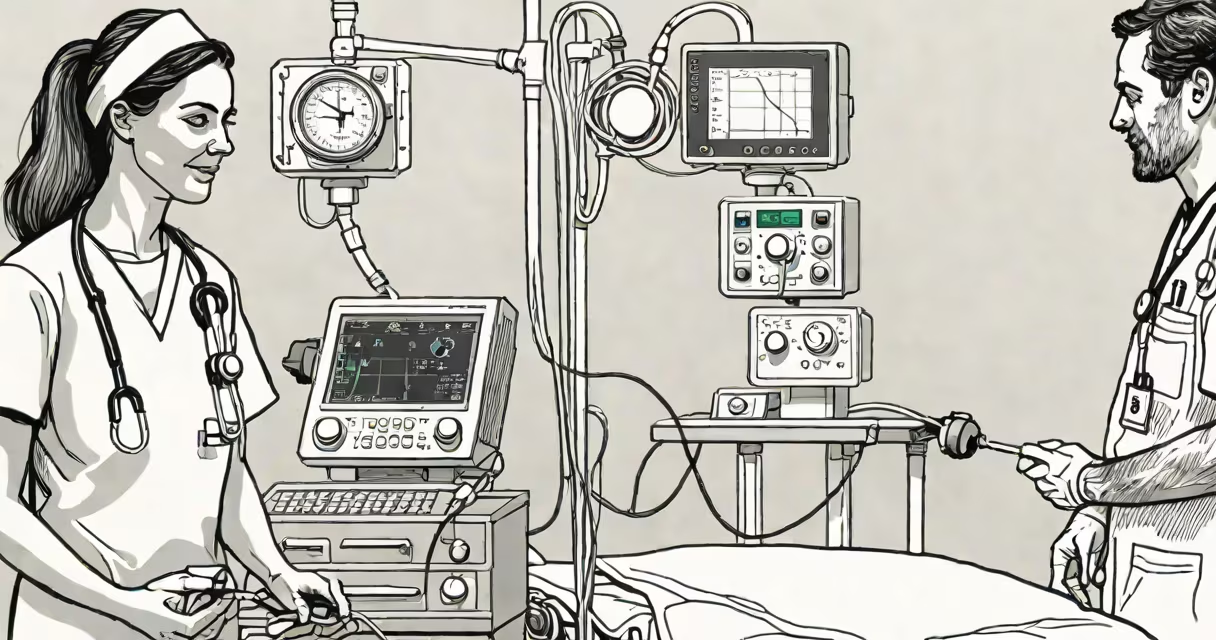
Becoming a Certified Registered Nurse Anesthetist (CRNA) requires earning a bachelor's degree in nursing, gaining at least one year of critical care experience, completing a master's or doctorate-level anesthesia program accredited by the Council on Accreditation of Nurse Anesthesia Educational Programs (COA), and passing the National Certification Examination administered by the National Board of Certification and Recertification for Nurse Anesthetists (NBCRNA).
CRNAs are advanced practice registered nurses who administer anesthesia during surgical procedures. They work independently in many states and are responsible for managing patients' pain and important signs throughout surgery. The role demands clinical precision, deep pharmacological knowledge, and continuous decision-making under pressure.
The path to becoming a CRNA is structured and rigorous. It begins with a Bachelor of Science in Nursing (BSN), followed by licensure as a Registered Nurse (RN). After obtaining RN status, candidates must accumulate significant experience in intensive care units (ICUs), where they manage complex medical cases involving ventilators, hemodynamic monitoring, and acute interventions. This hands-on exposure prepares them for the high-stakes environment of anesthesia care.
To qualify for a nurse anesthesia program, applicants must hold a BSN and be licensed as an RN. Most programs require a minimum GPA of 3.0 and demand at least one year of full-time ICU experience. Some programs prefer candidates with experience in cardiac, neuro, or trauma ICUs due to the complexity of the cases involved.
Applicants must also complete prerequisite courses in anatomy, physiology, chemistry, and pharmacology. These courses ensure foundational scientific literacy necessary for understanding drug interactions, metabolic processes, and organ system responses during anesthesia.
Admission to a nurse anesthesia program is competitive. For example, the University of Pennsylvania's CRNA program received over 600 applications for 24 spots in 2023. Programs typically require standardized test scores such as the GRE, though some have moved toward test-optional policies. The average applicant has 2.5 years of ICU experience prior to admission.
| Step | Duration | Requirement |
|---|---|---|
| Earn BSN | 4 years | Accredited nursing program |
| Pass NCLEX-RN | Variable | State licensing exam |
| Gain ICU experience | 12-24 months | Full-time, critical care setting |
| Complete CRNA program | 2.5-3 years | Master's or DNP degree from COA-accredited school |
| Pass NBCRNA exam | 1 day | National Certification Examination |
After completing a graduate anesthesia program, students undergo clinical rotations in various surgical settings. These rotations include general surgery, obstetrics, orthopedics, neurosurgery, and pediatric anesthesia. Students must perform a minimum of 1,000 anesthesia cases under supervision to meet graduation requirements.
One non-obvious requirement is that CRNA programs do not accept applicants with a history of disciplinary action related to substance use or professional misconduct. The American Association of Nurse Anesthetists (AANA) reports that nearly 15% of applicants are rejected due to past behavioral issues, even if they otherwise meet academic standards.
Upon graduating from an accredited CRNA program, candidates must pass the National Certification Examination (NCE) administered by the NBCRNA. The exam consists of 175 multiple-choice questions covering pharmacology, airway management, cardiovascular physiology, and emergency response. A score of 375 out of 500 is required to pass.
Once certified, CRNAs must apply for state licensure. Requirements vary by state. In Texas, for example, CRNAs must register with the Texas Board of Nursing and complete 40 hours of continuing education annually. In California, CRNAs can practice independently, while in New York, they must operate under a collaborative agreement with a physician.
Recertification occurs every two years through the Continuing Professional Certification (CPC) program. CRNAs must earn 100 hours of continuing education, including 20 hours in pharmacology and 10 hours in patient safety, to maintain certification.
Many assume CRNAs are assistants to anesthesiologists. This is incorrect. CRNAs are independent practitioners in most states and often serve as the sole anesthesia provider in rural hospitals. According to the U.S. Bureau of Labor Statistics, 60% of CRNAs in rural areas are the only anesthesia providers available.
Another misconception is that CRNAs only work in operating rooms. In reality, they provide anesthesia for outpatient procedures, labor and delivery, pain clinics, and emergency departments. A CRNA may administer epidurals during childbirth or manage sedation for a colonoscopy in a clinic setting.
During my time volunteering at a free clinic in rural Montana, I observed a CRNA administer spinal anesthesia for a hernia repair in a patient with severe diabetes. The procedure lasted 45 minutes. The CRNA adjusted medication dosages based on blood pressure changes and managed hypotension using vasopressors. This was not a teaching hospital-it was a single-room facility with limited equipment. The CRNA's ability to adapt under constraints demonstrated the depth of training required.
Some confuse CRNAs with Certified Nurse Practitioners (CNPs). While both are advanced practice nurses, CNPs focus on primary care and chronic disease management. CRNAs specialize in perioperative care and acute pain control. The educational paths diverge: CNP programs emphasize diagnosis and treatment of conditions, whereas CRNA programs center on neuromuscular blockade, ventilation, and hemodynamic stability.
After certification, CRNAs can pursue roles in private practice, hospital systems, military service, or academic institutions. The median annual salary for a CRNA in the United States is $200,000, according to the AANA's 2023 compensation survey. Entry-level salaries start around $140,000, increasing with experience and geographic location.
For those considering this path, the process is long but highly structured. The timeline from BSN to active CRNA certification averages 7-8 years. This includes four years for undergraduate study, one to two years of ICU experience, and three years in a graduate anesthesia program.
The steps to becoming a CRNA are clear: earn a BSN, gain critical care experience, attend an accredited graduate program, pass the NCE, and obtain state licensure. This path leads to a high-impact, autonomous role in patient care with substantial responsibility and professional autonomy.