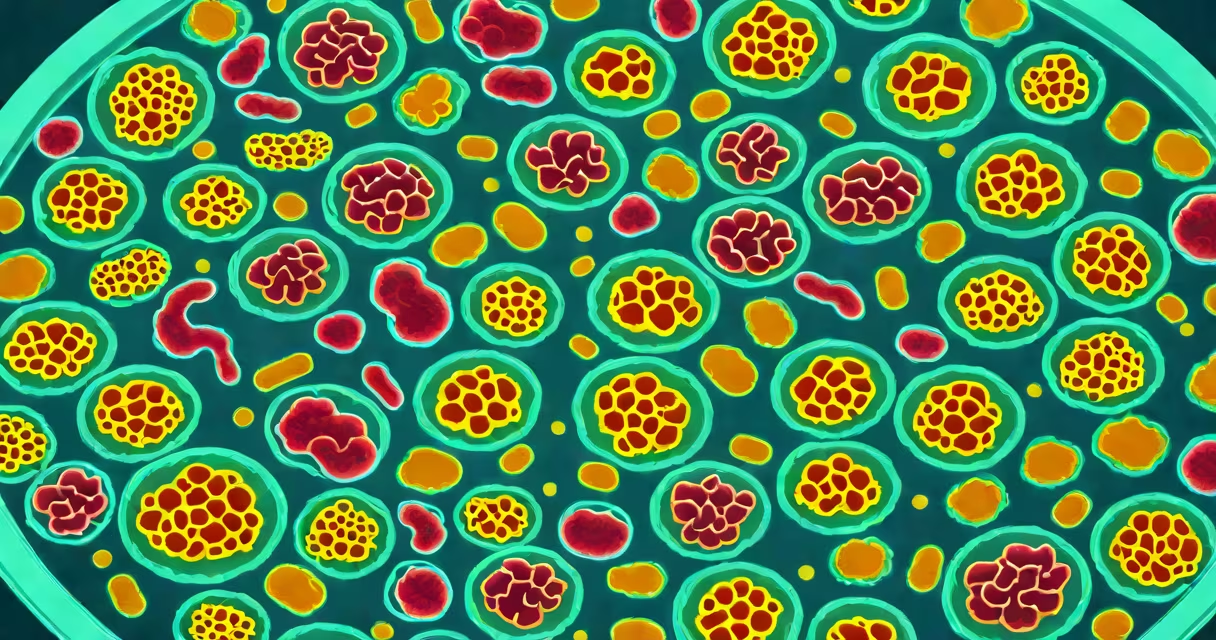
Bacteria resistant to antibiotics are strains that survive exposure to drugs designed to kill or inhibit them, often due to genetic changes or acquired resistance genes. These organisms pose serious threats in healthcare and community settings because standard treatments fail.
Antibiotic resistance arises when bacteria evolve mechanisms to neutralize or expel antibiotics. This includes producing enzymes that break down the drug, altering the drug's target site, or pumping the antibiotic out of the cell. Resistance can develop naturally over time, but misuse of antibiotics accelerates the process.
According to the CDC, over 2.8 million antibiotic-resistant infections occur annually in the U.S., leading to more than 35,000 deaths. The World Health Organization identifies antibiotic resistance as one of the top 10 global public health threats, with some resistant strains spreading rapidly across borders.
Resistance begins when a mutation or gene transfer allows a bacterium to survive antibiotic exposure. Surviving cells multiply and pass the trait to offspring. Over time, entire populations may become resistant.
For example, methicillin-resistant *Staphylococcus aureus* (MRSA) emerged after widespread use of methicillin in hospitals. The bacterium acquired a gene called *mecA*, which codes for a modified penicillin-binding protein that resists beta-lactam antibiotics. This single genetic change renders common treatments ineffective.
Horizontal gene transfer-where bacteria share resistance genes via plasmids-speeds up resistance spread. A single *E. coli* strain can transfer resistance to multiple antibiotic classes within hours under lab conditions, demonstrating how quickly resistance can emerge in real-world environments.
Several bacterial species are well-documented for their resistance profiles. The following table outlines key pathogens, their resistance mechanisms, and clinical significance.
| Bacterium | Resistant To | Key Resistance Mechanism | Common Infection Type |
|---|---|---|---|
| Staphylococcus aureus (MRSA) | Methicillin, oxacillin, other beta-lactams | *mecA* gene alters penicillin-binding protein | Skin/soft tissue infections, pneumonia, bloodstream infections |
| Enterobacteriaceae (ESBL producers) | Penicillins, cephalosporins | Extended-spectrum beta-lactamase enzymes | UTIs, sepsis, intra-abdominal infections |
| Carbapenem-resistant Enterobacteriaceae (CRE) | Carbapenems, broad-spectrum antibiotics | Carbapenemase enzymes (e.g., KPC, NDM) | Life-threatening bloodstream and respiratory infections |
| Pseudomonas aeruginosa (MDR-Pa) | Multiple classes including fluoroquinolones, aminoglycosides | Efflux pumps, enzymatic degradation | Hospital-acquired pneumonia, burn wound infections |
CRE, or carbapenem-resistant Enterobacteriaceae, are particularly concerning. They are often referred to as "nightmare bacteria" by the CDC due to limited treatment options. Infections caused by CRE have mortality rates exceeding 50% in some patient groups, especially those with weakened immune systems.
A 2022 study published in *The Lancet Infectious Diseases* found that CRE accounted for nearly 10% of all hospital-acquired gram-negative bloodstream infections in Europe, with resistance rates rising in intensive care units.
Many people assume that "resistant bacteria" means "stronger" or "more dangerous." That's not always true. Resistance doesn't equate to higher virulence. Some resistant strains are less fit in the absence of antibiotics, meaning they don't spread as easily in natural environments.
However, resistance creates a treatment bottleneck. For example, a patient with a UTI caused by an ESBL-producing *E. coli* cannot be treated with amoxicillin or ceftriaxone. Doctors must switch to broader agents like meropenem or fosfomycin, which carry higher risks of side effects and cost more.
I once observed a case in a rural clinic where a patient with a persistent urinary tract infection was prescribed multiple courses of ciprofloxacin. After failing to improve, a urine culture revealed ESBL-producing *E. coli*. The doctor switched to nitrofurantoin, which was effective. This case highlights how misdiagnosis or delayed testing leads to prolonged suffering and increased resistance risk.
Effective control relies on reducing unnecessary antibiotic use. The WHO recommends prescribing antibiotics only when needed and ensuring patients complete the full course. In hospitals, strict infection control measures-including hand hygiene, isolation protocols, and environmental cleaning-help prevent transmission of resistant strains.
Surveillance programs track resistance patterns. The CDC's National Healthcare Safety Network (NHSN) monitors antibiotic resistance in U.S. healthcare facilities. Data from 2023 showed a 12% decline in MRSA bloodstream infections since 2015, attributed to improved screening and decolonization protocols.
When resistance is suspected, molecular diagnostics such as PCR can detect resistance genes within hours, enabling faster targeted therapy. In contrast, traditional culture methods take 24-48 hours, delaying appropriate treatment.
People frequently confuse antibiotic resistance with immunity. Bacteria do not "develop immunity" like human immune systems. Instead, resistance results from specific biochemical adaptations. A bacterium isn't "immune" to penicillin-it's either killed by it or survives due to a structural change in its cell wall or enzyme activity.
Another misconception is that all resistant bacteria are hospital-only threats. While healthcare settings concentrate high-risk strains, community-acquired resistant infections are increasing. For example, community-associated MRSA (CA-MRSA) spreads through skin contact in schools, gyms, and households, often causing severe skin abscesses.
Resistance is not a new phenomenon. Alexander Fleming warned about it in his 1945 Nobel Prize speech, stating, "There is a danger that the public may think that antibiotics are a cure-all." Resistance has existed since the early days of penicillin use, but modern practices have accelerated its emergence.
Understanding what bacteria are resistant to antibiotics is essential for safe treatment and public health. Common resistant pathogens include MRSA, ESBL producers, CRE, and MDR *Pseudomonas*. These strains resist multiple drug classes due to genetic changes, horizontal gene transfer, and enzyme production.
Early detection and proper diagnosis reduce the risk of treatment failure. When antibiotics are used appropriately, resistance development slows. Patients should never demand antibiotics for viral infections, and doctors must avoid overprescribing.