Being a Catholic means being a member of the Roman Catholic Church, the largest Christian denomination, united under the authority of the Pope and grounded in sacred Scripture, apostolic tradition, and the teachings of the Church's magisterium. This identity involves doctrinal belief, participation in the sacraments, and lived commitment to moral and social teaching.
The Catholic Church traces its origins to Jesus Christ and the apostles, particularly Saint Peter, whom Catholics believe was appointed by Christ as the first pope. The Church teaches that it is both human and divine-a community of believers guided by the Holy Spirit. Its central claim is that it is the one, holy, catholic, and apostolic Church founded by Christ, as stated in the Nicene Creed.
According to the United States Conference of Catholic Bishops (USCCB), "The Catholic Church is the people of God, called together by Christ to live out His mission in the world." This communal identity shapes everything from worship to ethics. A person becomes Catholic through baptism, and remains so through ongoing formation, participation in the sacramental life, and adherence to Church teaching.
Catholicism operates through a structured system of belief and practice. The Church teaches that divine revelation comes through two sources: Scripture and sacred tradition. These are interpreted authoritatively by the Magisterium-the teaching office of the bishops in union with the Pope. This dual-source model distinguishes Catholic theology from Protestant traditions, which hold Scripture alone as the ultimate authority.
For example, the doctrine of the Immaculate Conception-that Mary was conceived without original sin-is not explicitly stated in the Bible. Yet the Church teaches it based on centuries of theological reflection and tradition, affirmed definitively by Pope Pius IX in 1854. The Church maintains that such teachings are preserved through the guidance of the Holy Spirit, ensuring continuity with the apostolic message.
Every Catholic is expected to participate in the Eucharist at least once a month, according to canon law (Canon 204). Regular confession, prayer, and service are also emphasized. The Church sees these acts not as optional rituals but as essential expressions of faith. Without them, membership becomes disconnected from the spiritual life the Church exists to nurture.
Catholic identity centers on seven sacraments: Baptism, Confirmation, Eucharist, Reconciliation, Anointing of the Sick, Holy Orders, and Matrimony. These are visible signs of invisible grace, instituted by Christ and entrusted to the Church. They mark key moments in a believer's spiritual process-from birth to death.
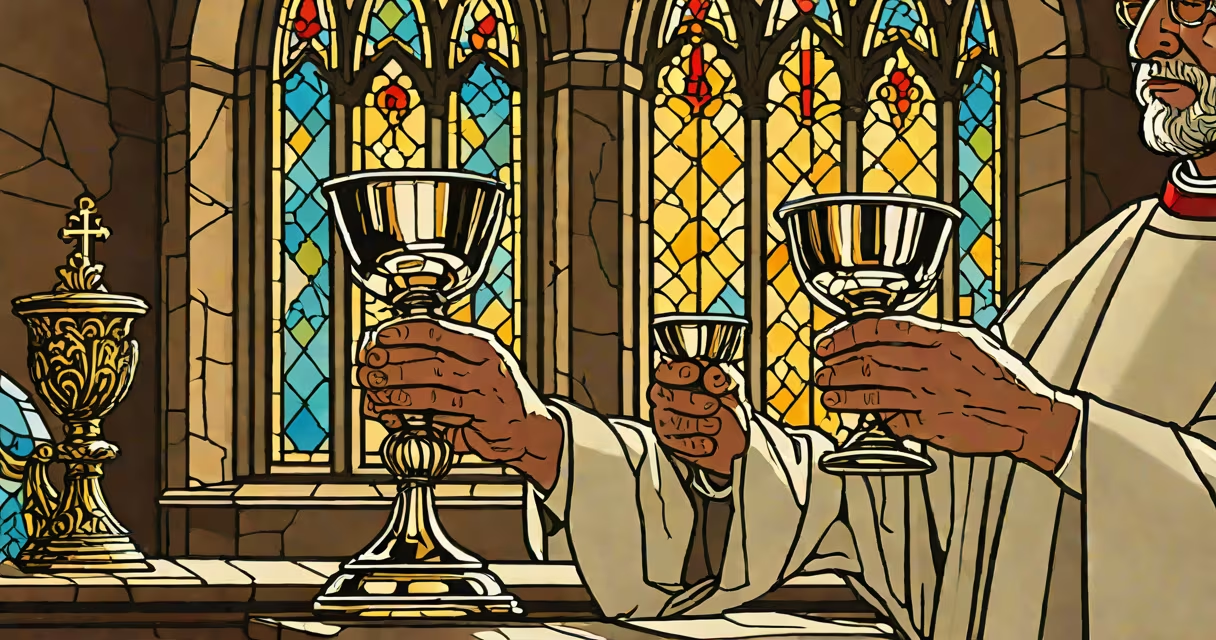
Baptism is the gateway. It washes away original sin and makes one a child of God and a member of the Church. Confirmation strengthens the baptized with the gift of the Holy Spirit. The Eucharist-where bread and wine become the body and blood of Christ-is the pinnacle of Catholic worship. The Church teaches that this transformation, known as transubstantiation, is real, not symbolic.
| Sacrament | Primary Purpose | Typical Age/Event |
|---|---|---|
| Baptism | Initiation into the Church | Infancy or adult conversion |
| Confirmation | Strengthening in faith | Early adolescence |
| Eucharist | Communion with Christ | First Communion around age 7 |
| Reconciliation | Forgiveness of sins | Regular, especially before major feasts |
| Anointing of the Sick | Healing and comfort in illness | When seriously ill or facing surgery |
| Matrimony | Union of husband and wife | Marriage ceremony |
| Holy Orders | Ordination to priesthood or diaconate | Men entering seminary training |
One non-obvious fact: the Church recognizes the validity of baptisms performed by other Christian denominations if they use water and the Trinitarian formula ("in the name of the Father, and of the Son, and of the Holy Spirit"). This means a Lutheran who was baptized in a church service is considered validly baptized in Catholic eyes-even if they later convert. The Church does not require rebaptism.
Catholicism is practiced globally, with approximately 1.3 billion members across 163 countries. The largest concentrations are in Latin America (40%), Europe (25%), and Sub-Saharan Africa (15%). The Church runs schools, hospitals, charities, and media outlets in nearly every nation.
Its influence extends beyond worship. Catholic social teaching shapes public policy debates on poverty, immigration, climate change, and war. For example, the 1991 encyclical *Centesimus Annus* by Pope John Paul II reaffirmed the dignity of work and the rights of workers, influencing labor laws in several nations. The Church's position on abortion-universally opposed-has shaped legislation in countries like Poland and El Salvador.
I once attended a parish in rural Mexico where the local priest celebrated Mass in Spanish, Nahuatl, and Zapotec. The congregation included Indigenous elders who had never learned Spanish. The Church's commitment to inculturation-adapting liturgy to local cultures while preserving doctrine-ensured that faith remained accessible. That experience showed me that being Catholic isn't about uniformity. It's about unity in diversity.
Many assume Catholicism is synonymous with Roman Catholicism, but the term "Catholic" technically refers to the universal Church. There are Eastern Catholic Churches-such as the Maronite, Melkite, and Chaldean rites-that are in full communion with Rome but maintain distinct liturgical traditions, languages, and canonical structures. They are not "branches" of the Church but integral parts of it.
Another misconception: Catholics pray to saints. The Church teaches that saints intercede-pray on behalf of the faithful-but do not receive worship. Worship (latria) is reserved for God alone. When Catholics ask Saint Anthony to help find lost keys, they're not worshipping him. They're asking for his prayers, much like asking a friend to pray for you.
Some confuse Catholic moral teaching with legalism. But the Church emphasizes intention, context, and grace. For example, the Church opposes artificial contraception, but allows natural family planning methods. It teaches that marital intimacy should reflect love, openness to life, and mutual respect-not just biological function. This reflects a theology of the body developed by Pope John Paul II in his *Theology of the Body* lectures.
Finally, being a Catholic doesn't mean agreeing with every decision made by bishops or even the Pope. The Church allows for legitimate disagreement within the bounds of faith and charity. But it requires adherence to core doctrines-such as the divinity of Christ, the resurrection, and the existence of purgatory-as defined by ecumenical councils and papal definitions.