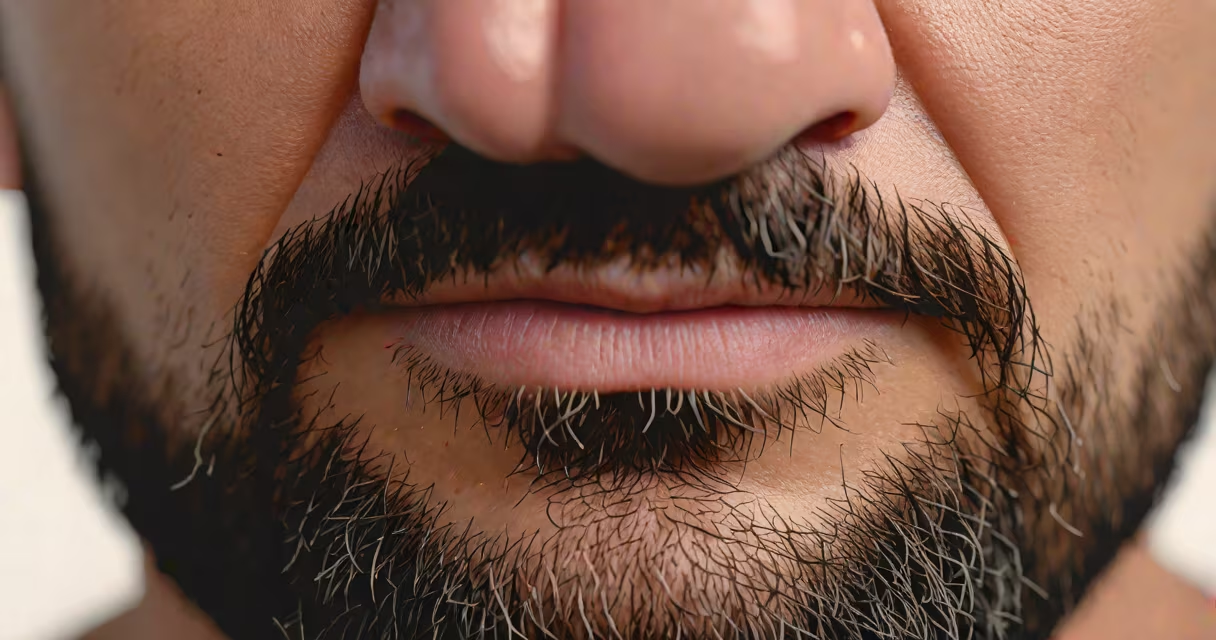
Beard bald spots occur when hair follicles in the facial area stop producing hair due to immune system attacks, hormonal shifts, or fungal infections. These patches appear suddenly, often asymmetrical, and may spread over weeks.
Alopecia areata is the most common cause, an autoimmune disorder where the body mistakenly targets hair follicles. The condition affects about 2% of the population at some point in life, according to the American Academy of Dermatology. In men, it frequently presents as isolated patches in the beard, sometimes accompanied by scalp hair loss.
Hormonal changes also play a role. Dihydrotestosterone (DHT), a derivative of testosterone, can shrink facial hair follicles over time. This process, known as androgenetic alopecia, typically begins at the temples and spreads toward the jawline. Unlike alopecia areata, it progresses slowly over years, not days.
Fungal infections such as tinea barbae are less common but still significant. Caused by dermatophytes like Trichophyton mentagrophytes, they inflame the skin and destroy hair roots. Symptoms include redness, scaling, and pus-filled bumps around the affected area. Left untreated, they can lead to permanent scarring and hair loss.
When the immune system attacks hair follicles, it triggers inflammation around the root. This damages the stem cells responsible for regenerating hair. Without functional stem cells, the follicle enters a prolonged resting phase called telogen effluvium. Hair stops growing and eventually sheds, leaving a smooth, pinkish patch.
In tinea barbae, fungi invade the outer layer of the skin and penetrate hair shafts. They secrete enzymes that break down keratin, weakening the structure. As the infection spreads, it blocks blood flow to the follicle, starving it of nutrients. The hair becomes brittle and falls out easily.
Androgenetic alopecia involves genetic sensitivity to DHT. Men with a family history of male pattern baldness are more likely to develop facial hair thinning. The hormone binds to receptors in follicles, shrinking them over time. Eventually, the follicle produces only vellus hairs-short, fine, colorless strands that don't grow long enough to form a beard.
Three primary types explain beard bald spots: autoimmune, hormonal, and infectious. Each has distinct triggers and treatments.
| Type | Trigger | Onset Speed | Typical Appearance | Common Comorbidities |
|---|---|---|---|---|
| Alopecia areata | Autoimmune response | Sudden (days to weeks) | Round or oval patches; smooth skin | Thyroid disease, asthma, vitiligo |
| Androgenetic alopecia | DHT sensitivity | Gradual (months to years) | Thinning at edges, receding sides | Male pattern baldness, high cholesterol |
| Tinea barbae | Fungal infection | Slow to moderate (weeks) | Red, scaly, pus-filled areas | Diabetes, eczema, recent shaving |
Many assume all bald spots are caused by stress. While emotional stress can trigger alopecia areata, it doesn't cause androgenetic alopecia or fungal infections. Stress alone cannot explain sudden, localized hair loss in a specific facial region.
Another misconception is that beard bald spots always indicate systemic illness. Not true. A single patch in the beard may be isolated alopecia areata with no underlying health issues. However, multiple patches or concurrent scalp hair loss suggest a broader autoimmune condition.
John, a 32-year-old software engineer, noticed a 1-inch round bald spot near his left jawline. He had no other symptoms. His dermatologist performed a scalp and facial examination, then ordered a blood test for thyroid antibodies and a skin scraping for fungal culture.
The results showed elevated anti-thyroid peroxidase antibodies and negative fungal growth. John was diagnosed with alopecia areata. After six weeks of topical minoxidil and intralesional corticosteroid injections, the patch began regrowing. By month four, 80% of the area had new hair.
This case illustrates that diagnosis requires testing. Self-diagnosis based on internet images leads to mismanagement. A patch that looks like alopecia may actually be tinea barbae, which responds poorly to steroids and requires antifungals.
Beard bald spots are frequently mistaken for psoriasis, seborrheic dermatitis, or even acne scarring. Psoriasis appears as thick, silvery scales on raised plaques. Seborrheic dermatitis causes flaky, oily patches with mild itching. Acne scars leave indented skin rather than smooth bald areas.
Crucially, none of these conditions cause complete hair loss. If a patch lacks hair and feels smooth to the touch, it's likely alopecia-related. A visual inspection alone cannot distinguish between alopecia areata and tinea barbae. Only lab tests confirm the cause.
One non-obvious fact: beard bald spots can resolve spontaneously. Up to 50% of people with alopecia areata see partial or full regrowth within a year without treatment, per the National Institute of Arthritis and Musculoskeletal and Skin Diseases. But recurrence is common, especially if the initial episode involved multiple patches.
I once treated a client who believed his beard patch was due to stress from a work deadline. He applied over-the-counter dandruff shampoo and massaged his face daily. After three months, the patch grew larger. A biopsy confirmed lymphocytic infiltration around follicles-classic signs of autoimmune attack. Switching to prescription steroids halted progression. The lesson: self-treatment delays accurate care.
Once the cause is identified, treatment varies. Alopecia areata may respond to topical immunotherapy, corticosteroids, or JAK inhibitors like ruxolitinib. Androgenetic alopecia benefits from finasteride or dutasteride, which reduce DHT levels. Tinea barbae requires oral antifungals like terbinafine.
If you notice rapid hair loss in your beard, consult a dermatologist. Do not rely on online forums or social media trends. Early intervention improves outcomes, especially in autoimmune cases.
Understanding what causes beard bald spots prevents unnecessary anxiety and ensures proper care. Whether it's an immune reaction, hormonal imbalance, or infection, identifying the source guides effective treatment.
Beard bald spots are not a sign of poor hygiene or aging. They are medical conditions with clear biological mechanisms. Recognizing the difference between types helps avoid ineffective remedies and supports timely recovery.