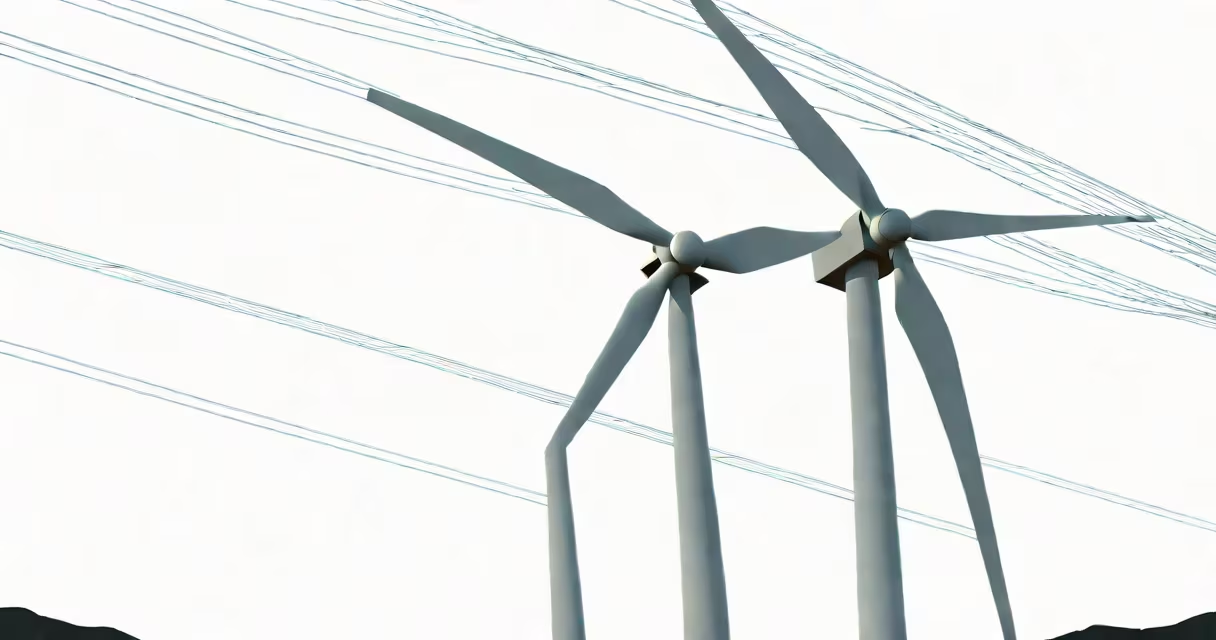
Electricity arises when charged particles, typically electrons, move through a conductor. This flow results from energy conversions involving mechanical motion, chemical reactions, or electromagnetic fields. The process begins with a source of energy-such as steam, flowing water, sunlight, or fuel-that drives a generator or alters electron behavior in a circuit.
At its core, electricity is produced by converting other forms of energy. A generator uses rotating magnets near copper coils to induce electron movement via electromagnetic induction-a principle discovered by Michael Faraday in 1831. When a magnetic field changes around a conductor, it pushes electrons through the wire, creating current. This principle powers most large-scale electricity production.
Every electric device relies on this fundamental mechanism. A flashlight uses chemical energy from batteries to push electrons through a filament. A hydroelectric dam channels falling water to spin turbines connected to generators. Solar panels convert photons from sunlight into electron flow through semiconductor materials. These are not different kinds of electricity-they are different ways to create the same phenomenon: moving charge.
Most grid-scale electricity comes from spinning turbines linked to generators. The turbine's rotation is driven by a primary energy source. Steam from heated water, compressed air, flowing water, or wind turns the blades. The rotational force moves magnets inside a coil of wire, generating alternating current (AC).
Steam-based plants burn fossil fuels-coal, natural gas, or oil-or use nuclear fission to heat water into steam. Geothermal plants tap underground heat. Wind farms rely on consistent airflow to turn propeller-like blades. Hydroelectric dams use gravity and stored water volume. Each system converts kinetic or thermal energy into mechanical rotation, which then becomes electrical energy.
Photovoltaic solar cells work differently. They absorb light photons, which excite electrons in silicon layers. The freed electrons flow in one direction due to a built-in electric field, producing direct current (DC). An inverter converts DC to AC for household use. Unlike turbines, solar panels have no moving parts and generate electricity only when exposed to light.
The following table compares common electricity generation methods by input source, efficiency, and environmental impact.
| Source Type | Input Energy | Conversion Method | Avg. Efficiency | Emissions (CO₂ per kWh) |
|---|---|---|---|---|
| Coal-fired plant | Chemical (combustion) | Steam turbine → generator | 33-38% | 820 g |
| Natural gas plant | Chemical (combustion) | Gas turbine → generator | 45-60% | 490 g |
| Wind turbine | Kinetic (airflow) | Blades → rotor → generator | 35-45% | 11 g |
| Hydroelectric dam | Potential (water elevation) | Water flow → turbine → generator | 85-90% | 2 g |
| Solar panel (photovoltaic) | Radiant (sunlight) | Photon absorption → electron flow | 15-22% | 40 g |
Efficiency varies widely. Modern combined-cycle gas plants reach 60% efficiency by capturing waste heat to drive a secondary turbine. Coal plants, despite technological improvements, remain below 40%. Solar panels lose much of their input energy as heat rather than electricity. These differences stem from thermodynamic limits and material properties-not design flaws.
Renewable sources like wind and solar are growing rapidly. In 2023, renewables accounted for 30% of global electricity generation, according to the International Energy Agency (IEA). That share is expected to rise to 50% by 2030. But even renewable systems depend on physical processes: wind must blow, sun must shine. Grid stability requires backup storage or dispatchable sources during low-output periods.
Many people think electricity "comes from" outlets or batteries. Outlets deliver current generated elsewhere. Batteries store chemical energy and release it as electron flow when connected to a circuit. The power doesn't originate in the wall-it originates in a distant plant or solar farm.
Another misconception is that electrons travel long distances through wires. In reality, electrons drift slowly-about 1 millimeter per second in typical household wiring. What travels fast is the electromagnetic wave that pushes electrons forward. Think of it like a row of dominoes: the last one falls almost instantly after the first, even though each domino moves only a short distance.
Some believe that static electricity is different from current electricity. Both involve electron movement. Static buildup occurs when electrons transfer between surfaces-like rubbing a balloon on hair. The discharge (spark) is a brief burst of current. The physics remains the same: electrons moving under voltage difference.
Consider a wind farm in Texas with 50 turbines, each rated at 2 megawatts. On a windy day, each turbine spins at 15 revolutions per minute. The blades turn a gearbox that increases speed to 1,800 RPM, driving a generator. Inside the generator, rotating electromagnets pass near copper windings, inducing a 60-hertz AC current.
The output travels through underground cables to a substation. Transformers step up the voltage from 1,000 volts to 138,000 volts for efficient long-distance transmission. From there, it enters the regional grid. Over 24 hours, the farm produces about 2.4 million kilowatt-hours-enough to power roughly 200,000 homes.
This system demonstrates how mechanical energy from wind becomes usable electricity. No combustion. No emissions. Just motion, magnetism, and conductive materials.
Electricity is not a substance-it is a form of energy transfer. It results from controlled electron movement caused by energy conversion. Whether from coal, wind, or sunlight, the underlying mechanism is the same: a change in electromagnetic field induces current in a conductor.
Understanding what creates electricity clarifies how power systems work. It explains why solar panels need daylight, why wind farms require consistent wind, and why battery storage matters. The process is governed by laws of physics-not magic or mystery.