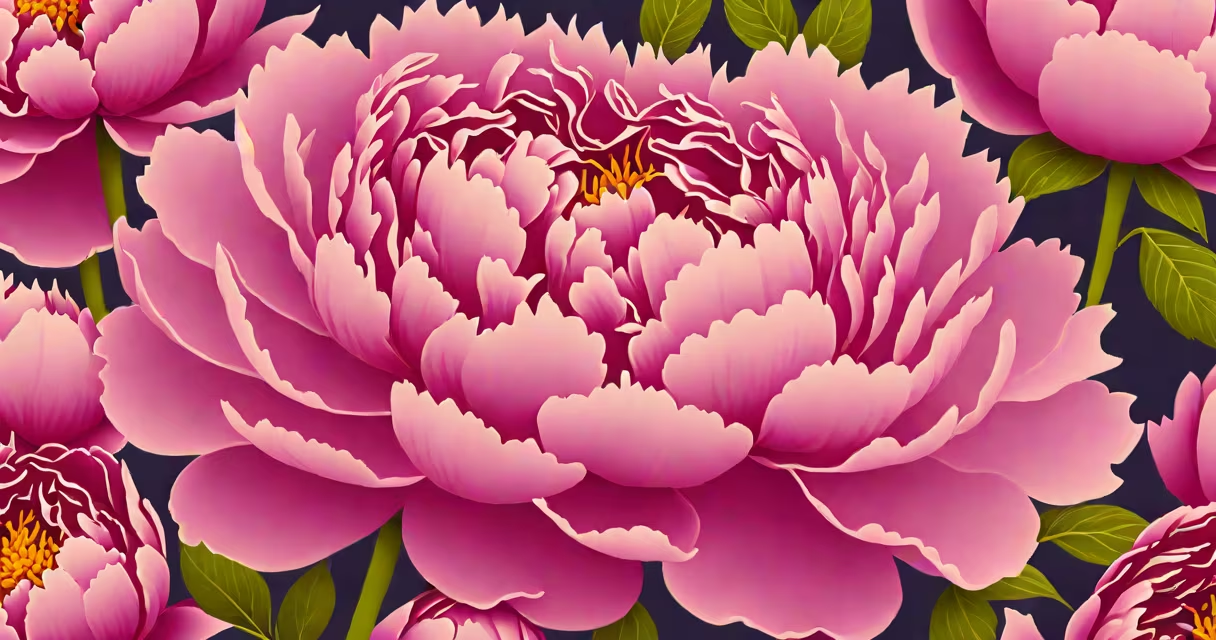
Peonies represent romance, prosperity, and good fortune. In Chinese culture, they symbolize honor, wealth, and a happy marriage. In Western traditions, they convey bashfulness, beauty, and a wish for a long life.
These flowers have held symbolic weight for over 2,000 years. In ancient China, peonies were cultivated in imperial gardens and associated with nobility. The plant's large, layered petals and rich fragrance made it a favorite among emperors and poets alike. The Tang Dynasty (618-907 CE) declared the peony the "king of flowers," a title still honored today.
In Japan, peonies appear in traditional art and festivals. They're linked to strength and courage, often depicted in samurai armor motifs. In the West, Victorian-era floriography assigned peonies meanings tied to romance and modesty. A single peony was seen as a gesture of admiration, while a bouquet suggested a desire for lasting affection.
Cultural context shapes what peonies represent. In China, red and pink peonies are central to Lunar New Year celebrations. They're placed on altars and given as gifts to invite luck and family harmony. The color red amplifies their association with joy and celebration.
In contrast, in European traditions, peonies were once viewed with suspicion. During the Middle Ages, they were believed to ward off evil spirits. Their thick roots were used in folk medicine. By the 18th century, they had become symbols of lavishness and were planted in aristocratic gardens.
A key distinction lies in color. White peonies symbolize purity and new beginnings. Pink indicates romance and feminine grace. Red peonies denote passion and respect. Yellow peonies suggest friendship and joy. These meanings are consistent across both Eastern and Western interpretations.
| Color | Western Meaning | Eastern Meaning |
|---|---|---|
| White | Purity, innocence, new beginnings | Peace, spiritual clarity, mourning (in some contexts) |
| Pink | Romance, tenderness, gratitude | Love, happiness, marital bliss |
| Red | Passion, admiration, deep affection | Honor, prosperity, respect |
| Yellow | Friendship, joy, warmth | Good fortune, celebration, social status |
One non-obvious fact: peonies are not native to Europe. They originate in China and were introduced to Europe via the Silk Road in the 17th century. Their sudden popularity led to a surge in botanical exploration. The Royal Horticultural Society documented over 300 peony varieties by 1850, many bred specifically for their symbolic appeal.
Many assume peonies only represent love. While they are frequently used in wedding bouquets, their meaning extends beyond romance. In Chinese weddings, peonies are included not just for beauty but because they're believed to bring lasting harmony to the couple's home.
Another misconception is that peonies are fragile. In reality, they're hardy perennials. The herbaceous variety can survive for 50 years or more with proper care. Their roots grow deep, anchoring them through harsh winters-a trait that reinforces their symbolic link to endurance and resilience.
A lesser-known point: peonies were once banned in certain parts of Japan during the Edo period due to their association with rebellion. Their bold appearance and strong scent were seen as disruptive to the quiet aesthetic of wabi-sabi. This ban highlights how deeply cultural values influence floral symbolism.
In 2018, the Chinese government gifted a 12-foot-tall peony sculpture to the United Nations headquarters in New York. The piece, made of bronze and jade, was presented during the UN's International Day of Peace. Its message: peace through mutual respect and shared prosperity.
At the 2022 Winter Olympics in Beijing, peonies appeared in the opening ceremony's stage design. The backdrop featured animated peonies blooming across a snow-covered field. This visual metaphor linked winter's stillness with spring's renewal-symbolizing hope and national pride.
On a personal level, I once visited a Japanese garden in Kyoto where a single red peony stood at the center of a stone path. A sign in English and Japanese read: "This flower stands for courage. Walk slowly." The placement invited contemplation, not just admiration. It reminded me that symbolism isn't always loud-it can be silent, deliberate, and deeply rooted in place.
Peonies are often mistaken for ranunculus or garden roses due to similar petal shapes. But peonies have a distinct, fleshy stem and a sweet, honey-like scent. Ranunculus lack this fragrance and have thinner stems. Garden roses typically have more pointed petals and a sharper, citrusy aroma.
Unlike carnations, which are often used in funerals, peonies are rarely associated with death. Carnations represent remembrance and eternal love in Western funerals. Peonies, by contrast, are reserved for joyful occasions-weddings, birthdays, and festivals. Their presence at a funeral would be unusual and potentially misinterpreted.
Understanding what peonies represent reveals more than flower lore-it shows how cultures encode values in nature. Whether displayed in a temple, a wedding bouquet, or a public sculpture, peonies carry layered messages of dignity, abundance, and connection.