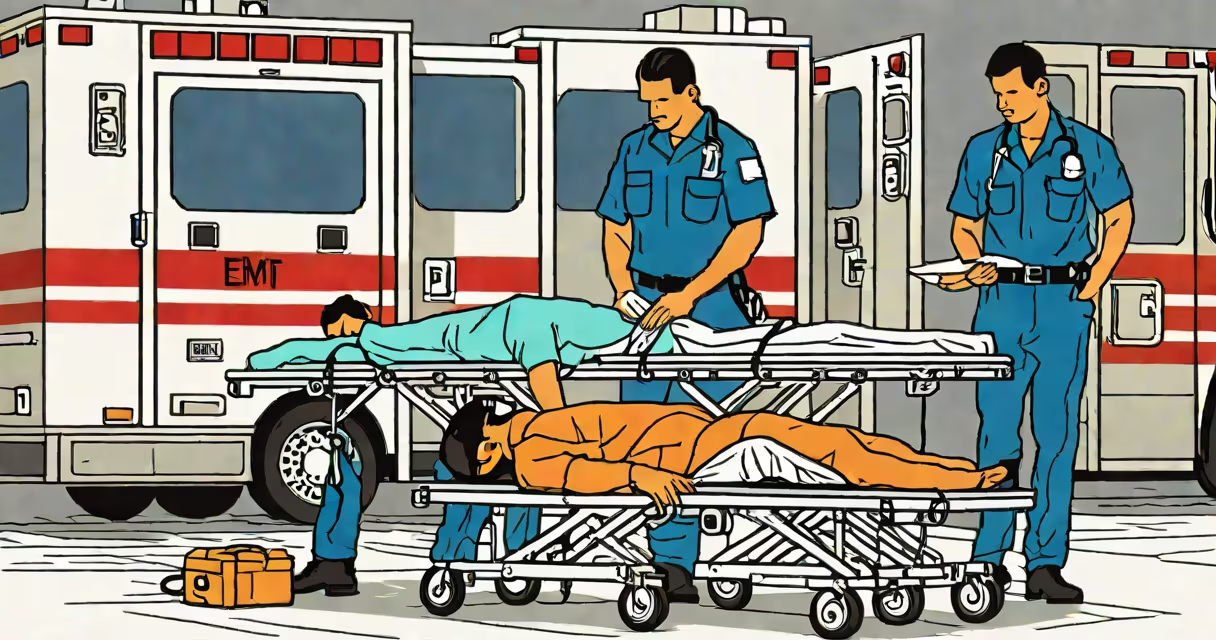
To become an EMT, you must complete an accredited EMT training program, pass the National Registry of Emergency Medical Technicians (NREMT) exam, and obtain state licensure. This process ensures you meet national standards for patient care in prehospital settings.
EMTs are frontline responders trained to assess, stabilize, and transport patients during emergencies. The role demands physical stamina, clear thinking under pressure, and proficiency in basic life support procedures such as airway management, bleeding control, and cardiac monitoring. All states require formal training and testing before granting practice authorization.
The National Highway Traffic Safety Administration (NHTSA) sets minimum curriculum standards for EMT programs. These programs typically last 120-150 hours and cover anatomy, trauma response, medical emergencies, obstetrics, pediatric care, and ethics. Completion of a recognized course is mandatory before sitting for the NREMT exam.
Before enrolling in an EMT program, you must have a high school diploma or GED. Some programs require prerequisite courses in biology or anatomy. You must also hold current CPR certification-specifically BLS (Basic Life Support) for healthcare providers-as most programs require it prior to enrollment.
Many community colleges and vocational schools offer EMT training. Programs often run over 6-12 weeks, with classes held evenings or weekends to accommodate working adults. Tuition ranges from $800 to $2,500 depending on location and institution. Financial aid and scholarships may be available through local EMS agencies or nonprofit organizations.
One non-obvious requirement: candidates must pass a background check. Some states deny licensure to individuals with certain criminal convictions, especially those involving violence or drug offenses. A clean record increases your chances of being hired by fire departments or ambulance services.
EMT training includes both classroom instruction and hands-on clinical rotations. Students learn to perform patient assessments using the SAMPLE history method, manage spinal injuries with immobilization techniques, and administer oxygen via various delivery devices. They also train in using automated external defibrillators (AEDs) and managing shock.
Clinical experience takes place in hospital emergency departments, ambulance services, or urgent care centers. Students observe and assist licensed EMTs and paramedics during real calls. Most programs require 100-120 hours of clinical time. This exposure builds confidence and prepares students for field scenarios.
After completing the course, you take the NREMT cognitive exam-a computer-adaptive test with 70-120 questions. Questions assess your ability to make rapid decisions in high-stakes situations. For example, a question might ask: "A 65-year-old male presents with chest pain, diaphoresis, and nausea. His blood pressure is 90/60 mmHg. What is the next best step?" Correct answer: initiate oxygen and prepare for possible cardiac arrest.
Each U.S. state issues its own EMT license. While all states accept NREMT certification as proof of competency, some impose additional requirements. California, for instance, requires a state-specific exam and fingerprinting. New York mandates a separate written test focused on regional protocols.
Employment opportunities exist with fire departments, private ambulance companies, and public health agencies. Entry-level EMTs earn between $35,000 and $50,000 annually, depending on location and employer. Rural areas often pay less, while urban centers and specialized units (like hazardous materials response) offer higher compensation.
During my first year as an EMT in rural Oregon, I responded to a motor vehicle collision involving a child. My training kicked in: I assessed the airway, applied a cervical collar, and monitored vitals. The child survived with no long-term effects. That call confirmed the value of structured training-not just knowledge, but muscle memory under stress.
| Type | Duration | Typical Cost | Outcome |
|---|---|---|---|
| EMT-Basic (Entry-Level) | 120-150 hours | $800-$2,500 | NREMT certification, state license |
| EMT-Intermediate (Limited) | Additional 100-150 hours | $1,000-$3,000 | Expanded scope: IV access, advanced airways |
| Paramedic (Advanced) | 1,200+ hours over 12-24 months | $10,000-$20,000 | Advanced life support, medication administration |
People often assume EMTs are doctors or nurses. They are not. EMTs provide prehospital care within defined scopes. They cannot prescribe medications, perform surgery, or interpret X-rays. Their role ends when they hand over care to hospital staff.
Another misconception: EMTs don't need ongoing education. In reality, most states require 24 hours of continuing education every two years to maintain licensure. Topics include new guidelines for stroke care, opioid overdose reversal, and mental health crisis intervention.
The American Heart Association (AHA) updates CPR and emergency care protocols every five years. EMTs must stay current. For example, the 2020 AHA guidelines emphasized high-quality chest compressions at 100-120 per minute with minimal interruptions. Failure to follow updated standards risks patient harm and legal liability.
After passing the NREMT exam and receiving state licensure, you can apply for jobs with local EMS agencies. Many departments offer paid training and hiring bonuses to attract new EMTs. Some require a probationary period before independent dispatch.
Advancement paths include becoming a paramedic, instructor, or EMS supervisor. To advance, you'll need additional training and experience. Some EMTs pursue associate degrees in emergency medical services or transfer credits toward a bachelor's degree in public health or nursing.
Understanding what you need to become an EMT begins with meeting basic qualifications and progressing through accredited training. The process demands discipline, compassion, and resilience-but leads to meaningful work saving lives.