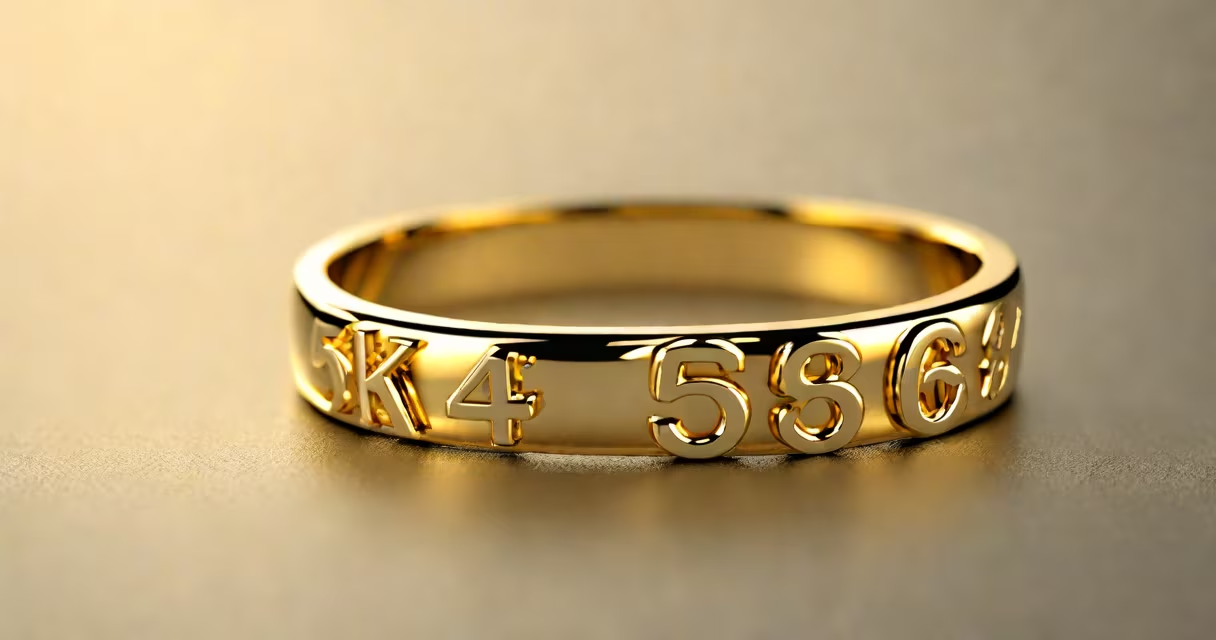
585 14k indicates that a piece of jewelry contains 58.5% pure gold, with the remainder made of alloy metals like silver, copper, or nickel. This marking is a standardized way to denote gold purity in international jewelry manufacturing.
The term "14k" refers to the karat system, where 24 parts make a full karat. Fourteen parts gold and ten parts alloy result in 14/24 = 58.33%, which rounds to 58.5%. The number "585" is the millesimal fineness standard-meaning 585 parts per 1,000 are pure gold. Both labels serve the same purpose: to verify gold content.
Manufacturers stamp this mark on gold jewelry to meet legal requirements in countries including the United States, Canada, the UK, and most of Europe. The U.S. Federal Trade Commission (FTC) mandates that any item labeled "14k gold" must contain between 58.3% and 58.5% pure gold. The 585 designation aligns with this regulation.
Gold is too soft for most jewelry uses. Pure gold (24k) bends easily and wears quickly. To increase durability, gold is mixed with other metals-called alloys-to create stronger, wear-resistant pieces. The karat system measures how much of the metal is actual gold.
For example, 18k gold is 75% pure gold (18/24), while 10k gold is 41.7% pure. The 14k standard strikes a balance between affordability, durability, and visual appeal. Its yellow hue remains rich without being overly bright, making it popular for rings, earrings, and necklaces.
When a jeweler crafts a 14k gold ring, they mix 58.5 grams of pure gold with 41.5 grams of alloy metals. These alloys affect color and hardness. Copper adds warmth and red tones; silver brings a cooler, whiter appearance. Nickel increases strength but may cause allergic reactions in sensitive individuals.
Gold jewelry uses multiple systems to communicate purity. The most common are karat (k), millesimal fineness (number), and regional hallmarks. Understanding them prevents confusion during purchases.
| Karat | Millesimal Fineness | Pure Gold Percentage | Common Uses |
|---|---|---|---|
| 10k | 417 | 41.7% | Everyday wear, budget-friendly pieces |
| 14k | 585 | 58.5% | Rings, bracelets, earrings - most popular choice |
| 18k | 750 | 75.0% | Luxury items, fine jewelry, wedding bands |
| 22k | 916 | 91.6% | Traditional Indian jewelry, ceremonial items |
Some countries use additional symbols. In the UK, the "sign" includes a lion passant (for London), a date letter, and a maker's mark. In Germany, the "G" symbol with a number denotes fineness. The 585 14k stamp appears globally, especially in mass-market and designer brands.
Not all gold markings are accurate. Counterfeit items sometimes use fake stamps. Always check for consistency in font size, spacing, and placement. A genuine 585 14k mark should appear on the inside of a ring band or near a clasp on a necklace.
Many people assume that "14k" means "14% gold." That's incorrect. The "k" stands for karat, not percentage. A 14k piece contains nearly 60% pure gold-not 14%. This misunderstanding leads buyers to undervalue gold items or pay too much for low-purity pieces.
Another error is confusing 585 with 58.5%. The number 585 is not a percentage-it's a ratio per 1,000 parts. So 585 means 585 parts gold per 1,000 total parts. This is equivalent to 58.5% pure gold. The system avoids decimals in labeling, making it easier to read and machine-stamp.
A lesser-known fact: the 585 standard is not exclusive to gold. Silver and platinum also use millesimal fineness. For example, sterling silver is marked 925 (92.5% silver). But only gold uses the karat system alongside millesimal numbers. This dual labeling ensures clarity across markets.
I bought a vintage-style wedding band at a local estate sale. The seller claimed it was "14k gold," but didn't show proof. Inside the band, I found a faint "585" stamp. I took it to a jeweler for verification.
Using a handheld spectrometer, the jeweler confirmed the ring contained 58.3% gold-within the acceptable range for 14k. The alloy was primarily copper and silver. The ring's weight was 4.2 grams. Based on current gold prices ($2,050 per troy ounce), the intrinsic gold value was $172. The total retail price was $380-well above material cost due to craftsmanship and brand.
This example shows how 585 14k serves both as a quality indicator and a valuation tool. Without the stamp, the ring's authenticity would have been questionable. With it, the buyer could trust the material composition.
Knowing what 585 14k means protects consumers from fraud and helps set fair expectations. A 14k gold ring lasts longer than 10k, resists scratches better, and maintains its color over time. It's ideal for daily wear and heirloom pieces.
For resale, 585 14k jewelry holds value. According to the American Numismatic Society, 14k gold accounts for over 60% of all gold jewelry sold in the U.S. annually. Its consistent quality makes it a preferred choice for pawn shops, buyback services, and online marketplaces.
When shopping, always look for the 585 or 14k mark. If absent, ask for certification. Reputable jewelers provide assay certificates or serial numbers linked to independent testing labs. Avoid sellers who refuse to disclose material details.
Understanding 585 14k is essential for anyone investing in gold jewelry. It's not just a label-it's a guarantee of quality, legality, and long-term value. Whether buying a gift or building a collection, this marking ensures you're getting what you pay for.