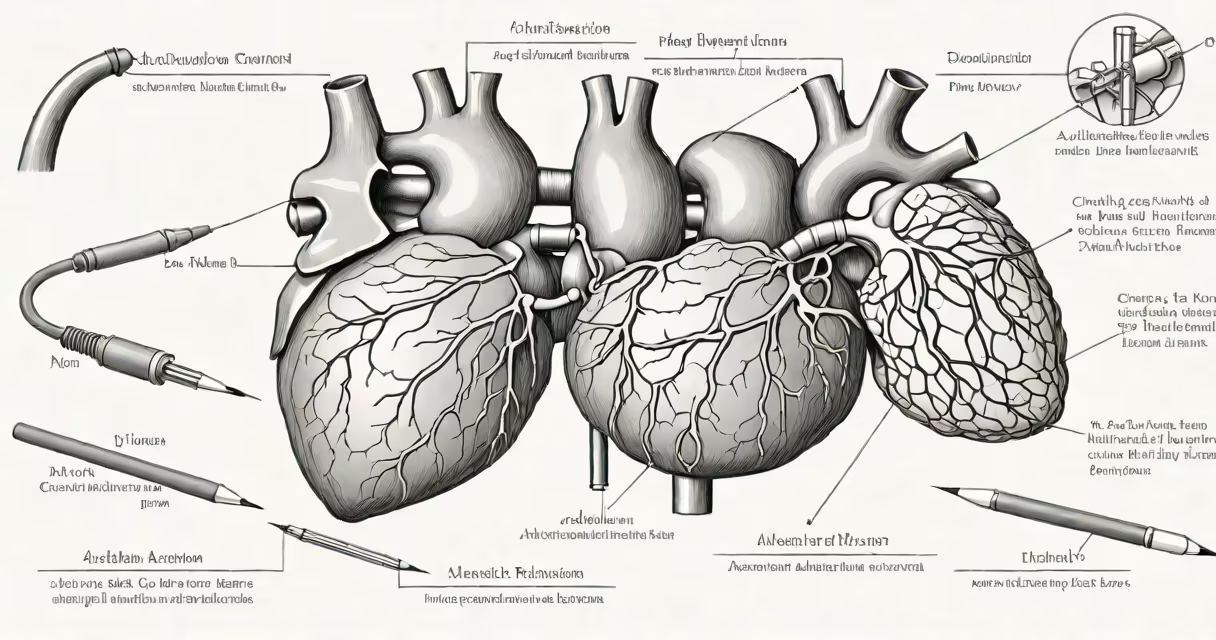
Ablation in medical terms describes a procedure that destroys abnormal tissue using heat, cold, radiofrequency energy, or laser. It targets areas causing arrhythmias, tumors, or pain without removing large sections of healthy tissue.
Doctors use ablation to treat conditions where electrical signals in the body misfire. The most common application is in cardiology, where it corrects irregular heartbeats. Ablation can also treat certain cancers, epilepsy foci, and chronic pain syndromes. The goal is localized destruction - not systemic treatment.
Procedures are minimally invasive. A catheter or probe enters through blood vessels or small incisions. Real-time imaging guides the device to the precise site. Once positioned, energy is delivered to destroy targeted cells while sparing surrounding structures.
Ablation relies on controlled energy delivery to disrupt cell membranes and proteins. Heat-based methods, such as radiofrequency ablation, raise tissue temperature to 60-80°C, causing coagulation necrosis. Cold-based techniques, like cryoablation, freeze tissue to -40°C, forming ice crystals that rupture cells.
Electrical ablation uses high-frequency alternating current passed through a needle electrode. This generates frictional heat at the tip, destroying tissue in a focused zone. Laser ablation delivers concentrated light energy that vaporizes tissue layer by layer. Each method selects based on location, tissue type, and risk profile.
For example, in atrial fibrillation, doctors map electrical activity in the heart's left atrium. When they detect ectopic foci - abnormal pacemaker sites - they apply radiofrequency energy to create scar tissue that blocks faulty signals. The scar acts as a barrier, restoring normal rhythm.
Different ablation types serve distinct clinical purposes. The choice depends on anatomy, disease stage, and patient factors.
| Type | Energy Source | Common Uses | Example Application |
|---|---|---|---|
| Radiofrequency Ablation (RFA) | High-frequency alternating current | Cardiac arrhythmias, liver tumors, joint pain | Treating Wolff-Parkinson-White syndrome by ablating accessory pathways |
| Cryoablation | Freezing temperatures | Lung cancer, benign nodules, cardiac arrhythmias | Preserving esophageal tissue during left atrial ablation |
| Laser Ablation | Focused light beam | Brain tumors, retinal disorders, vascular lesions | Removing small brain metastases with minimal edema |
| Microwave Ablation | Electromagnetic waves | Liver and kidney tumors | Targeting tumors larger than 3 cm in cirrhotic livers |
Cryoablation offers a safety advantage in sensitive areas. Freezing causes less collateral damage than heating. For instance, in pulmonary vein isolation, cryoablation reduces the risk of esophageal injury compared to RFA, which can cause thermal burns to nearby structures.
Ablation treats conditions where surgery is too risky or ineffective. In cardiology, it's standard for symptomatic supraventricular tachycardia (SVT) unresponsive to medication. A 2021 study in Journal of the American College of Cardiology found that 92% of patients with AV nodal reentrant tachycardia achieved long-term freedom from symptoms after ablation.
In oncology, ablation controls early-stage hepatocellular carcinoma (HCC). The American Association for the Study of Liver Diseases recommends ablation for tumors ≤5 cm without vascular invasion. Success rates exceed 80% at five years when tumors are small and well-localized.
Neurological applications include treating epileptic seizures originating from focal cortical dysplasia. A 2020 trial published in Neurology showed that 68% of patients had seizure freedom after laser interstitial thermal therapy (LITT), a form of ablation.
Ablation is not the same as surgical resection. Resection removes entire organs or large segments. Ablation preserves organ structure while eliminating diseased zones. This difference matters in liver and kidney cancers, where preserving function is critical.
Some confuse ablation with radiation therapy. Radiation damages DNA over time and affects both healthy and abnormal cells. Ablation acts instantly and locally. It doesn't expose surrounding tissues to ionizing radiation.
Another misconception: ablation always cures. While effective, recurrence happens. In atrial fibrillation, up to 25% of patients require repeat procedures within two years. Success depends on accurate mapping, lesion formation, and patient-specific factors like fibrosis or inflammation.
I performed a radiofrequency ablation on a 58-year-old man with recurrent SVT. His ECG showed a delta wave indicating WPW syndrome. After mapping the accessory pathway via catheter, we applied 45 seconds of 50 W radiofrequency energy. The abnormal conduction vanished immediately. He remained asymptomatic at six-month follow-up.
Ablation fails when tissue is diffuse or inaccessible. In advanced heart failure, scar tissue may spread widely, making isolated lesions ineffective. Similarly, tumors with extensive vascular invasion or distant metastases aren't candidates for ablation alone.
Pregnant women and those with implanted devices like pacemakers face higher risks. Electromagnetic interference can disrupt pacing systems. Patients must undergo device checks before and after ablation.
Not all healthcare providers perform ablation. It requires specialized training in electrophysiology, interventional radiology, or neurosurgery. Centers with dedicated ablation labs and multidisciplinary teams report better outcomes.
Understanding what ablation means in medical terms begins with recognizing it as a precise, localized intervention. It's not a cure-all, but a targeted tool for specific pathologies. When applied correctly, it restores function, relieves symptoms, and avoids major surgery.