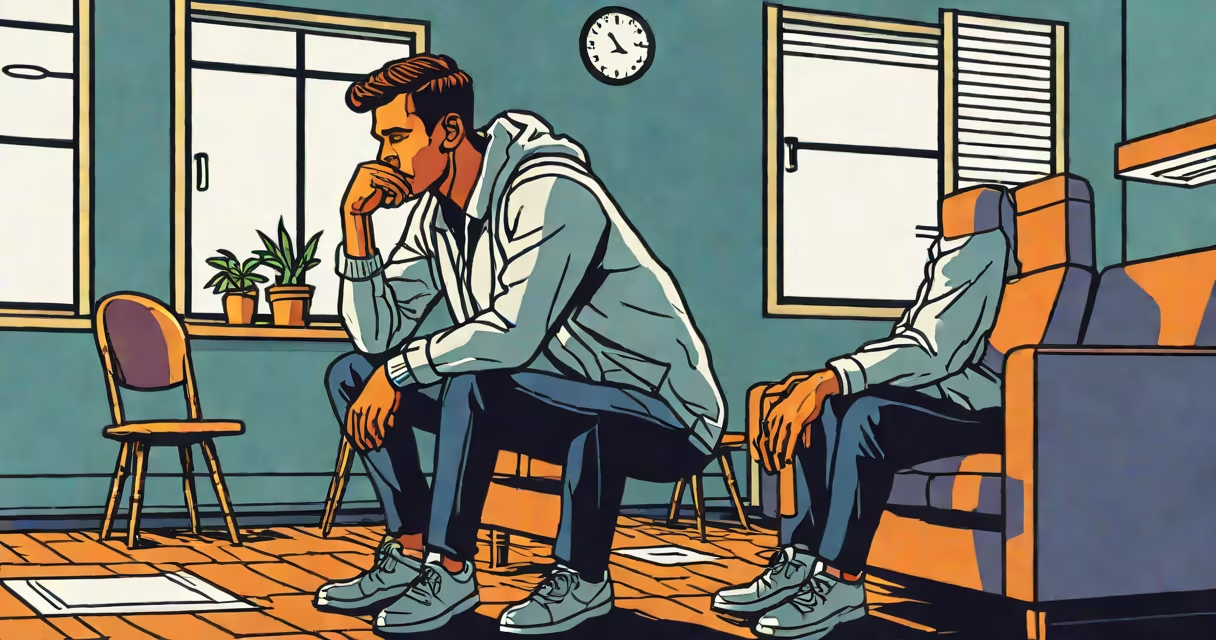
Bipolar disorder involves extreme mood episodes-manic highs and depressive lows-that disrupt thinking, energy, and behavior. These shifts aren't just emotional ups and downs; they're clinically distinct states affecting perception, decision-making, and daily functioning.
Mania can feel like boundless energy, racing thoughts, and heightened confidence. Some describe it as "flying" or "supercharged," where ideas flood in and tasks seem effortless. A person may talk rapidly, sleep little, and make impulsive decisions-like spending large sums of money or quitting a job without planning. In severe cases, mania includes delusions or hallucinations, where reality becomes distorted.
Depression in bipolar disorder is deeper than sadness. It's a heavy fog of exhaustion, hopelessness, and mental numbness. Thoughts slow, motivation vanishes, and even basic tasks-eating, showering, speaking-feel overwhelming. The mind may replay failures, amplify self-criticism, and fixate on worst-case scenarios. Suicidal ideation occurs in about 25% of people with bipolar disorder, according to the National Institute of Mental Health (NIMH).
| Mood State | Common Symptoms | Duration |
|---|---|---|
| Manic episode | Racing thoughts, reduced need for sleep, impulsivity, grandiosity | At least 1 week |
| Depressive episode | Low energy, difficulty concentrating, feelings of worthlessness, suicidal thoughts | At least 2 weeks |
| Hypomanic episode | Mild mania without psychosis or hospitalization | At least 4 days |
People often mistake bipolar episodes for personality quirks. A manic phase might look like ambition or creativity, but it can lead to financial loss, damaged relationships, or legal trouble. A depressive episode may appear as laziness, but it's rooted in neurological changes. The American Psychiatric Association notes that untreated bipolar disorder increases suicide risk by up to 15 times.
One patient described a manic episode: "I wrote a novel in 72 hours. I didn't sleep. I called strangers to pitch my idea. I spent $2,000 on printing. I felt like I was changing the world-until I realized I'd lost everything." That shift from euphoria to collapse is common. After the crash, depression sets in-slow, heavy, and isolating.
Many people with bipolar disorder report feeling disconnected from themselves during episodes. During mania, they may recognize their actions as reckless but feel unable to stop. During depression, they may want to reach out but lack the physical or mental energy. This sense of alienation is part of the illness, not weakness.
A key distinction: bipolar disorder is not the same as mood swings from stress or anxiety. Mood swings in bipolar are prolonged, intense, and often occur without clear triggers. They're biological events driven by brain chemistry imbalances, not reactions to external events.
One non-obvious fact: many people with bipolar disorder experience mixed episodes-where manic and depressive symptoms happen simultaneously. For example, someone may feel energized and agitated while also feeling hopeless and tearful. These episodes are particularly dangerous because they increase suicide risk.
Consider this scenario: Maria, a 34-year-old teacher, had a hypomanic episode lasting five days. She stayed awake for 72 hours, taught three classes in a row, and sent 40 emails. She felt "on fire"-focused, creative, unstoppable. By day six, she collapsed. Over the next two weeks, she couldn't get out of bed, cried uncontrollably, and stopped eating. Her doctor diagnosed her with bipolar II disorder after reviewing her history.
Medication stabilizes mood cycles. Lithium reduces manic episodes by 60-70%, according to NIMH research. Antipsychotics like quetiapine and mood stabilizers such as valproate are also effective. Therapy-especially cognitive behavioral therapy (CBT)-helps patients identify early warning signs and manage triggers.
Stigma remains a barrier. People often assume those with bipolar disorder are "unstable" or "dangerous." But most are not violent. In fact, they're more likely to harm themselves than others. The National Alliance on Mental Illness (NAMI) reports that 80% of people with bipolar disorder have experienced stigma, which delays treatment.
After years of misdiagnosis, I finally got a correct diagnosis at age 31. My first manic episode happened during a work trip. I booked flights to four countries in 24 hours, told coworkers I'd quit to start a global nonprofit, and stayed awake for three days. When I crashed, I couldn't speak. A psychiatrist later explained: "This wasn't burnout. It was mania." I started medication and therapy. It took time, but I learned to recognize the early signs-racing thoughts, sudden bursts of energy, skipping meals. Now I track moods daily using a journal app.
Understanding what being bipolar feels like requires seeing beyond the surface. It's not just mood swings-it's a neurological condition marked by profound internal shifts. The experience varies: some feel clarity during mania, others feel terror. Depression isn't sadness-it's a physical weight. Recovery is possible with treatment, support, and self-awareness.