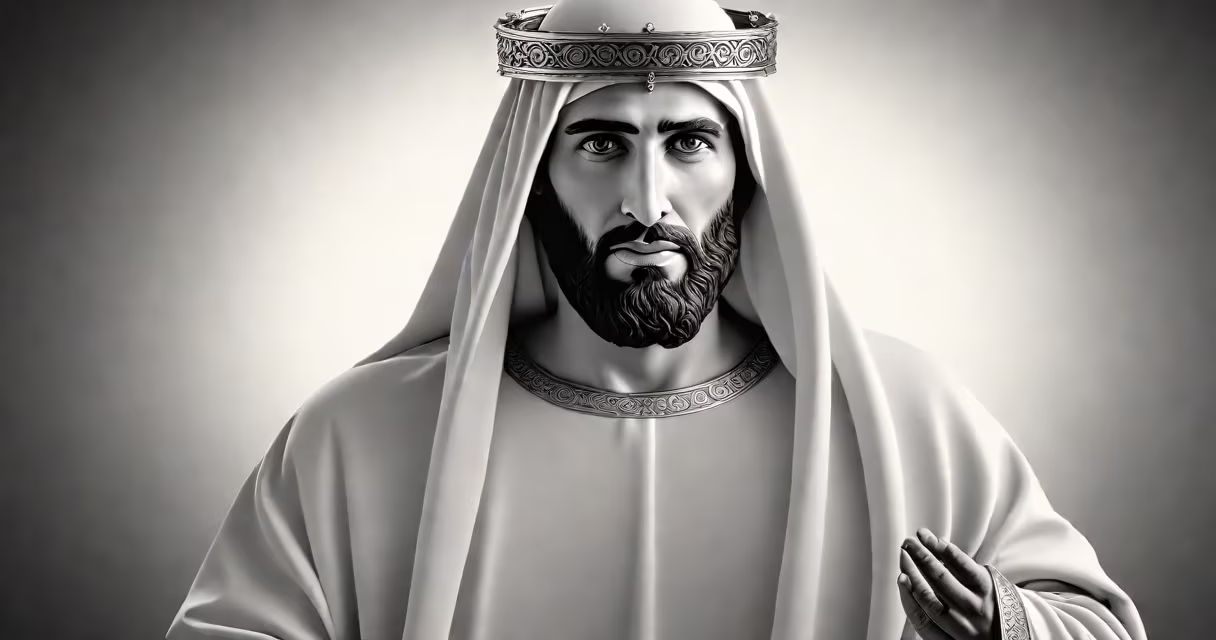
Islam holds that Jesus (Isa in Arabic) was a divinely chosen prophet, born of the Virgin Mary, who performed miracles by God's permission. He is not considered divine, nor did he die on the cross. Instead, he was raised bodily to heaven and will return before the Day of Judgment.
The Quran explicitly states Jesus was not killed or crucified, but only appeared to be. Surah An-Nisa (4:157) says: "They did not kill him, nor did they crucify him, but it was made to appear so to them." This belief is central to Islamic theology and distinguishes it sharply from Christianity.
Jesus is mentioned 25 times in the Quran, more than any other individual except Muhammad. His story is detailed in chapters such as Maryam (19), Al-Imran (3), and An-Nisa (4). These passages emphasize his miraculous birth, his role as a messenger of God, and his authority to heal and raise the dead through divine command.
In Islam, prophets are human beings chosen by God to deliver divine messages. Jesus is seen as one of the most important prophets, alongside Adam, Noah, Abraham, Moses, and Muhammad. He was sent to the Children of Israel to reaffirm the message of monotheism and to call people to worship one God.
His miracles are described as signs of God's power, not proof of his own divinity. The Quran says he spoke in infancy to defend his mother's purity and healed the blind and lepers by God's will. These acts were not supernatural in nature-they were manifestations of divine will through a righteous servant.
Jesus' teachings are summarized in the Quran as calling people to worship God alone and to follow the Torah. He is portrayed as a humble servant, not a savior or redeemer. There is no concept of original sin in Islam, so Jesus did not die to atone for humanity's sins.
Christianity teaches that Jesus is both fully divine and fully human, the Son of God, and the savior of humanity. Islam rejects this entirely. The Quran denies that Jesus is the son of God in any literal sense. Surah Al-Ma'idah (5:17) states: "The Messiah, Jesus, son of Mary, is only a messenger of God..."
Another major difference lies in the crucifixion. Christians believe Jesus died on the cross to redeem humanity. Islam teaches that God protected Jesus from death and raised him to heaven. The Quran says God "exalted him" and removed him from earthly suffering.
A third distinction is the absence of the Trinity in Islamic belief. The concept of God as three persons in one is considered shirk-associating partners with God-and is strictly forbidden. Jesus is a prophet, not part of a divine triune being.
| Aspect | Christian View | Islamic View |
|---|---|---|
| Divinity of Jesus | Full deity, part of the Trinity | Prophet, not divine |
| Crucifixion | He died on the cross | He was not crucified; God raised him |
| Miracles | Proof of divine identity | Signs of God's power through a prophet |
| Role in Salvation | Savior who atones for sin | Teacher who called people to God |
Islam emerged in the 7th century CE in Arabia, drawing from Jewish and Christian traditions while asserting a new revelation through the Prophet Muhammad. The Quran was revealed in Arabic, and its portrayal of Jesus reflects theological priorities common in early Islamic thought: strict monotheism, rejection of idolatry, and emphasis on prophetic continuity.
Islamic scholars have long debated the details of Jesus' life, including whether he married or had children. The majority position, based on Quranic silence and Hadith (sayings of Muhammad), is that Jesus remained celibate and never married. Some minority views suggest he may have traveled to India or Tibet, but these lack textual support and are not mainstream.
Today, approximately 1.8 billion Muslims live worldwide. Most accept the Quranic narrative of Jesus without dispute. In Muslim-majority countries like Egypt, Turkey, and Indonesia, churches often display images of Jesus with a halo, reflecting cultural familiarity with Christian iconography-but Islamic theology remains distinct.
Many assume that because Muslims revere Jesus, they must believe in the same doctrines as Christians. This is incorrect. Reverence in Islam is based on obedience to God's commands, not on worship. A prophet is honored not because of his nature, but because of his mission.
Another misconception is that Muslims deny Jesus ever existed. This is false. The Quran affirms his existence, his mother's virginity, and his miracles. It even includes a prayer attributed to Jesus: "Peace be upon me the day I was born, the day I die, and the day I am raised alive" (Surah Maryam 19:19).
A lesser-known fact: the Quran describes Jesus as speaking in the cradle. When Mary brought her newborn son to the temple, people accused her of impropriety. Jesus responded, "I am a servant of God. He gave me the Scripture and made me a prophet." This moment underscores his prophetic status from birth.
I once attended a mosque in Istanbul during a Friday sermon focused on the life of Jesus. The imam emphasized that Jesus was not divine but a model of patience, humility, and faith. He quoted Surah Al-Imran (3:45-49), describing how Maryam prayed for protection from Satan and received the child through God's will. The atmosphere was reverent, not doctrinal. The audience listened quietly, not arguing, not debating-just absorbing the narrative as sacred history.