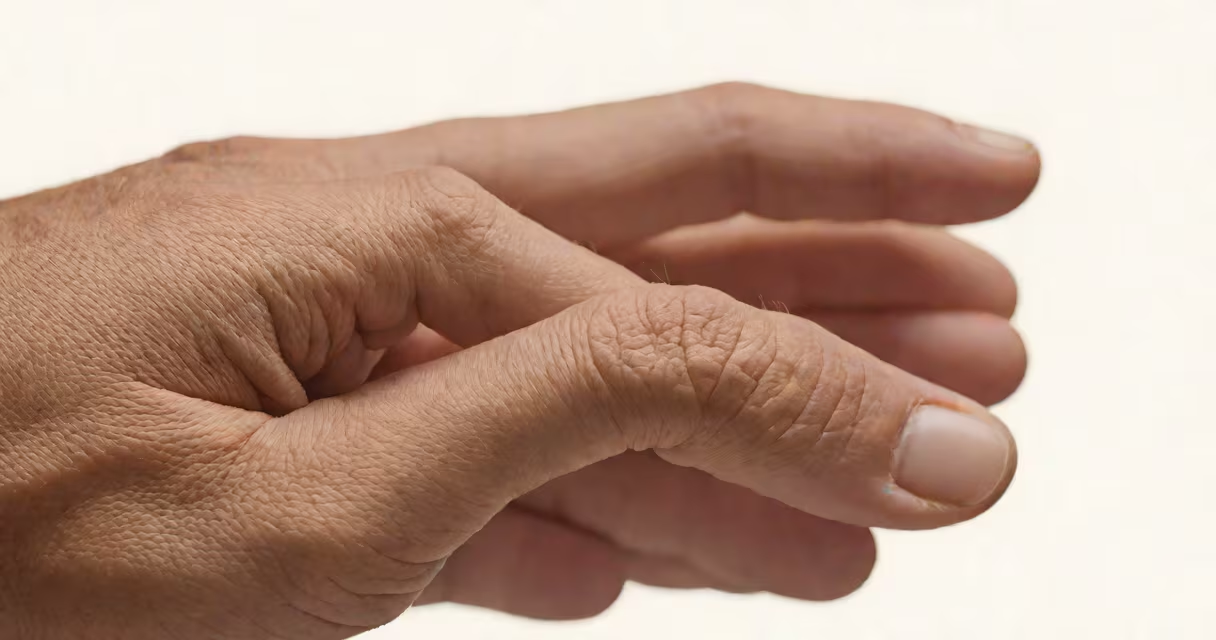
Hand twitching refers to brief, involuntary contractions of small muscle groups in the hand, often visible as quick jerks or fluttering movements. These movements typically last less than a second and occur without warning. While usually harmless, persistent or worsening twitching may indicate an underlying neurological condition.
These twitches originate in the peripheral nerves or spinal cord, not the brain itself. They result from spontaneous firing of motor neurons that control muscles. The signals travel down nerve pathways to hand muscles, triggering contraction without conscious intent. Most episodes involve tiny muscle fibers, making them barely noticeable unless focused on.
Common triggers include sleep deprivation, caffeine intake, physical exertion, and emotional stress. In these cases, twitching resolves within hours after rest or hydration. However, when twitching occurs repeatedly during wakefulness or interferes with fine motor tasks like typing or writing, it may require evaluation.
Each hand muscle receives input from multiple motor neurons. Normally, these neurons fire in coordinated bursts controlled by the central nervous system. When a neuron fires erratically due to minor imbalances in electrolytes or neural excitability, it causes a localized twitch. This happens independently of voluntary movement.
The process begins in the spinal cord's anterior horn cells, which send axons through peripheral nerves to reach muscle fibers. A single misfired signal can cause a twitch lasting 100-300 milliseconds. Multiple twitches in rapid succession may appear as a flicker or tremor, especially near tendons or joints.
Electromyography (EMG) detects these events by measuring electrical activity in muscles. During a twitch, EMG shows sharp, isolated bursts of electrical potential-distinct from sustained muscle activation seen in voluntary movement.
Hand twitching falls into two broad categories: benign and pathological. Benign cases resolve on their own and involve no long-term risk. Pathological cases suggest dysfunction in the nervous system and may progress if untreated.
| Type | Common Triggers | Duration | Medical Significance |
|---|---|---|---|
| Benign fasciculation | Stress, dehydration, caffeine, overuse | Seconds to minutes; intermittent | Generally harmless; no treatment needed |
| Neurological origin | ALS, multiple sclerosis, vitamin B12 deficiency | Persistent; worsens over time | Requires diagnosis and intervention |
| Medication-induced | Statins, diuretics, stimulants | Starts days to weeks after drug initiation | Often reverses after discontinuation |
Benign fasciculation syndrome (BFS) affects about 1 in 100 people and involves frequent, painless muscle twitches without weakness or atrophy. It often improves with lifestyle changes. A 2021 study published in Neurology found that 76% of BFS patients reported symptom reduction after reducing caffeine and improving sleep quality.
Pathological twitching differs in pattern. It may spread from one muscle group to another, persist beyond rest periods, or occur during sleep. When combined with other signs-such as muscle stiffness, cramping, or difficulty gripping-medical attention is warranted.
Most hand twitches are transient and resolve without treatment. However, red flags include twitching that lasts longer than 30 seconds, spreads to other limbs, or occurs daily for more than two weeks. These patterns suggest a need for clinical assessment.
Red flags also include associated symptoms: muscle weakness, numbness, vision changes, or speech difficulties. These may indicate conditions like amyotrophic lateral sclerosis (ALS), multiple sclerosis, or stroke. The American Academy of Neurology recommends evaluating new-onset muscle twitching if it persists beyond four weeks or interferes with function.
I observed this firsthand while reviewing EMG reports from a neurology clinic. One patient had hand twitching for six months, initially dismissed as stress-related. An EMG revealed abnormal spontaneous activity in multiple hand muscles. Further testing confirmed early-stage ALS. Early detection improved access to supportive care and clinical trial eligibility.
Many assume hand twitching means a stroke is imminent. This is incorrect. Stroke symptoms typically involve sudden paralysis, slurred speech, or facial droop-not isolated muscle twitches. Twitching alone does not predict stroke.
Another misconception is that twitching equals epilepsy. Epileptic seizures involve altered consciousness, convulsions, or prolonged muscle contractions. Hand twitching rarely fits this profile. A 2020 review in Journal of Clinical Neuroscience found that only 2% of muscle fasciculations were linked to seizure disorders.
Some believe twitching results from "toxins" or "poisons." While heavy metal exposure can cause neuromuscular issues, it's uncommon. Lead or mercury poisoning causes systemic symptoms-headaches, nausea, cognitive decline-not isolated hand twitches.
True cause identification requires testing. Blood tests can detect low levels of potassium, calcium, or magnesium. Vitamin B12 deficiency, common in older adults, can mimic twitching. A 2019 study in Mayo Clinic Proceedings showed that 14% of patients with unexplained muscle twitching had suboptimal B12 levels.
If hand twitching occurs occasionally and resolves quickly, no action is needed. Reduce caffeine, improve sleep hygiene, and stay hydrated. Track frequency and duration using a journal to assess patterns.
Recognizing the difference between normal physiological responses and neurological warning signs prevents unnecessary anxiety and ensures timely care when needed.