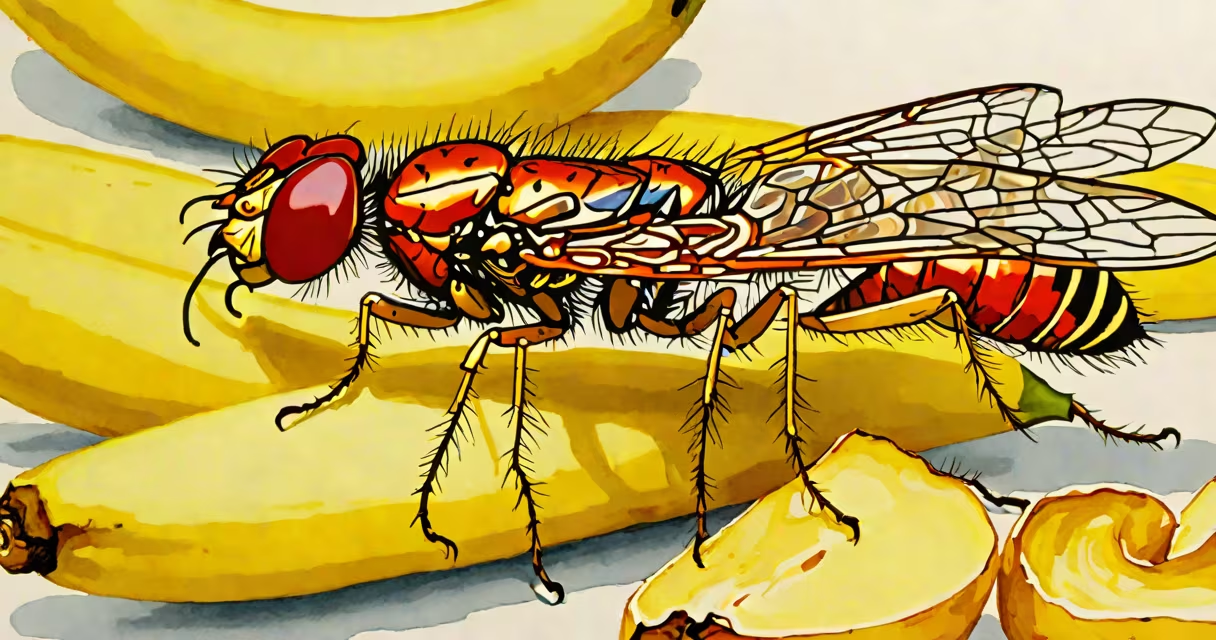
Fruit flies cannot bite humans. They lack mouthparts designed for piercing skin or drawing blood. Their feeding mechanism is limited to sipping liquids from fermenting organic matter.
Fruit flies belong to the family Drosophilidae, with species like Drosophila melanogaster being common in homes. These insects have sponge-like mouthparts that absorb liquids, not sharp structures for puncturing skin. They feed exclusively on yeasts and sugars found in overripe fruit, spilled soda, or damp kitchen surfaces.
Despite their name, fruit flies are not attracted to fresh fruit. They target fruit that has begun to rot, where yeast colonies grow. This behavior explains their frequent appearance near compost bins, trash cans, or dirty dishcloths. The misconception that they bite arises from confusion with other flying insects such as mosquitoes or horseflies, which do possess biting mouthparts.
Fruit flies locate food sources using scent receptors on their antennae. They detect ethyl alcohol and acetic acid-byproducts of fermentation-at concentrations as low as 0.01 parts per million. This sensitivity allows them to find spoiled food within seconds of exposure.
Once they land on a food source, they extend their proboscis-a tubular mouthpart-to absorb liquid nutrients. The process takes less than ten seconds. After feeding, they lay eggs in the same substrate. A single female can lay up to 500 eggs in her lifetime, usually in moist, sugary environments.
Development from egg to adult takes about 8 days at room temperature. With multiple generations per month, infestations can grow rapidly. A single pair of fruit flies can produce over 10,000 descendants in 60 days under ideal conditions.
Several fly species resemble fruit flies but differ in behavior and impact. Confusion often leads people to assume fruit flies bite when they actually encounter other pests.
| Common Name | Scientific Name | Bites Humans? | Feeding Behavior | Typical Habitat |
|---|---|---|---|---|
| Fruit fly | Drosophila melanogaster | No | Sips fermenting liquids | Kitchens, fruit bowls, drains |
| Housefly | Musca domestica | No | Licks fluids; regurgitates on food | Garbage, animal waste, open food |
| Black fly | Simulium spp. | Yes | Pierces skin to feed on blood | Water sources, wooded areas |
| Horsefly | Tabanus spp. | Yes | Sharp mouthparts cut skin to draw blood | Grasslands, forests, near water |
Black flies and horseflies are known to bite humans and animals. Black flies cause intense itching and swelling, while horseflies deliver painful, deep bites that may lead to secondary infections. These insects are not found indoors unless carried in on clothing or pets.
A key distinction lies in flight patterns. Fruit flies hover erratically near food sources, while biting flies tend to dart and land with purpose. If you feel a sudden sting near your ankles during outdoor activity, it's likely a black fly or horsefly-not a fruit fly.
Fruit flies enter homes through open windows, doors, or cracks. They can also hitchhike on groceries, especially produce with bruised or damaged skins. Once inside, they seek out moisture and sugar-rich environments.
Common breeding sites include:
Eliminating these sources reduces infestations. For example, sealing a cracked banana peel in a plastic bag and placing it in the freezer stops egg-laying for up to 14 days. Cleaning sink traps with boiling water weekly removes microbial films that attract flies.
I once observed a fruit fly outbreak in a rental apartment where tenants reported seeing dozens of tiny flies around the kitchen sink. The source was a clogged drain with a layer of decomposing food residue. After cleaning the P-trap with a mixture of baking soda and vinegar, then flushing with hot water, the population dropped to zero within five days.
If you experience unexplained bites-especially on legs, arms, or ankles-consider whether the culprit is a different species. Biting flies often target exposed skin and leave red, swollen welts. Some, like stable flies, bite repeatedly and can transmit pathogens.
For persistent bites, check for signs of other pests. Stable flies resemble houseflies but have a pointed proboscis and bite with a sharp, stabbing motion. They're often found near livestock but can invade homes in rural areas.
If you're unsure, capture a specimen and compare it to images from trusted sources like the University of Minnesota Extension or the UC IPM Pest Notes. These resources provide accurate identification guides based on wing patterns, body size, and behavior.